E-Paper



Uttarakhand HC prohibits mechanised mining in riverbeds across state
The PIL states that as per the Uttarakhand river dredging policy, mechanised mining was being done in the river bed in utter violation of the central government norms

 Prefer HTon Google


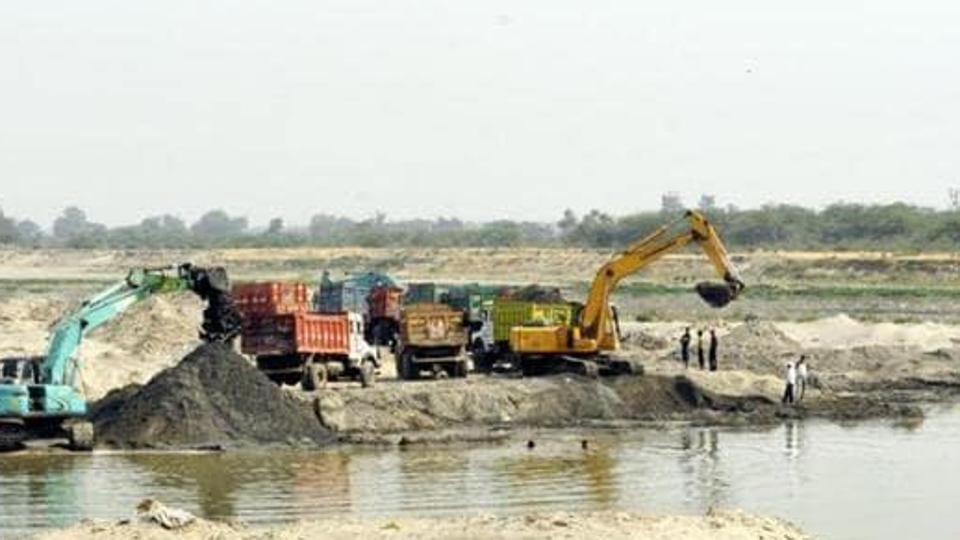
Uttarakhand high court on Monday prohibited mechanised mining of river-bed materials (RBM) in the riverbeds across the Himalayan state. RBM includes sand, gravel and stones.
The division bench of chief justice Vipin Sanghi and Justice RC Khulbe gave the order while hearing a public interest litigation (PIL) by one Gagan Parashar, a social activist earlier this year.
Also Read: Under construction bridge collapses in Bihar before inauguration| Video
The PIL alleged that indiscriminate mining is carried out in the riverbeds of the state using heavy machinery when the norms don’t allow the same.
The Uttarakhand Minor Mineral Concession Rules 2001 amends the use of ‘JCB, suction lift, and heavy machines’ in the river bed mining areas.
The PIL states that as per the Uttarakhand river dredging policy, mechanised mining was being done in the river bed in utter violation of the central government norms.
“Due to ambiguity created by the state in permitting machines on river beds in the name of dredging or monsoon preparedness, uncontrolled mechanised excavation in mining and illegal mining throughout the state and even river Yamuna at Vikas Nagar, Dehradun, has been diverted by the mining mafia using these gigantic machines”, the PIL stated.
Dushyant Mainali, the counsel of the petitioner said that the Nainital-based social activist said, the PIL also raised the issue of the difference in the rates of royalty charged on the RBM on river bed sites of Uttarakhand forest development corporation and those of private mining lease holders.
According to the PIL, “While royalty on RBM of Uttarakhand forest development corporation sites is ₹ 31, in the case of RBM mined by private mining lease holders, it is ₹ 12 to ₹ 19. Due to this, most people are buying RBM from private miners, pushing demand and thus encouraging indiscriminate mining in riverbeds through mechanised mining.”
Also Read: Delhi gets its first dense fog of the season; AQI deteriorates to ‘severe’
After hearing the case, the HC court prohibited the use of mechanised mining in riverbeds across the state. It also directed all the district magistrates, who are chairpersons of the district mining task forces, to “ensure the prohibition of mechanised mining and seize mechanised mining equipment/vehicles if found in river bed areas.”
On the difference in royalty rates, the HC directed the state mining secretary to file an affidavit within 21 days, explaining why there is a difference in the rates.
The court has further given three weeks to the geological survey of India (GSI) to conduct a survey in the areas mined by private mining lease holders to check the extent of mining carried out and submit its response to the court.
In February last year, the state government apprised HC, giving its reasons as to why it had allowed the mining of RBM on private lands adjacent to the riverbeds in the state.
According to the affidavit filed by the state government, river water floods onto private lands near banks and sometimes it also washes off away chunks of private land.