E-Paper



Uttarakhand to conduct study on carrying capacity of Joshimath, other hill towns
Uttarakhand chief minister Pushkar Singh Dhami said if there are more constructions than the carrying capacity of the towns, then constructions will be immediately stopped in such towns

 Prefer HTon Google


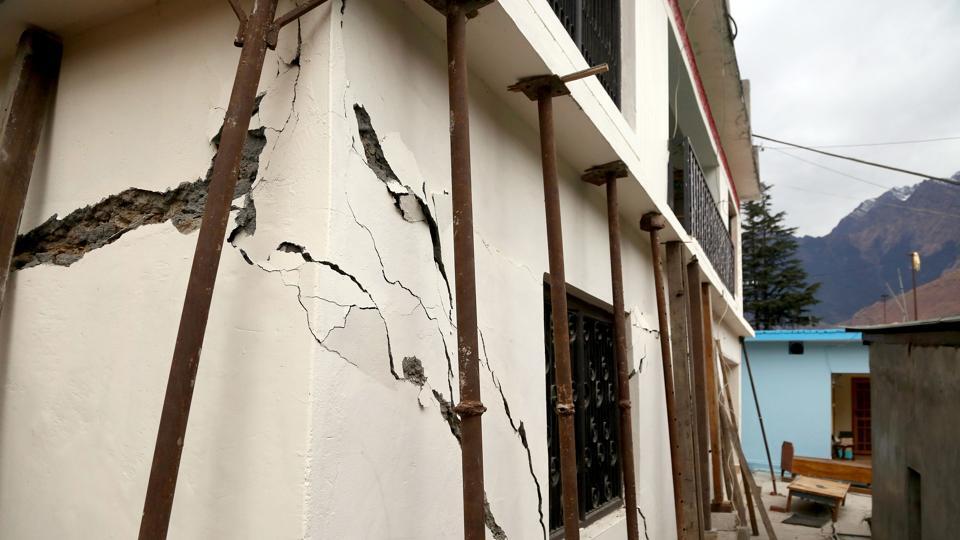
Uttarakhand chief minister Pushkar Singh Dhami on Wednesday said that the state government will conduct studies on the carrying capacity of Joshimath and other hill towns in the state.after structures developed cracks due to land subsidence in the holy city.
Dhami while talking to reporters in Joshimath, where he reached in the evening, said he has been stressing on development of the state with a “balance between economy and ecology”.
“We will conduct studies on the carrying capacity of Joshimath and other hill towns of the state. If there are more constructions than the carrying capacity of the towns, then constructions will be immediately stopped in such towns,” he said
Dhami said a total amount of ₹ 45 crore has been released for providing interim relief to 3,000 affected families in Joshimath.
Dhami said that compensation will be given at the market rate to the affected people in land subsidence-affected areas in Joshimath.
“The market rate will be decided after seeking suggestions from the stakeholders and locals. A total amount of ₹ 45 crore has been released for providing interim compensation to 3000 affected families in Joshimath. For the time being, interim assistance of ₹ 1.50 lakh per family is being given. An advance amount of ₹ 1 lakh is being given to the affected families before their rehabilitation. An amount of ₹50,000 is being given to the affected families in the form of a one-time special grant for the transportation of their belongings. This amount was released by the Uttarakhand State Disaster Authority,” he said.
The chief minister has also given one month’s salary to the Chief Minister’s Relief Fund to help the disaster-affected families in Joshimath.
Dhami said that rumours are being spread about the demolition of houses which have developed cracks. “I appeal to all not to pay heed to these rumours. No action is being taken to demolish the houses having cracks in the affected area. I have directed the chief secretary not to demolish the houses with cracks in the affected area unless it is unavoidable,” he said.
The chief minister said he is taking regular reports from the officials regarding all the arrangements in Joshimath. Dhami said he has instructed the chief secretary that all problems of the affected people should be resolved quickly after talking to them.
A total of 131 families have so far been shifted to temporary relief centres in Joshimath and the number of damaged houses in the town has risen to 723, according to a report by news agency, PTI.