E-Paper



To conserve Malcha Mahal, 14th-century lodge in Delhi forest set for a facelift
After the death of the last member of the clan, “Prince” Ali Raza, in September 2017, plans are now afoot to open the “Mahal” to the public

 Prefer HTon Google


In a bid to conserve Malcha Mahal and boost its tourism prospects, the Delhi government’s department of archaeology has started landscaping at the 14th-century monument which has been seeped in mystery for decades and was inhabited by members of a self-proclaimed royal family from the 1980s till 2017.
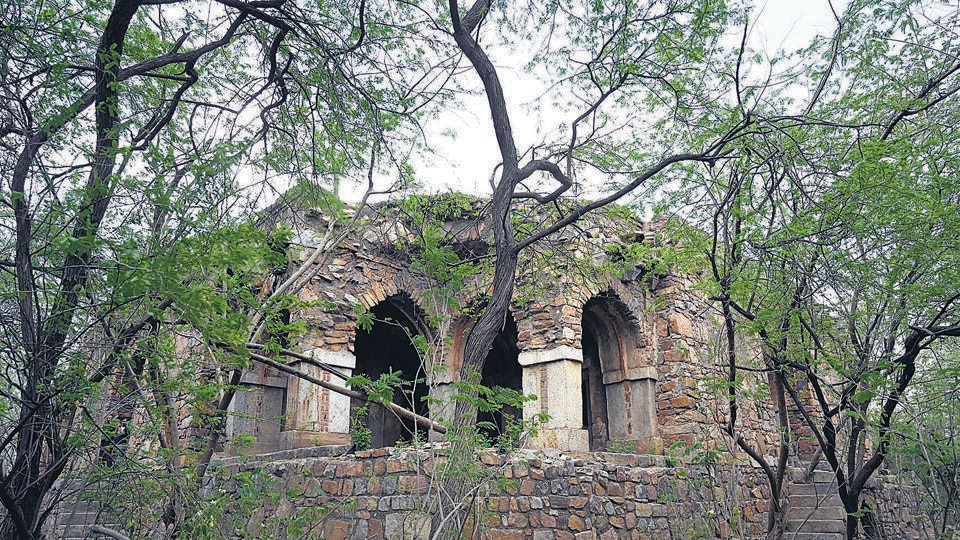
After the death of the last member of the clan, “Prince” Ali Raza, in September 2017, plans are now afoot to open the “Mahal” to the public.
The archaeology department was granted permission from the forest and wildlife department earlier this month to fell 38 trees and prune another 150 in the monument complex inside the Central Ridge in Chanakyapuri. In lieu of the 38 trees being felled, the archaeology department will also have to carry out a compensatory plantation of 380 native species in the same area.
An official aware of the matter said that grilles will be installed in the area around the monument as part of the beautification process. “We will conserve the monument and ensure that its premises are protected. Landscaping efforts are also underway. We have pruned trees that had come up at the monument,” said the official from the archaeology department.
The move will likely facilitate “haunted heritage walks” at the monument under a Delhi government initiative launched in May. The walks are conducted every Saturday and Sunday from 5.30pm to 7pm. Officials said though lighting will be installed in the complex, organising such haunted walks or any other activity at night will be challenging in the absence of a proper pathway. “In the 25x25m area around the monument, we are installing grilles and barricading the premises. We will also put lighting arrangements in place. Other utilities such as toilets will also be made for visitors,” the official quoted above said.
Built as a hunting lodge in the 14th century during the rule of Firoz Shah Tughlaq, the ruler of the Delhi Sultanate, Malcha Mahal has remained seeped in mystery for years. In the 1980s, a self-proclaimed royal family of Oudh moved into the dilapidated structure, remaining there till the last member of the clan, Ali Raza, died in September 2017.
Maulvi Zafar Hasan, the Archaeological Survey of India (ASI) expert who prepared the first list of monuments worthy of conservation in 1916, in his listings identifies Malcha Mahal as a palace built during the reign of Firoz Shah. Hasan also mentions the presence of a water tank close to the palace. “Some 50 yards to the south of the palace there is a bund of a large tank into which, says Sham Shirazi, the emperor Firoz Shah threw a quantity of the water of Zamzam (sacred water from a famous well at Mecca). The palace seems to have been a pleasure house or Shikargah on the bank of the tank,” he wrote, referring to Sham Shirazi, who wrote an account of Firoz Shah’s reign.
The palace is mentioned as Bistadari Mahal in Indian National Trust for Art and Cultural Heritage listing of built heritage in Delhi, drawing from its location on Bistadari Road in the southern Ridge. Not much is known about the fate of the structure over the next few centuries till the 1980s when the Oudh “royal family” moved in.
Author and historian Swapna Liddle said that besides providing amenities to tourists, it was crucial to focus on the conservation of the complex as a place of historical importance.
“The structure is a hunting lodge from the time of Firoz Shah Tughlaq. Additionally, there is a certain romanticism of the place due to its later occupants... Visitors should also be informed about the historical significance of the structure through signboards,” said Liddle.
To reach the monument, one has to walk through a potholed and dimly lit road frequented only by monkeys, cows, buffaloes, and dogs. Officials said while signages will be placed at the site, a pathway could not be created since the monument fell under forest land. Several parts of the monument were dilapidated, with trees growing through its stairs and windows. Senior officials from the archaeology department said the growth of trees on the monument was interfering with the structural safety and had to be pruned. “Trees were growing from within the monument. From a conservation point of view, the removal of these trees was important. We have cut only those trees that were growing within the monument complex,” said an official.
The permission to fell 38 trees and prune another 150 was granted under the Delhi Preservation of Trees Act (DPTA), 1994, officials said. For the compensatory plantation of 380 trees, the forest department has recommended native species such as dhak (Butea monosperma) and amaltas (Cassia fistula). A senior forest department official said the trees being pruned and felled are all invasive species — such as vilayati kikar and subabul.
With regard to a footpath in the area, the official said no request to build one has been received yet.
Pradip Krishen, an environmentalist who has carried out multiple walks along the Central Ridge, says removing subabul and vilayati kikar was a good idea, since the species were invasive, but the archaeology department should not limit their plantation to just two to three species.