
 E-Paper



15 years after journalist’s murder, parts of key Delhi stretch still poorly lit
During a spot check on Wednesday, HT found that several of the street lights on this stretch were not operational


Turn on to Nelson Mandela Marg from the Outer Ring Road, and the difference can be astonishing. From a busy, bustling road where drivers are short on temper, you suddenly find yourself on a wide, tree-lined boulevard, which at night is poorly lit, and deserted.
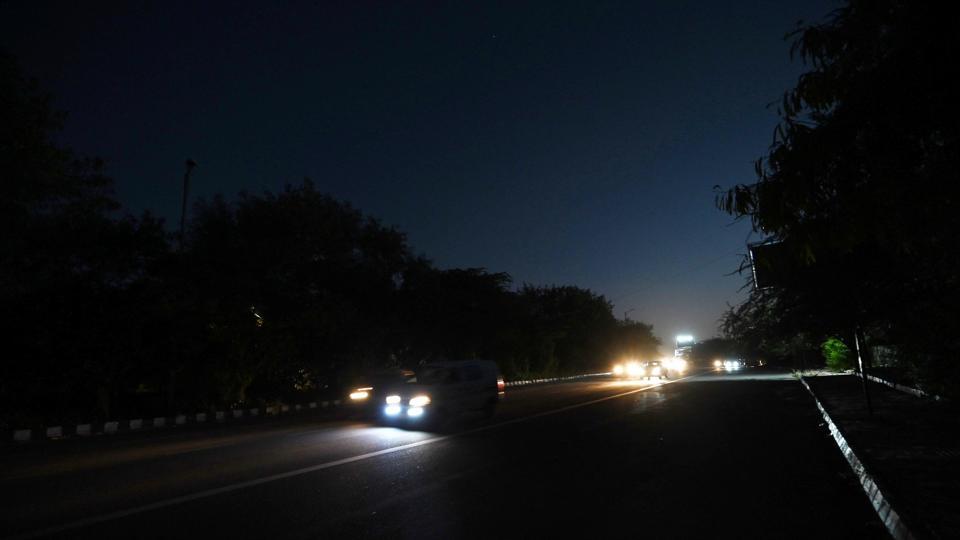
The area is covered by multiple police stations, but the four-kilometre stretch, which connects Vasant Vihar and Vasant Kunj, is notorious for some of the Capital’s most high-profile accidents. It is also on this stretch that television journalist Soumya Vishwanathan was murdered on September 30, 2008, when she was on her way home from work.
Fifteen years on, patches of Nelson Mandela Marg have undergone a transformation — three popular malls have come up along one carriageway, while multiple interventions in the form of speed cameras and streetscaping have added to a sense of security.
However, parts of the road still remain isolated, and poorly lit. During a spot check on Wednesday, HT found that several of the street lights on this stretch were not operational.
Snehlata Rathi, RWA president of the D6 locality in Vasant Kunj, who has been living in the area for the last 21 years, said the arterial route has witnessed massive changes over the last two decades. “When we moved here, the area was so deserted that we would not take this route after 8pm. But then, the malls came up, and the footfall around this region started growing around 2012-14. Due to the addition of security cameras and police station, the security situation has improved somewhat,” Rathi said.
She, however, cautioned that while the carriageway from Vasant Kunj to Munikra is now illuminated, the opposite side still has large dark patch. “This stretch, which comes after crossing JNU, needs to be illuminated well,” she added.
When HT reached out to the Delhi Police about Nelson Mandela Marg, Suman Nalwa, deputy commissioner of police (public relations), said, “A number of steps have been taken over a period of time for the safety of women in Delhi in tune with the changing dynamics of the city life. Some of the steps include an increase in the percentage of women personnel in Delhi Police, and an increased presence round-the-clock in all police stations, all-women PCRs, special helpline numbers, and treating crime against women as highest priority while responding to calls…”
Rajesh Panwar, who heads the Federation of Vasant Kunj RWAs and has been a resident of the area since 2005, said the stretch has seen multiple rounds of development work over the last 15 years. “There was a large wooded area in the central verge in front of the malls, which has been landscaped. The biggest improvement in footfall came due to malls,” he said.
Gurpreet Bindra, president of Vasant Vihar RWA, said the security situation has improved on this key access route but it should be mostly attributed to increase in habitation, and the rise in footfall due to the malls. “In the early 2000s, this stretch was more of a jungle. Now, however, several development works have taken place, including the development of the Vasant Vihar DDA park, which earlier used to be a shabbily maintained swamp. Now residents can use this park to go right up to Munirka,” he said.
AK Jain, former commissioner (planning), Delhi Development Authority, said the Vasant Kunj region was identified (along with Rohini and Narela) for residential development in 1980. “Vasant Kunj was planned as a residential township and its development started in 1987-88, but the overall plan was implemented in phases, which led to some portions remaining secluded in the initial phase. We see it as a general feature in the urban development projects like in Rohini and Vasant Kunj that the initial occupancy is low but once the area gets populated, schools and commercial hubs come up, it becomes bustling as Vasant Kunj has become. The sheer demand (of property) and high value indicates the success,” he said.

Stay updated with all top Cities including, Bengaluru, Delhi, Mumbai and more across India. Stay informed on the latest happenings in World News along with Delhi Election 2025 and Delhi Election Result 2025 Live, New Delhi Election Result Live, Kalkaji Election Result Live at Hindustan Times.


