
 E-Paper



50% of Delhi’s water network older than 20 years, needs revamp: Minister
Delhi's water minister reveals over half of the city's pipelines are over 20 years old, requiring replacement over the next 7-8 years to improve water quality

 Prefer HTon Google


New Delhi: Delhi water minister Parvesh Verma on Friday said that the scale of deterioration in Delhi’s water infrastructure is far more severe than previously estimated, and that more than half of the city’s pipelines are 20 years or olderand will require complete replacement.
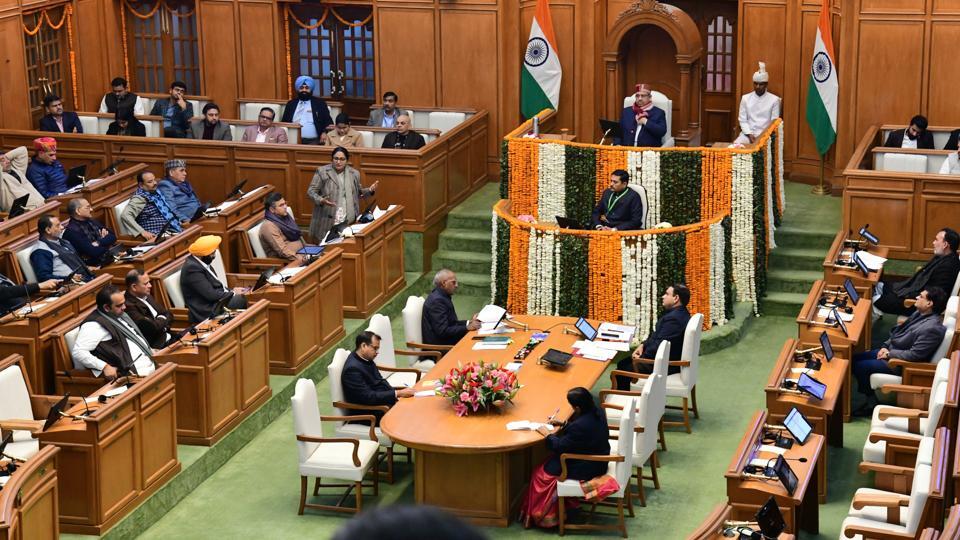
Addressing the Delhi Assembly in response to a question raised by Malviya Nagar MLA Satish Upadhyay during Question Hour, Verma said the government aims to replace the entire ageing network, with tenders for all related works to be issued within the next year. However, he cautioned that the full overhaul would take seven to eight years to complete, with about 30% of the work finished within the current government’s tenure.
“Out of nearly 16,000 km of water pipelines in Delhi, the overwhelming majority are more than three decades old. These pipelines have outlived their life and are the root cause of contamination, leakages and supply losses. Our aim is to replace every weak and obsolete pipeline. Tenders will be floated within a year, but such a massive overhaul will realistically take seven to eight years,” Verma told the House.
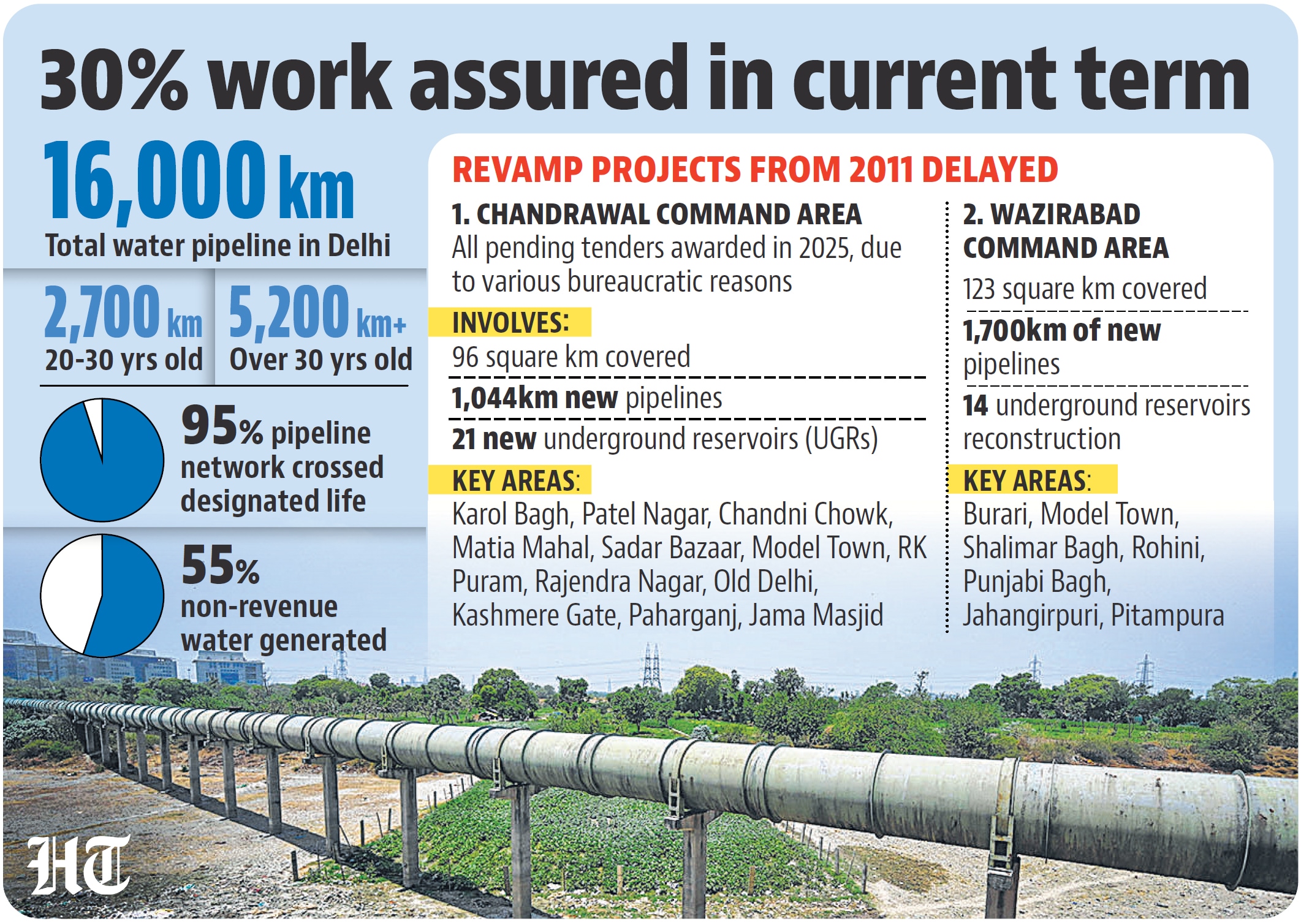
The minister said the government inherited a “deeply neglected and fragile” water infrastructure. He detailed that over 5,200 km of pipelines are older than 30 years, with another 2,700 km in the 20-30-year category. This aged infrastructure, he said, is the root cause of contamination, frequent leaks, pipe bursts, and significant water loss.
“These old pipelines are the main reason for up to 55% non-revenue water loss in Delhi,” he said, referring to water that is produced but never billed due to leaks or faults. “This directly affects water quality and availability at the consumer end.”
The minister’s assessment comes at a time when cities across India are reevaluating their water networks under increased scrutiny in the run-up to a water-borne disease outbreak in Madhya Pradesh’s Indore, which left 10 dead, 446 hospitalised, and a total of 1,500 affected.
Verma cited two large-scale reform projects – Chandrawal and Wazirabad water treatment plants – that were proposed as early as 2011, but were repeatedly stalled. He said the government has now prioritised reviving them to together cater to nearly 20 Assembly constituencies – nine by the Chandrawal project, and 11 by Wazirabad.
“Because of years of delay, the cost burden increased and ultimately the people of Delhi had to pay for it. But once completed, this project will significantly improve supply in central and old parts of the city, including dense residential and commercial areas,” Verma said.
Under Chandrawal, covering about 96 sq km and a population of roughly 2.2 million, all pending packages were awarded in November 2025, he said. The project involves laying more than 1,000 km of new pipelines and constructing 21 underground reservoirs (UGRs).
The Wazirabad project, which serves about 123 sq km and a population of nearly 3 million, has also been revived with assistance from the Asian Development Bank (ADB), Verma said. Funding for the project had earlier been withdrawn, bringing work to a halt.
“After our government came to power, ADB approached us again. Within a month, we held meetings and restarted the process. This project alone will add nearly 1,700 km of new pipelines in north and northwest Delhi,” Verma added.
Beyond these two zones, the government has divided the rest of Delhi into six areas for phased pipeline replacement. The plan includes replacing around 4,200 km of pipelines, constructing 54 new underground reservoirs, and creating over 1,300 district metered areas to monitor and control supply. The goal is to reduce non-revenue water to 15% and achieve citywide 24x7 supply. “In the next two to three years, work will be awarded for replacing nearly 7,000 km of pipelines across Delhi,” Verma said.
While the large-scale replacement unfolds, the minister listed interim steps taken over the past 11 months: commissioning three new primary reservoirs, operationalizing 262 new tubewells adding 9 million gallons per day (MGD), and laying 200 km of new pipelines. A ₹170-crore project to desilt 100 km of long-neglected trunk sewers is also underway, he said.
“No resident should have to pay ₹3,000 to a private tanker and still risk sewage being dumped into drains. Until sewer connectivity is universal, septic tank cleaning will be provided free of cost,” Verma said.
Delhi currently receives around 1,000 MGD of water from its treatment plants and groundwater sources, but faces a shortfall of nearly 250 MGD, the minister said. To bridge this gap, the government is working with neighbouring states and the Centre. He said ongoing discussions with Uttar Pradesh and Haryana to exchange treated wastewater from Delhi’s sewage treatment plants for around 51 cusecs of fresh raw water currently being used for irrigation in those states.
“Our STPs now produce high-quality treated water. We have proposed that this water be used for irrigation in neighbouring states, and in return, the raw water they divert from rivers can be made available to Delhi for drinking purposes,” he said.
He said talks are also underway with Himachal Pradesh to revive a pending agreement for an additional 113 MGD of water.
“These problems did not arise overnight, and they will not disappear overnight but we are determined that Delhi will have a modern, reliable and contamination-free water supply system,” Verma said.


Stay updated with all top Cities including, Bengaluru, Delhi, Mumbai and more across India. Stay informed on the latest happenings in World News along with Delhi Election 2025 and Delhi Election Result 2025 Live, New Delhi Election Result Live, Kalkaji Election Result Live at Hindustan Times.


