E-Paper



Ammonia levels spike in Yamuna, water supply hit in Delhi
DJB officials said the level of pollutants in the raw water spiked further on Wednesday and the ammonia levels rose from 3 ppm to 5ppm

 Prefer HTon Google


Several parts of north and central Delhi are reeling under a shortage of water along with low-pressure supply as treatment operations in the Capital remain affected due to the high pollution load in the raw water of Yamuna, according to the Delhi Jal Board (DJB).
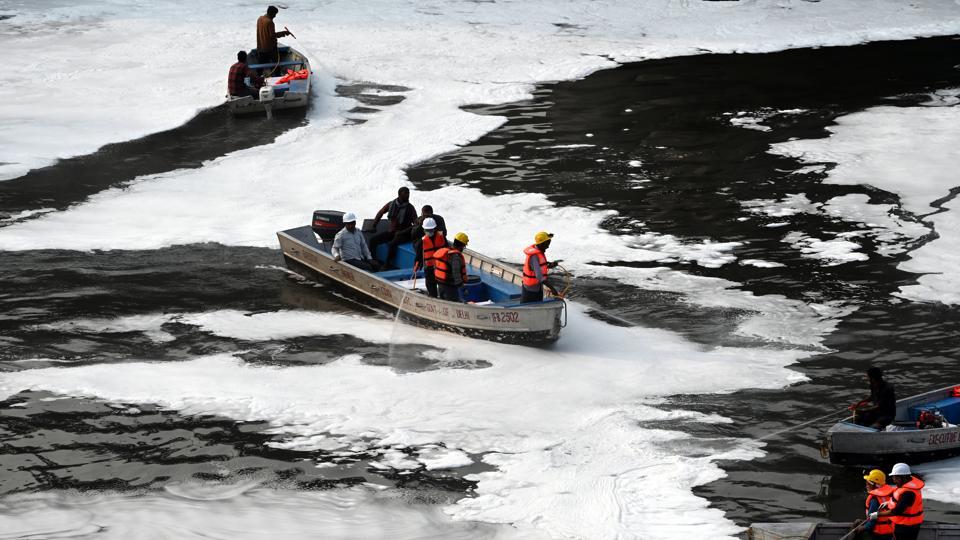
DJB officials said the level of pollutants in the raw water spiked further on Wednesday and the ammonia levels rose from 3 parts per million (ppm) on Monday to 5ppm by 7pm on by Wednesday.
In an advisory issued earlier, DJB had warned of supplies being impacted until the situation improved. HT reached out to the Delhi government which did not respond to queries seeking comments.
“The Wazirabad water treatment plant has been partially shut down and is currently operating at 50% of its capacity. We are trying to divert more raw water from other sources for dilution to maintain the operations at the Chandrawal plant,” a DJB official said, asking not to be named.
To be sure, DJB faces the problem of high ammonia levels in Yamuna water throughout the year, but it is relatively acute between January and March.
DJB supplies more than 990 million gallon per day (MGD) of water to Delhi out of which over 230 MGD is supplied by Chandrawal and Wazirabad plants — both of which draw water from the Wazirabad pond fed by raw water coming from the river. The water utility can treat up to 0.9ppm of ammonia in raw water but beyond such high levels, neutralisation of ammonia with chlorine gas regularly leads to the formation of toxic chloramine compounds.
A second DJB official said that the pollutant load had briefly gone down during the intervening night of Tuesday and Wednesday when ammonia levels of 1.1ppm to 1.2ppm were recorded at the Wazriabad water treatment plant. However, the turbidity levels were still high at 58 nephelometric turbidity units (NTU). Turbdity is the optical clarity of water and is is measured in NTUs. For clear supply water, the turbidity needs to be less than 3 NTU.
The second official added that the levels rose through the day and reached around 3ppm at 3.30pm with a turbidity level of 60NTUs before hitting 5ppm at 7pm.
“This was way beyond the treatable limit and operations could not be maintained. In such a situation, the operations can only be maintained if the plant is fed by CLC (carrier lined canal or Munak) only,” the official said.
DJB officials have previously alleged that the source of the pollutants such as dyes, chlorides, and ammonia-based chemicals comes from the Panipat industrial dye drain and that untreated water from industries in Haryana predominantly causes high levels of ammonia in the river water, a charge repeatedly denied by the Haryana government.
Meanwhile, the high pollution levels translated to a range of issues in areas of north and central Delhi — while there was zero water supply in some areas, some received a curtailed supply in low-pressure.
Ashok Bhasin, who heads the North Delhi Resident Welfare Federation, said that the water supply has been affected over the last two days and the timing of the morning supply has been reduced.