E-Paper



Bapu Sewa Kendra to get hydraulic parking system
NDMC vice-chairman said that the redevelopment of the Sewa Kendra includes revamping its hall and adding blocks which will be equipped with modern technology

 Prefer HTon Google


The New Delhi Municipal Council (NDMC) will be providing a renewed push to complete its ongoing redevelopment project of the historic Bapu Sewa Kendra, as the civic body has also decided to build a hydraulic parking system for the centre which earlier used to witness social events and skill development classes, senior NDMC functionaries have said.
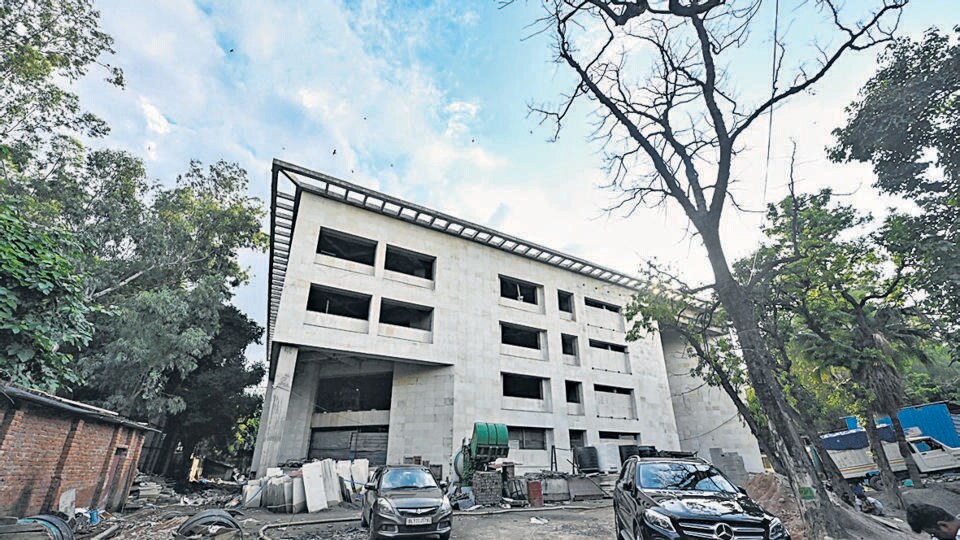
Located near Panchkuian road, the centre, dedicated to Mahatma Gandhi, was originally developed in 1954 to carry out welfare works for the Valmiki community. It abuts the Valmiki temple and basti, where Gandhi had spent a considerable amount of his time between 1946 and 1947 working with the people. However, the seven-decade-old building had been lying in a dilapidated condition and out of use since 2009.
NDMC vice-chairman Satish Upadhyay said that the redevelopment of the Sewa Kendra includes revamping its hall and adding blocks which will be equipped with modern technology fixtures. “The centre dedicated to Mahatma Gandhi has a historic significance and was used to not only celebrate functions such as Gandhi Jayanti and Martyrdom Day, and conduct programmes dedicated to the welfare of neighbouring residents of the Harijan basti such as craft and stitching classes, besides running a nursery school and a mother and child welfare centre. The hall was also used for bookings for events at subsided rates for the registered Harijan welfare associations. We are developing modern halls as the old facility has outlived its life and modern fixtures are being added to it,” he said.
The civic body has also invited bids for development of the hydraulic parking system at the centre which is expected to cater to around 110 vehicles at a time, a senior NDMC functionary said.
“Besides the ongoing development work, we will hire an agency for installation of pit parking hydraulic systems for around 100 vehicles as well as its operation and maintenance work for four years,” the official added. “The council has already started upgrading the building into an auditorium by providing seating tiers in the main hall with the provision of lifts, along with two new blocks on either side of the building.”
Another senior NDMC official said that a large number of Valmiki families used to live in slums close to the temple and worked as sweepers in areas such as Gole Market and Connaught Place.
“In 1946, Gandhi asked elders of the Valmiki colony if he could stay there for a couple of months. He stayed for over 214 days between 1946 and 1947 working with the community. This centre was developed in 1954 to continue the welfare works for the community,” the official added.
“Its hall was used for cultural activities by the community but the building dilapidated at a later stage. The building fell into disuse in 2009,” said the official.