
 E-Paper



CBSE pass percentage dips for Class 10, 12 in Delhi; girls outshine boys
Like the rest of the country, girls performed better than boys with pass percentages of 93.99% and 90.52%, respectively


In line with the national trend this year, the overall pass percentage in Delhi declined compared to last year even as the Class 12 and Class 10 board examination results were announced by the Central Board of Secondary Education (CBSE) on Friday.
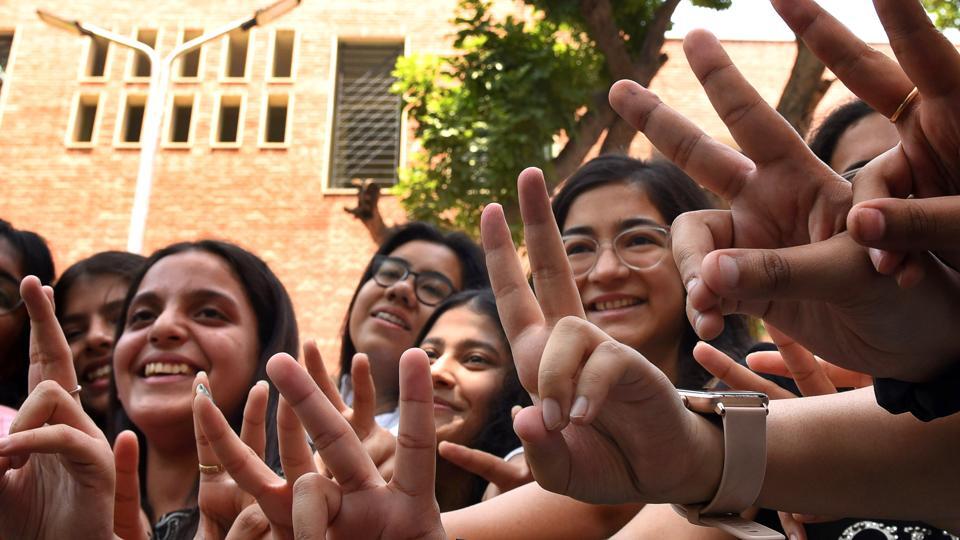
Delhi’s pass percentage dipped to 92.22% from last year’s 96.29% when board exams were conducted in two terms and CBSE followed a different evaluation policy. However, like the national average, Delhi’s pass percentage remained higher than in the pre-pandemic year 2019, when it was 91.87%.
Since 2020, CBSE board exams have been severely affected due to the pandemic situation. In 2020 and 2021, students were marked based on their internal exams, practical, assignments, and performance in previous classes.
CBSE divides the Delhi region to east and west. The pass percentage in the west region was 93.24% while in the east region was 91.5%. Delhi west and east stood 4th and 6th, respectively, among the CBSE’s 16 regions across the country. The pass percentage for both regions declined from last year when it stood at 96.29% for both.
Like the rest of the country, girls performed better than boys with pass percentages of 93.99% and 90.52%, respectively.
Private schools also performed better than government schools in both regions. In the east, the government school pass percentage was 95.74% while private schools secured 97.09%. In the west, the pass percentage of government schools was 96.4% while private schools secured 96.84%.
For Class 10 too, the Capital’s pass percentage dipped to 89.24% from last year’s 94.4%. This year’s pass percentage is the lowest in the past five years since 2019 when it was 91.10%. The pass percentage for girls and boys stood at 90% and 87.31%, respectively.
Sudha Acharya, chairperson, National Progressive Schools’ Conference (NPSC), a consortium of private schools, said that the average percentage went down in most schools compared to previous years.
“Last year, the average percentage in my school stood at 92.4%, but this year it declined to 89.4%. Most private schools have recorded almost a 5% dip in results. We are introspecting the various factors. It seems that moderation was not done for private schools. Our students who did well at JEE were disappointed by their performance in CBSE. Students were complaining that they were unable to secure 100 in mathematics despite answering all questions,” said Acharya.
She added that another factor that possibly influenced results was the introduction of CUET as the entry mechanism to undergraduate admission. “Students are focusing on CUET, JEE, and NEET preparation since they know they can no longer secure admission based on board score. They are joining coaching centres for CUET and the board exam has been reduced to a qualifying exam,” said Acharya.
Tamanna Arora, 17, who secured 98% in humanities, said that she was happy with her performance and hopes to pursue graduation in political science at Delhi University’s Hindu College. “I am satisfied with my performance although we cannot celebrate much since assurance of a college seat depends on CUET. If the exam is NCERT-based, it shouldn’t be much of a problem appearing for CUET since the preparation is over-lapping,” said Arora.
Bharat Arora, president of the Action Committee of Private Unaided Schools, a consortium of private schools, said that while CUET played a big role in shifting students’ focus from boards to entrance preparation, Class 12 students also did not have prior experience of appearing for boards due to the pandemic.
“The performance of schools might have declined from last year but overall private schools have done well. We also need to take into account that the boards were disrupted by the pandemic last year. Students appeared for a regular written board exam after the pandemic. This year, boards were not disrupted and private unaided schools have performed better than government and aided schools,” said Arora.


Stay updated with all top Cities including, Bengaluru, Delhi, Mumbai and more across India. Stay informed on the latest happenings in World News along with Delhi Election 2025 and Delhi Election Result 2025 Live, New Delhi Election Result Live, Kalkaji Election Result Live at Hindustan Times.


