
 E-Paper



‘Concerns on electoral rolls, EVMs baseless’
CEC Rajiv Kumar addressed recurring concerns over issues such as voter roll additions and deletions, voter turnout discrepancies, and EVM reliability

 Prefer HTon Google


Chief election commissioner Rajiv Kumar on Tuesday dismissed claims of tampering with electronic voting machines (EVMs) as “baseless,” stressing that the Supreme Court has repeatedly vouched for the reliability of these devices. Addressing accusations of voter roll manipulation and EVM rigging, he emphasised that all changes to electoral rolls are carried out following due process, with political parties kept in the loop throughout.
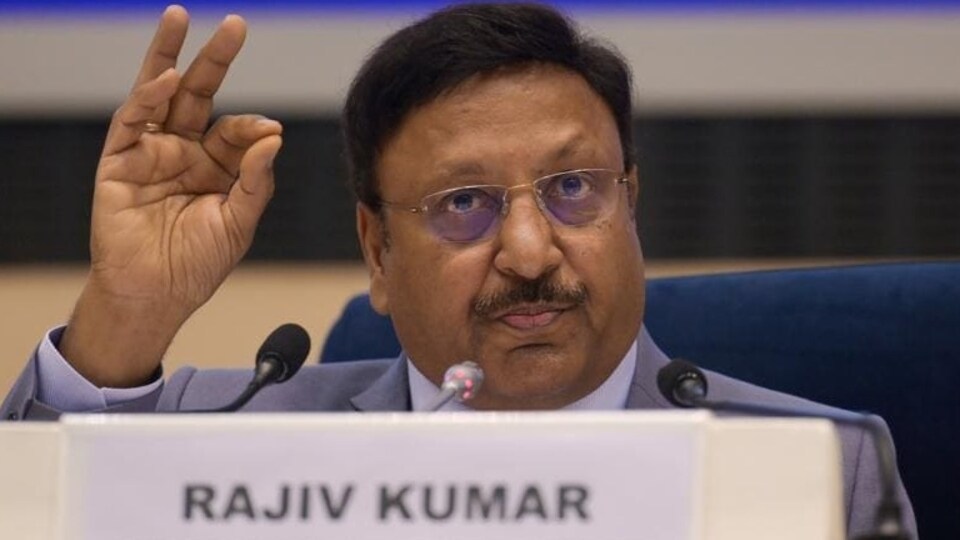
Speaking during a press conference to announce the Delhi assembly election dates, Kumar addressed recurring concerns raised by political parties over issues such as voter roll additions and deletions, voter turnout discrepancies, and EVM reliability. He reassured the public about the robustness of India’s electoral process and the measures in place to ensure its credibility.
“From the preparation of electoral rolls to the counting of votes, there are about 70 steps where political parties and candidates are involved,” he said.
He urged political parties and individuals to refrain from making sweeping accusations and instead file specific complaints that could be investigated by the Election Commission of India (ECI).
To be sure, all these claims, raised by political parties in the run-up to the elections, have previously been addressed by the Election Commission of India (ECI) several times in the past, he said.
Kumar highlighted the scale of electoral operations in India, noting that there are approximately 1.05 million polling booths across the country, each staffed by four to five polling officials.
“These officials are randomised in front of the candidates two-to-three days before they reach the booth and teams are formed,” he said. He expressed concern over the impact of baseless conspiracy theories on these officials, who, he said, bear the brunt of unfounded allegations.
On electoral rolls
Explaining the process of electoral roll preparation, Kumar noted that returning officers and district election officers, under ECI supervision, revise and update the rolls annually, with the final roll published around January 5 each year.
“No deletions can happen without Form 7. Even in cases of deaths, we keep a record of the death certificate through the BLO,” he said.
He added that political parties are provided with free copies of draft and final rolls, while the public can obtain them for a “nominal fee”.
Two copies of the electoral rolls – a hard copy with images of the electors, and a soft copy without the images – is made available at ERO level. Draft rolls, deletions, and objections are posted even at the village level, Kumar said.
Before all state assembly elections, ECI conducts a Special Summary Revision (SSR), involving house-to-house surveys, physical verification by booth-level officers, and random checks by senior officials. Political parties, he said, are encouraged to appoint booth-level agents to oversee the process and raise objections, if necessary.
On EVMs
Kumar reiterated that EVMs are not connected to the internet and can thus not be hacked. He cited a Supreme Court judgment that upheld ECI’s stance on EVM reliability and deemed calls for a return to paper ballots as a “regressive step.”
Kumar also underscored the involvement of political parties in the entire voting process, including the sealing of EVMs, mock polling, locking, and storage in strong rooms.
“All allegations of tampering are baseless,” he said citing the apex court’s stance.
On voter turnout
On turnout figures, Kumar referred to ECI’s affidavit submitted to the Supreme Court during the general elections, explaining why exact voter turnout data cannot be provided before polling concludes.
“With 1.05 million booths across India and disconnected EVMs, it is impossible to give precise voter turnout before voting ends at 6pm,” he said. He added that voting continues after 6pm for those who arrive at polling booths before the deadline, with tokens issued to latecomers to ensure they can vote.
Kumar clarified that Form 17C, which records voter turnout, is provided to polling agents of all political parties, ensuring transparency.
He explained that discrepancies in voter turnout data occur because postal ballots, which are counted later, are not included in the initial turnout figures shared on polling day. This, he said, accounts for the marginal difference between the preliminary turnout numbers and the final vote count.
“This gap is an inbuilt gap. It is procedural. It is impossible to give the VTR before voting even ends,” he said.
Regarding instances where mock poll data is not recorded in Form 17C, Kumar noted that ECI guidelines mandate a VVPAT slip count if the victory margin is less than the number of votes on a single EVM. This measure ensures the integrity of the election outcome in closely contested seats.
Kumar concluded by condemning irresponsible media reporting on election-related issues, emphasising the need for accuracy and fairness in coverage. He urged the media to refrain from amplifying unfounded allegations and instead focus on verified facts.
On amending Conduct of Election Rules
Kumar said that the Conduct of Election Rules were amended in December to specifically prevent public access to CCTV footage from polling booths to protect the privacy of the voters and to prevent the footage from being used to train machine learning models.
“Only CCTV camera footage from the booth will not be given. It was prohibited earlier also,” Kumar said.
Kumar clarified that through the amended rule, rule 93(2), allows access to 25 forms. “All of them were available and will continue to be available,” he said.
The amendment was made to “protect the privacy of the voter, to prevent the profiling of the voter”, he said.

Stay updated with all top Cities including, Bengaluru, Delhi, Mumbai and more across India. Stay informed on the latest happenings in World News along with Delhi Election 2025 and Delhi Election Result 2025 Live, New Delhi Election Result Live, Kalkaji Election Result Live at Hindustan Times.


