E-Paper



Delhi: AAP vs BJP battle gets another front
Officials and stakeholders said that the formation and functioning of the panel may still face some significant hurdles

 Prefer HTon Google


While the 18th and final member of the Municipal Corporation of Delhi (MCD) standing committee was elected unanimously by Bharatiya Janata Party (BJP) councillors in a disputed vote on Friday, which the AAP boycotted, the issue may become yet another chapter in the long-drawn AAP-vs-BJP battle.
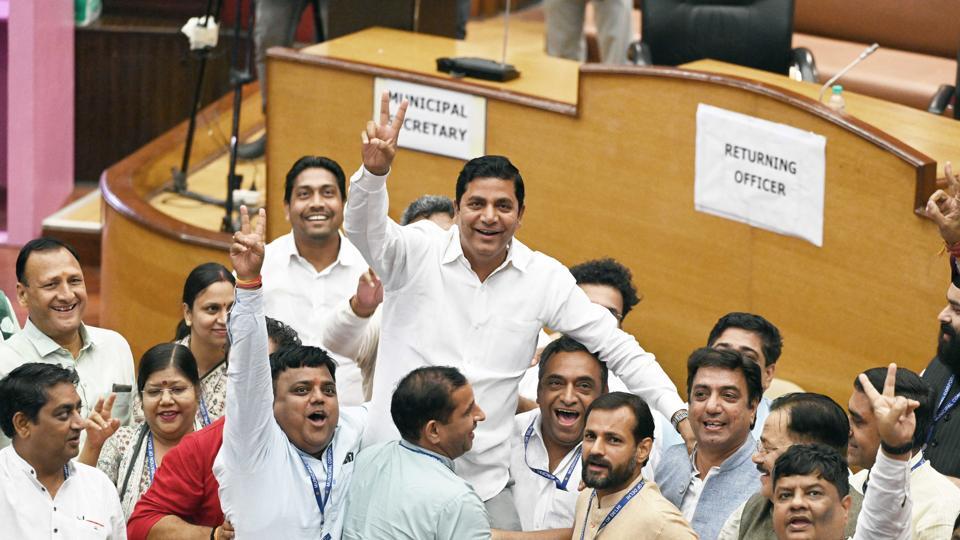
Officials and stakeholders said that the formation and functioning of the panel may still face some significant hurdles.
On Friday, mayor Shelly Oberoi, in a letter to commissioner Ashwani Kumar, argued that section 76 of the Delhi Municipal Corporation (DMC) Act states that the presiding officer of the polls has to be the mayor, or in her absence, the deputy mayor or other councillors. She added that as per section 74 and procedure regulations, members must be provided notice of 72 hours before the meeting.
A senior MCD official said that while there’s no dispute that the mayor has the aforementioned powers as per the DMC Act, but since she chose not to exercise them it allowed the LG to step in.
“Section 487 of the Act provides for the intervention of the Centre (through the LG) when a duty is not being performed by the municipal authority,” the official said.
But Oberoi still has a significant say on three critical steps ahead in the formation of the standing committee.
“The 18 members have been elected but the panel has not been formed. The mayor clears all proposals, which are put up in the House meeting. She may not agree to even put this proposal on the agenda to be taken up. Secondly, the AAP still has a majority in the house and the party may decide to reject the proposal,” the second official said.
Further, the official said, the process to hold the first standing committee meeting is likely to take another 15 days. “The commissioner will fix a date for the first meeting of the committee, but the mayor has the power to nominate a presiding officer. She may choose to not appoint one,” the official said.
However, the first MCD official said that in all scenarios — barring a directive by court — the LG can still deploy section 487 of the DMC Act to take the process forward. “The core argument for using section 487 remains the same. It has already been used twice this month,” he said.
Meanwhile, the BJP, anticipating the legal challenge, has already filed a contempt petition in the Supreme Court, accusing the AAP of violating the court’s August 5 order to immediately set up the panel