
 E-Paper



Delhi air improves, but history points to short reprieve
On Tuesday, blue skies were briefly visible during the day, as sunshine and winds of up to 15kmph helped disperse pollutants

 Prefer HTon Google


New Delhi
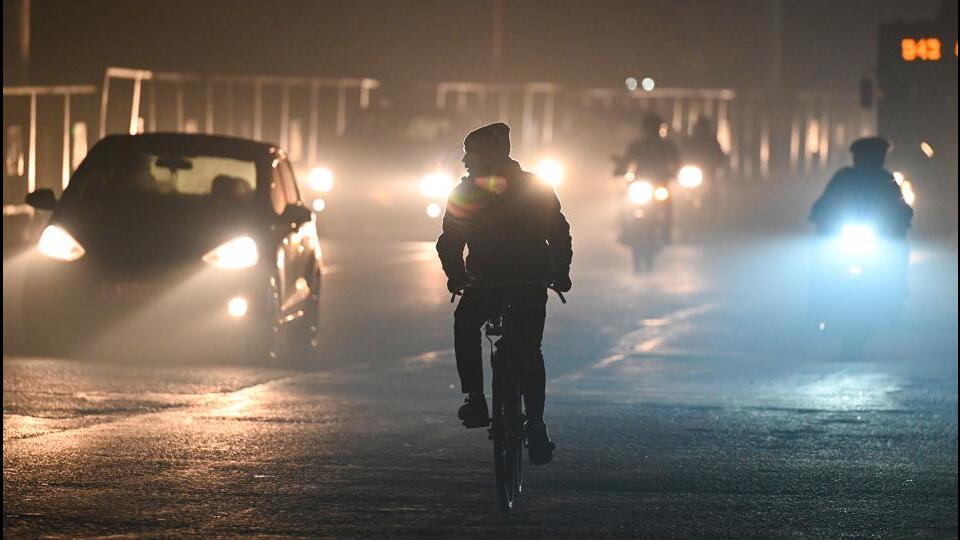
Strong surface winds came to Delhi’s aid on Tuesday, snapping a three-day streak of “severe” air and improving the air quality index to “very poor” level. However, analysis of long-term data shows that the worst may not yet be over, as further changes in meteorology and dipping temperatures are likely to worsen air quality by the month-end.
On Tuesday, blue skies were briefly visible during the day, as sunshine and winds of up to 15kmph helped disperse pollutants, which was in stark contrast to the day before, when dense fog and heavy pollution enveloped the city in a smog blanket, with AQI reeling at 427. Delhi’s 24-hour average AQI on Tuesday was 354 (“very poor”) at 4pm. By 7pm, it had improved further to 341, according to the Central Pollution Control Board (CPCB) data.
The Centre’s Air Quality Early Warning System (EWS) for Delhi forecasted that the air quality is unlikely to improve further and will remain “very poor” until December 19. “The outlook for the subsequent six days - from December 20 shows the AQI is likely to be between ‘very poor’ and the ‘severe’ category,” it said.
The CPCB classifies air quality as “moderate” when the AQI is between 101 and 200, “poor” between 201 and 300, and “very poor” between 301 and 400. Beyond 400, air quality is termed “severe”. For the purpose of Grap, 450+ is termed as “severe plus” with CPCB values not going beyond 500—a threshold already considered seriously dangerous by the pollution agency.
On Monday, at least 28 stations in Delhi showed the maximum reading of 500, while three station recorded the maximum reading on Sunday, when the AQI touched 461—Delhi’s second-worst December AQI ever. Overall, the Capital has now logged six “severe” air days this year.
On Tuesday, of the 39 active air quality monitoring stations in Delhi, only Mundka was in the “severe” category, with a reading of 407, while 35 stations recorded “very poor” readings and three recorded “poor” air.
At 280, IHBAS in Dilshad Garden recorded the best AQI on the day. In comparison, 28 stations were in severe condition on Monday.
“The AQI improved due to the strong westerly to northwesterly winds. The wind speed was around 15km/hr, briefly even going up to 20km/hr,” said Mahesh Palawat, vice president at Skymet, a private forecaster. “We expect consistent winds to blow until Friday, so further deterioration is unlikely. It may, in fact, improve further,” he said.
Worst not over yet
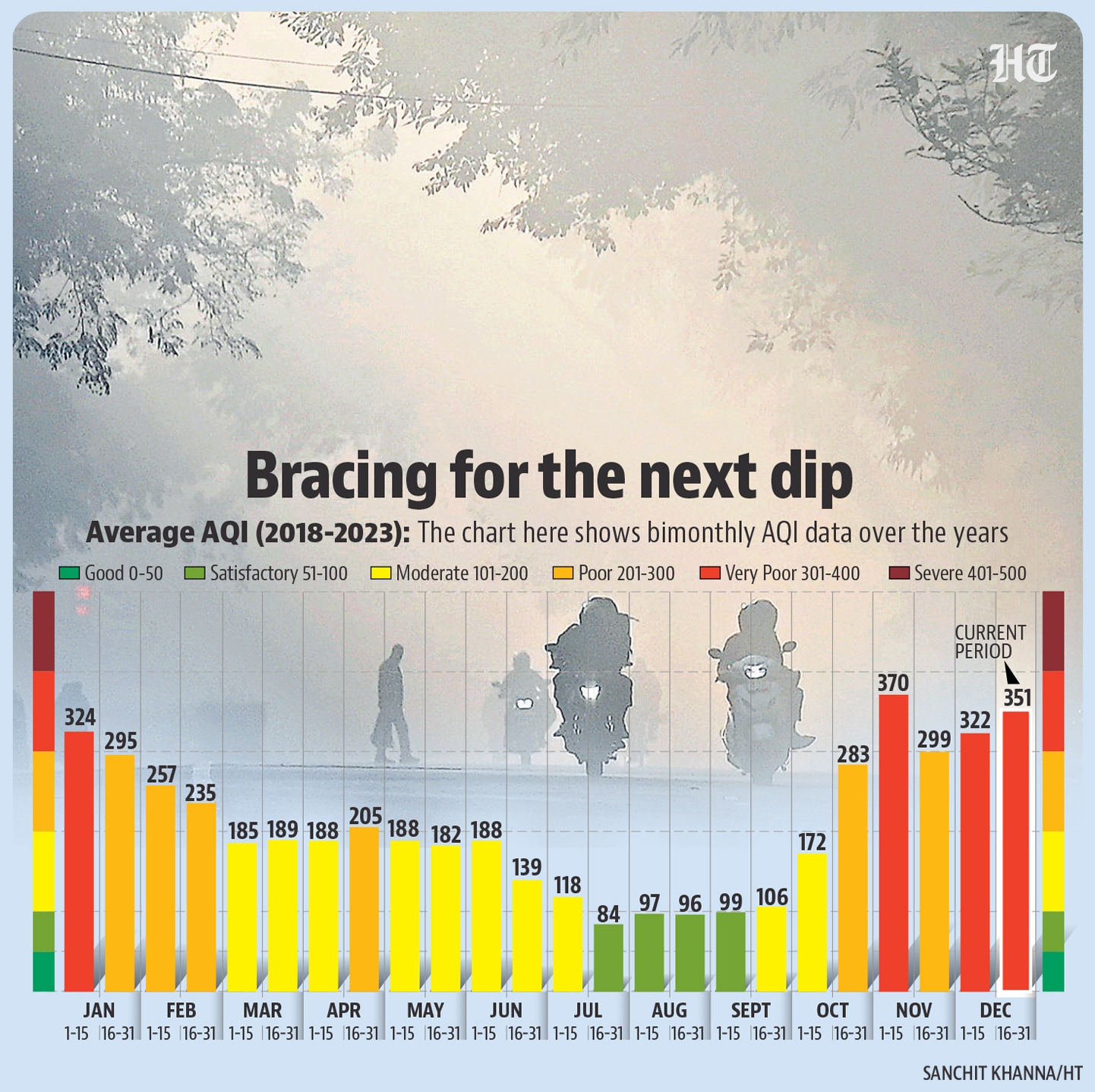
Long-term data show that Delhi typically sees a spike in pollution in December, towards the end of the month. This follows a significant spike in late October and early November. While the first peak typically coincides with stubble burning and Diwali, the second is driven by low temperatures, fog and local sources, such as vehicles and waste burning.
The Delhi Pollution Control Committee (DPCC), which assessed CPCB AQI for Delhi between 2018 and 2023, said the first half of November generally records the worst AQI, at an average of 370, while the second half of December records the second-worst spell, with an average AQI of 351.
“This is a natural phenomenon as low temperatures negatively impact air quality. They make the atmosphere more stable and lead to calm wind conditions. In late December and early January, we also see dense fog and the sun does not come out much. The local pollutants being released trap pollutants and again, in the absence of strong winds, ‘severe’ air days return,” said Dipankar Saha, former head of CPCB’s air laboratory.
An IIT Delhi study in 2019, analysing 15-year annual data for Delhi, showed a similar trend for the city’s air pollution. It found two prominent spikes in air pollution. While the first spike was seen from October 29 to November 4 and was largely attributed to stubble burning, a second spike — lower than the first — was recorded from December 31 to January 6. This, the study said, was largely down to open waste burning, low temperatures, and moderate to dense fog.
While in the first spell, the peak PM2.5 concentration breached 500 micrograms per cubic metre (µg/m3) — against a safe limit of 60µg/m3— the concentration during the second spell was around 350µg/m3.


Stay updated with all top Cities including, Bengaluru, Delhi, Mumbai and more across India. Stay informed on the latest happenings in World News along with Delhi Election 2025 and Delhi Election Result 2025 Live, New Delhi Election Result Live, Kalkaji Election Result Live at Hindustan Times.


