E-Paper



Delhi govt says power subsidy to continue till March 2025
Delhi cabinet extends power subsidy scheme till March 31, 2025. BJP demands subsidy for all consumers. Delhi govt pays ₹3,500 crore annually for the scheme.

 Prefer HTon Google


The Delhi cabinet on Thursday approved the extension of the power subsidy scheme for the financial year 2024-25. In a meeting chaired by chief minister Arvind Kejriwal, it was announced that the scheme would be in force till March 31, 2025, even as Kejriwal and power minister Atishi alleged the Opposition has made repeated attempts to derail the Aam Aadmi Party (AAP) government’s scheme.
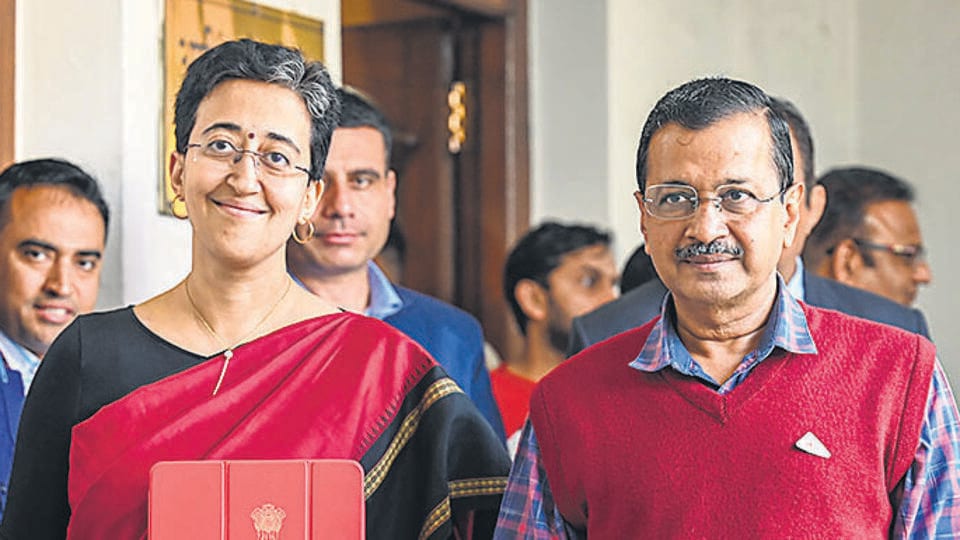
The Bharatiya Janata Party (BJP) refuted the claims and said it did not oppose the scheme. The party, however, reiterated its long-standing demand that both residential and commercial units should be able to avail the subsidy. Under the scheme, the Delhi government provides free electricity for a monthly consumption of up to 200 units. A 50% subsidy is also given where the consumption is between 201-400 units. The government pays ₹3,500 crore per annum for the power subsidy scheme. Commercial and industrial consumers have to pay ₹13 per unit in the Capital.
Kejriwal said that free electricity was available only in Delhi and Punjab. “In the rest of the country, there are long power cuts and electricity bills worth thousands of rupees have to be paid. This is possible (in Delhi and Punjab) because there is a government of honest and educated people in Delhi,” he said.
“I congratulate the people of Delhi that the 24-hour electricity with zero power cut and free electricity has been extended till March 31, 2025. This also includes free electricity for the lawyers’ chambers. Many people had apprehensions about the continuation of the electricity subsidy and whether they will get the benefits over next year or not... Let me tell you that these people tried their best to stop it. But your son got this work completed,” the chief minister posted on X.
In a briefing after the cabinet meeting, power minister Atishi said the AAP government has been fulfilling this promise for the past nine years. “Our opponents tried to ensure that Delhiites do not get zero power bills. Officers were threatened but since our government has committed to providing zero bills to consumers, we will ensure that they get it,” Atishi said.
‘Officers threatened’
She alleged that the “officers were being threatened that if they help in the implementation of AAP schemes, they will face vigilance, ED and CBI cases”.
The Delhi BJP dismissed the allegations. “The BJP has no opposition towards free electricity being given to residential consumers for up to 200 units a month. We welcome the extension of power subsidy through the exchequer. But we repeat our demand that all consumers, be it residential or commercial, should be given the first 200 units free of charge,” said Praveen Shankar Kapoor, BJP media head and spokesperson.
“The allegations are atrocious... on one hand the Delhi government claims to give 200 units free to a section of the society but on the other hand most commercial, industrial and even residential consumers are forced to buy electricity at the highest rates in North India. While industrial users of Delhi have to pay ₹13 per unit, their counterparts in Haryana pay a maximum of ₹8.5 per unit. Similarly, meter, load, and pension charges make Delhi electricity bills hefty,” said Delhi BJP secretary Harish Khurana.
While presenting the Delhi Budget on March 4, Atishi said Delhi has around 5.86 million domestic electricity consumers, out of which around 68.33% or 4.02 million domestic consumers availed the benefits of electricity subsidy. Out of these, over 2.2 million consumers also received zero bills. In 2023, around 3.41 crore zero electricity bills were issued to consumers.