
 E-Paper



Delhi govt to crack down on offices violating 50% WFH mandate under GRAP 4
Delhi CM Gupta also announced that the PUC challan regime would be made “more stringent” by “eliminating the scope for waivers”.

 Prefer HTon Google


The Delhi government on Monday warned of strict action against all offices failing to comply with the 50% work-from-home mandate under Stage 4 of the Graded Response Action Plan (GRAP). The directive is part of a renewed push to curb vehicular emissions and tighten enforcement against polluters, with a focus on WFH compliance and stricter Pollution Under Control (PUC) norms.
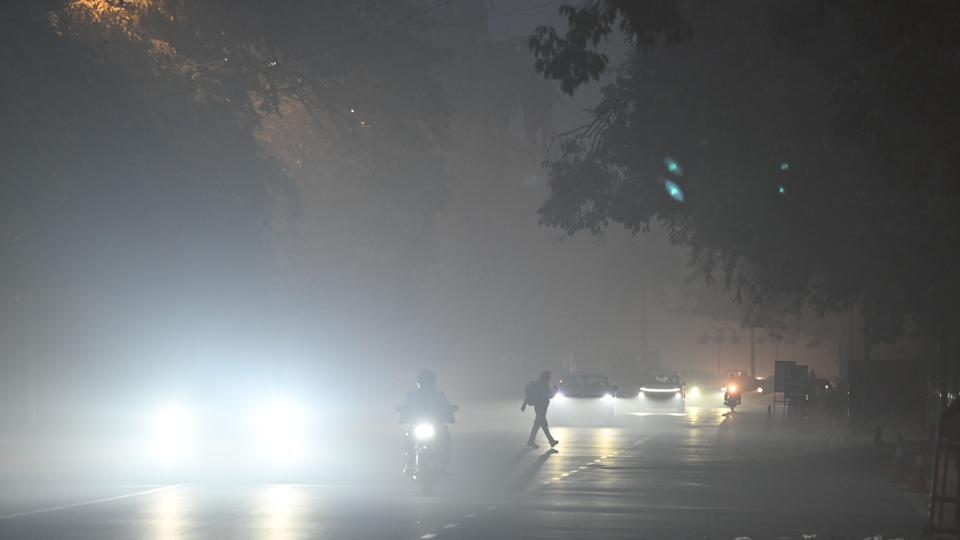
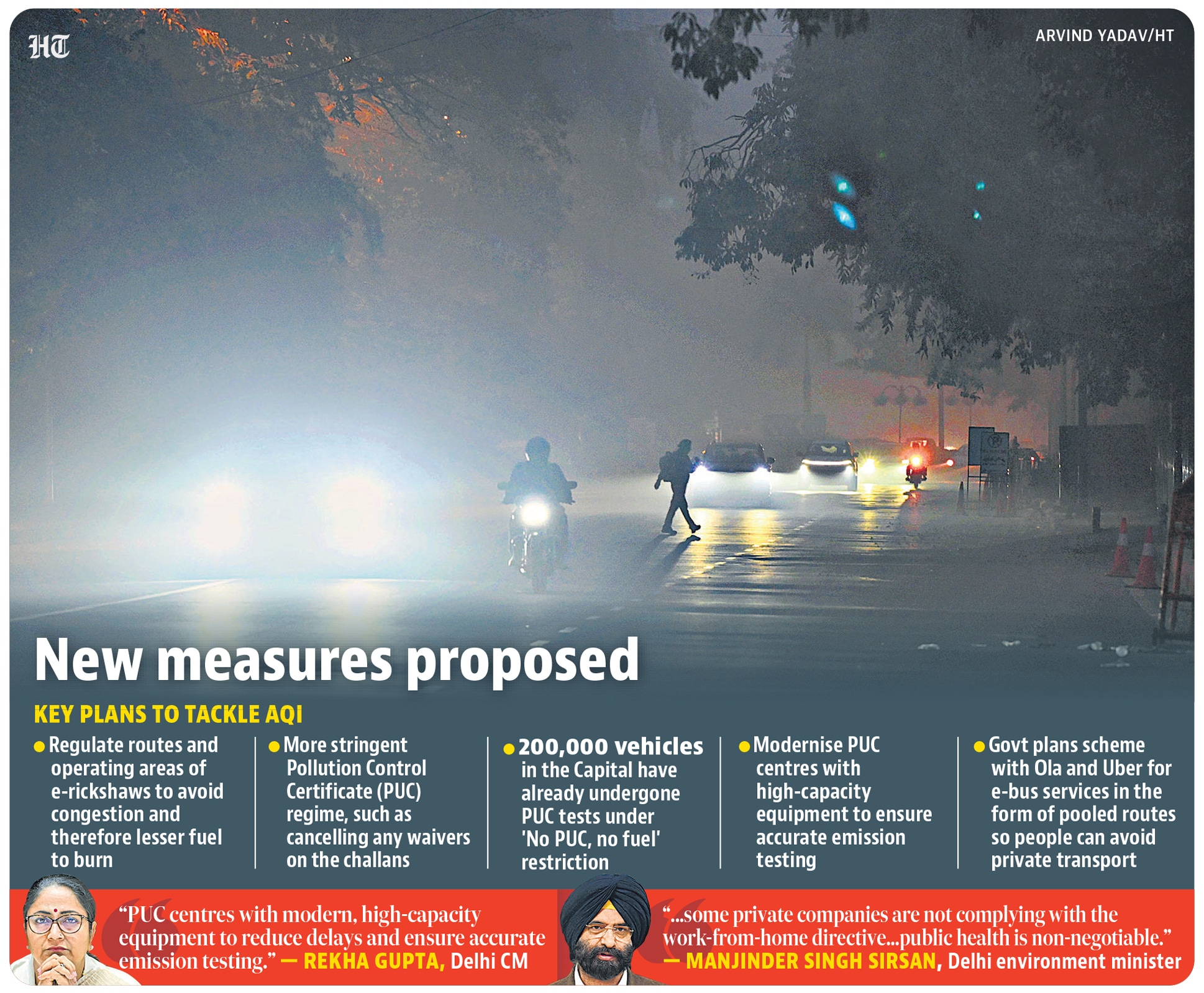
Delhi environment minister Manjinder Singh Sirsa emphasised a zero-tolerance approach toward pollution violations. “We have been made aware that some private companies are not complying with the work-from-home directive or the norm of operating with only 50% staff and strict action will be taken against such offices.Citizens’ convenience is important, but public health is non-negotiable. Everyone must adhere to pollution control directives,” Sirsa said on Monday.
Also Read | Dense fog blankets Delhi, Ghaziabad, Noida; visibility almost nil in some areas
The WFH mandate has been enforced twice this winter -- the first was a two-day period on November 25 and 26, while the second was enforced on December 18, and continues to be in place right now. However, enforcement has proven challenging, as offices remain open and authorities struggle to verify whether more than half of employees are working remotely on any given day. With traffic volumes refusing to dip significantly despite the order, the government has now signalled a tougher approach, warning that violations will invite legal action.
Also Read | AQI: E-rickshaw curbs among new quick fixes
The government has also sharpened its focus on vehicular pollution through tighter PUC enforcement. Sirsa said more than 200,000 vehicles have undergone PUC tests since the “No PUC, no fuel” rule came into effect last week. He added that thousands of vehicles were denied certificates during checks, which, according to the government, shows that enforcement is being taken seriously. Officials say transport department teams and traffic police have been instructed to intensify checks at fuel stations and on major corridors.
Also Read | 3 months of data on Yamuna water quality missing
Experts, however, say the enforcement and implementation of the plan is difficult. “It is also an issue of awareness and the turn-around time for implementation in private offices is sometimes too short. If we use the forecast mechanism and tell offices in advance that a poor spell is coming, and they are given two to three days’ time, then they will be better equipped to plan their rosters in advance,” said Sunil Dahiya, founder and lead analyst at Envirocatalyst.
He said that since a significant chunk of Delhi’s workforce was also travelling to Gurugram and Noida, a significant fall in traffic was not witnessed.
CM blames e-rickshaws for congestion
Chief minister Rekha Gupta, who on Monday chaired a high-level review meeting on pollution control with Sirsa and senior officials from the environment department, transport department, Delhi Pollution Control Committee and traffic police, announced a series of additional steps to curb congestion and emissions. A key concern flagged was the unchecked growth of e-rickshaws on city roads. Gupta said “uncontrolled e-rickshaws” were a major contributor to traffic snarls, which in turn lead to higher fuel consumption and emissions.
“To address this, the Delhi government will soon issue new e-rickshaw guidelines regulating operating areas and routes to ensure smoother traffic flow,” Gupta said, adding that better regulation would help reduce congestion-linked pollution.
Gupta also announced that the PUC challan regime would be made “more stringent” by “eliminating the scope for waivers”.
At present, polluting vehicles face fines of up to ₹10,000, but vehicle owners often approach Lok Adalats to get penalties reduced, diluting the deterrent effect.
“Henceforth, no pollution challan will be waived under any circumstances. We have directed officials to pursue all legal options, including approaching courts if required. Our objective is not revenue generation but ensuring clean and healthy air,” Gupta said.
To improve the credibility of PUC testing, Sirsa said all PUC centres would be upgraded with modern, high-capacity equipment to reduce delays and ensure accurate emission readings. A third-party inspection mechanism is also being introduced to strengthen transparency and curb malpractices.
The crackdown is not limited to vehicles. Sirsa warned that industrial units found violating air-pollution norms would be sealed immediately without further notice. Industries that fail to apply for mandatory environmental certifications by December 31 will also face legal action, he said, reiterating that public health would take precedence over convenience.
In a bid to reduce dependence on private vehicles, the government is also exploring partnerships with aggregator companies such as Ola and Uber to operate pooled electric or pollution-free buses across Delhi-NCR. Gupta said the Delhi Transport Corporation has been asked to rationalise bus routes and improve last-mile connectivity to encourage greater use of public transport.
Sirsa also took a swipe at the previous Delhi government, alleging mismanagement and technical failures, including issues with Automatic Number Plate Recognition cameras meant to aid enforcement.
“Those who ruled Delhi for ten years and left behind a legacy of pollution, mismanagement, and corruption now appear in the city only for photo opportunities and movie screenings. They have no moral authority to speak on Delhi’s environment when they abandon its people in crisis,” he said.
Hitting back, AAP Delhi state president Saurabh Bharadwaj said the minister did not know that traffic police high-speed cameras are installed by the Delhi Police, which functions under the Central Government and falls under the Union Home minister.
“This is the same person who, the moment he became a minister, announced that his government would not allow old vehicles to ply on Delhi’s roads and that they would not get petrol or diesel. After that, an order came from the Commission for Air Quality Management (CAQM), and chaos broke out in Delhi. He then blamed the previous governments for this as well and withdrew the order to remove vehicles from the roads. Now, once again, the CAQM has gone to the Supreme Court and restrictions on vehicles have been imposed.” he said.


Stay updated with all top Cities including, Bengaluru, Delhi, Mumbai and more across India. Stay informed on the latest happenings in World News along with Delhi Election 2025 and Delhi Election Result 2025 Live, New Delhi Election Result Live, Kalkaji Election Result Live at Hindustan Times.


