
 E-Paper



Delhi HC allows extraction of sperm of Army soldier in vegetative state, says earlier consent from him ‘valid’
The Delhi HC said that denying permission would effectively negate the husband’s original consent and defeat the very purpose of opting for the treatment.

 Prefer HTon Google


The Delhi High Court permitted the extraction and cryopreservation of sperm of an Indian Army soldier in a persistent vegetative state, holding that his prior consent to undergo IVF treatment with his wife amounted to valid consent under the law.
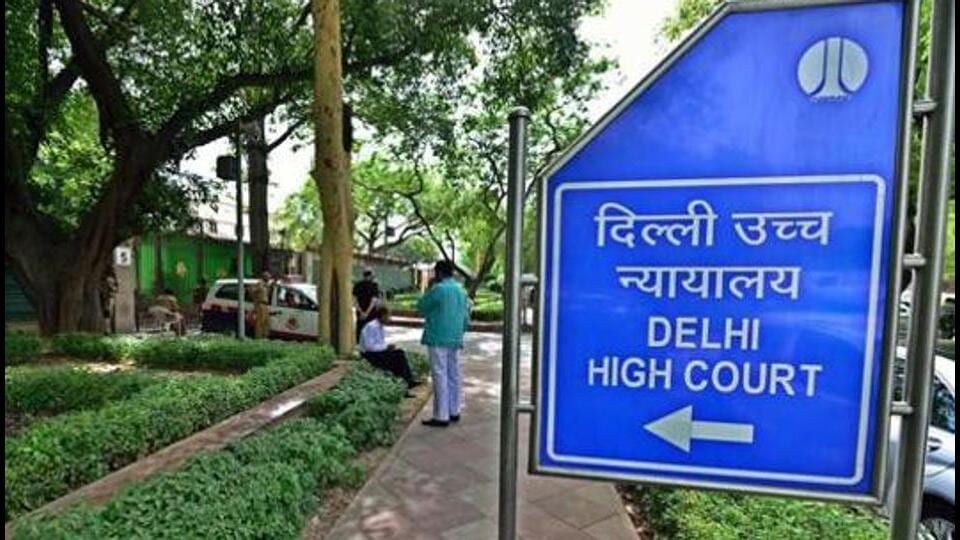
Citing “Srimad Bhagavatam”, a bench of justice Purushaindra Kumar Kaurav, in a verdict released on Wednesday, observed that the right to reproductive autonomy is a fundamental right and that the law— Assisted Reproductive Technology (Regulation) Act, 2021—must be interpreted in a manner that advances, rather than restricts, this right.
“Section 22 of the ART Act, thus, provides the mere procedure to address the broader, more fundamental problem, which is being faced by the citizens. It is trite law, that procedure is indeed the handmaiden of justice. Non-compliance with the bare, strict, text of a procedural provision, destroying the substantive intent of the legislation ought not to be countenanced. The right to reproductive autonomy, it must be remembered, is a fundamental right. The ART Act must be so interpreted which furthers the said right, and not derogates from it,” the bench said in its April 13 verdict.
ALSO READ | Delhi HC seeks Centre reply on pleas against transgender law amendments
It said, “Having considered the overall prospectus of facts and situation, it is directed that the petitioner’s husband action and his consent of joining the IVF treatment be treated to be sufficient compliance for the purposes of Section 22 of the ART Act. It is further directed that the petitioner’s consent be considered as valid consent for her husband for the purposes of IVF procedure, if the same is required for any other step/procedure.”
The court passed the order in a petition filed by the soldier’s wife seeking the extraction and cryopreservation of her husband’s sperm to undergo assisted reproductive technology (IVF), in furtherance of the couple’s mutual decision to conceive a child.
In the present case, the couple married in March 2017 and opted for IVF in June 2023. However, in July 2025, the husband, while posted at Dhoodhganga in Jammu and Kashmir, suffered a fall during patrol in an operational area, resulting in a severe traumatic brain injury that left him in a persistent vegetative state. In her petition, the woman contended that there was presently no reasonable likelihood or foreseeable scope of neurological recovery in the near future.
ALSO READ | Delhi HC asks Trimurti owner to not escalate dispute over song in Dhurandhar 2
The Centre’s counsel opposed the petition, contending that there was no “explicit written consent” from the man as required under Section 22 of the Assisted Reproductive Technology (Regulation) Act, 2021. The said provision, to be sure, bars the transfer of a cryopreserved human embryo without written consent. The counsel also referred to the opinion of the board of officers at Army Hospital, Delhi Cantonment, which stated that while surgical retrieval of sperm was technically feasible, the chances of obtaining viable sperm were minimal.
In its 10-page order, the court observed that the woman and her husband had voluntarily opted for IVF, had already undertaken procedures in furtherance of that decision and held that this clearly indicated the husband’s consent to undergo IVF.
ALSO READ | Delhi High Court refuses to stay trial in attempt to murder case linked to CM Rekha Gupta
It also noted that while the couple could not have anticipated the unfortunate incident in July 2025, and although there is presently no explicit expression of consent from the husband, it would be fair, reasonable, and just in the circumstances to permit the woman to carry forward the necessary procedures to complete the IVF. Denying such permission would effectively negate the husband’s original consent and defeat the very purpose of opting for the treatment, it said.
In October 2024, a coordinate bench had held that semen or ovum samples constitute the “property” or “estate” of an individual, and there can be no prohibition on their release, emphasising that such material forms part of a person’s biological substance, akin to a human body or its organs. Justice Prathiba M Singh had observed that under existing Indian law, there is no bar on posthumous reproduction, provided the consent of the sperm or egg owner can be established. However, this ruling has been challenged by the Centre before a division bench and is currently pending consideration.

Stay updated with all top Cities including, Bengaluru, Delhi, Mumbai and more across India. Stay informed on the latest happenings in World News along with Delhi Election 2025 and Delhi Election Result 2025 Live, New Delhi Election Result Live, Kalkaji Election Result Live at Hindustan Times.


