
 E-Paper



LG Saxena gives 11 reasons why Delhi got flooded; water minister hits back
The LG said the main reason for the flooding was that out of the 44-km portion of the Yamuna within Delhi, 22km has 18 major obstructions

 Prefer HTon Google


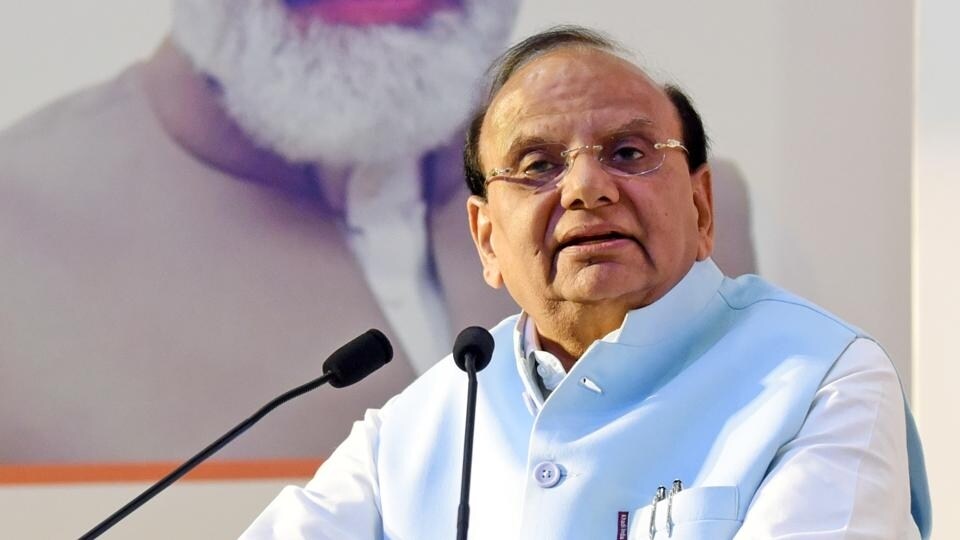
Lieutenant governor (LG) VK Saxena has, in a letter to chief minister Arvind Kejriwal, listed 11 reasons that caused the recent floods in Delhi, blaming government departments for lack of regular desilting and causing obstructions on the Yamuna -- claims that were dismissed by the Aam Aadmi Party government later in the day.
Read here: Statehood main issue in next Delhi polls: Arvind Kejriwal
In the 13-page letter, Saxena suggested a single nodal agency be made for the upkeep of the river, all pumping installations at regulator locations be given to a single department, and two agencies — the CPWD and PWD — work together to ensure hassle-free drainage from Rajghat and Samadhi Complex, which were “embarrassingly inundated” last month.
In a 7-point rebuttal, the Delhi water, irrigation and flood control minister Saurabh Bhardwaj said the problems in the Yamuna occurred due to Saxena’s decision to implement “an innovative method” to desilt drains, which deposited huge quantities of silt in the river, and that there were projects under the LG that were being carried out without any details being shared with the elected administration.
“The LG ignored that Haryana government has already accepted that their engineers did not maintain the ITO barrage and have suspended their chief engineer,” Bhardwaj’s response stated, adding that head of the irrigation and flood control department hit the fact that the gate at the ITO barrage was jammed.
“[IT] would be interesting to see if Hon’ble LG would initiate any action against the officer,” the response stated.
The LG said the main reason for the flooding was that out of the 44-km portion of the Yamuna within Delhi, 22km — from Wazirabad to Okhla — has 18 major obstructions, impeding the flow of water.
“Of the 44km of Yamuna in Delhi, 22km from Palla to Wazirabad is free of any obstruction in the form of bridges, flyovers, roadways or metro ways. However, the next 22km upto Okhla has 18 major obstructions, resulting in impeding the free flow of water,” the LG wrote.
The Delhi flood had brought into sharp focus the Hathnikund barrage, upstream on the Haryana-UP border, through which the flow of water of the Yamuna is regulated, with the Aam Aadmi Party even alleging it was deliberately mismanaged to inundate the Capital.
However, the letter said that higher volumes of water were previously discharged from the barrage but did not lead to a flood. “The highest recorded discharge of 8.28 lakh cusec was in 2019, which resulted in the water level in Yamuna at the Old Railway Bridge (ORB) touching the 206.6-metre mark, whereas, the discharge this year was only 3.59 lakh cusec, and yet the water level reached a record level of 208.66 metre at the ORB,” it said.
The letter said that in 1978 and 2010, when Delhi got flooded, the quantity of water released from Hathnikund was much higher.
Read here: Delhi assembly discusses CAG report, AAP demands probe
In the letter, Saxena suggested 11 short-term and six long-term measures to avoid a similar disaster in future. The short-term measures included assigning permanent ownership of the river stream to one department, on the lines of the DDA being the exclusive owner of the Yamuna floodplain.
“The long-pending Drainage Master Plan of the City, with detailed study of the drains, requirement of additional regulators and detailed drainage and siltation patterns, needs to be put in place at the earliest.”


