
 E-Paper



DJB floats tender to check sewage flow into Barapullah drain
The Delhi Jal Board has tendered a project to measure sewage flow into the Barapullah drain, addressing ongoing waterlogging issues in South Delhi.


The Delhi Jal Board (DJB) on Tuesday has informed the National Green Tribunal (NGT) that it has floated a tender to measure the flow of sewage entering drains connected to the Barapullah drain. Officials said necessary interventions will be carried out based on the findings.
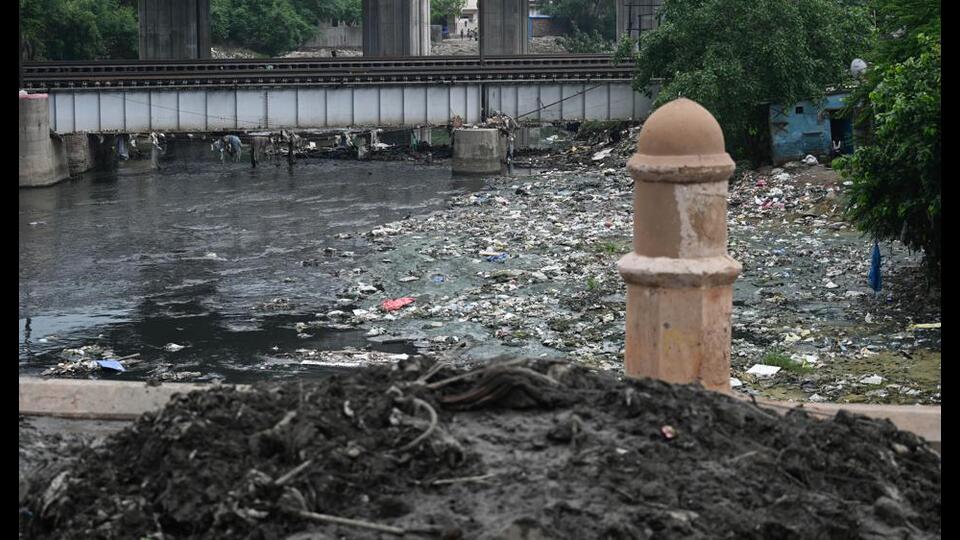
In a status report submitted to the tribunal on February 2, and uploaded on March 9, DJB said that large volumes of sewage are still flowing into supplementary drains from informal settlements. It added that it has not yet received a solution or action plan from the Delhi Urban Shelter Improvement Board (DUSIB) despite sending several letters.
“The Delhi Jal Board has initiated the process for installing flow measurement systems on major drains… and a tender has been floated for this purpose,” the report, stated, adding that the study will help authorities determine the quantity of sewage entering the drains, plan interception and treatment measures.
The NGT is hearing petitions, including one filed by the Nizamuddin West Residents’ Welfare Association (RWA) on 2021, seeking steps to clean the Barapullah drain and its subsidiary drains. Residents have alleged that several parts of South Delhi faced waterlogging during the monsoon due to the lack of desilting of these drains.
In an earlier submission last week, DJB told the tribunal that most sewage flowing into the Barapullah drain will stop before the upcoming monsoon. It said 40 of the 43 supplementary drains connected to the Barapullah are expected to be trapped and linked to sewage treatment plants (STPs) by June 30 this year.
For the remaining three drains, DJB said two are long-term projects expected to be completed by 2028, while discussions are ongoing with the New Delhi Municipal Council (NDMC) regarding the third. The February 2 report also stated that 10 JJ clusters were identified around the Barapullah basin. While sewage from two clusters has already been trapped, solutions for the remaining eight clusters are still being examined.
According to the submission, a joint survey conducted by DJB and DUSIB officials on November 27, found that DUSIB could not provide sewer connections from the JJ clusters to a single discharge point for further trapping into the DJB sewer network. As a result, DJB said it may consider decentralised STPs as an alternative solution.
DJB added that it had written to DUSIB multiple times on September 1, October 24, November 17, December 18 and recently on January 5. “Despite earlier correspondence and the joint survey, DUSIB has not provided an effective action plan. DJB has consistently reiterated that DUSIB must intercept JJ cluster sewage at single discharge points to enable DJB to connect it to its sewer network,” added DJB.


Stay updated with all top Cities including, Bengaluru, Delhi, Mumbai and more across India. Stay informed on the latest happenings in World News along with Delhi Election 2025 and Delhi Election Result 2025 Live, New Delhi Election Result Live, Kalkaji Election Result Live at Hindustan Times.


