E-Paper



DSS resumes sourcing data for pollution ahead of winter spike
According to DSS data, pollution from neighbouring NCR towns, particularly Faridabad, is expected to further impact Delhi’s air quality

 Prefer HTon Google


Delhi’s local sources of pollution, particularly vehicular emissions, dominated the city’s air quality on Monday, contributing approximately 16% of the total pollution load, according to data from the Centre’s Decision Support System. DSS, which resumed operations ahead of winter, estimates contributions from various pollution sources based on meteorological conditions and a long-term emissions inventory.
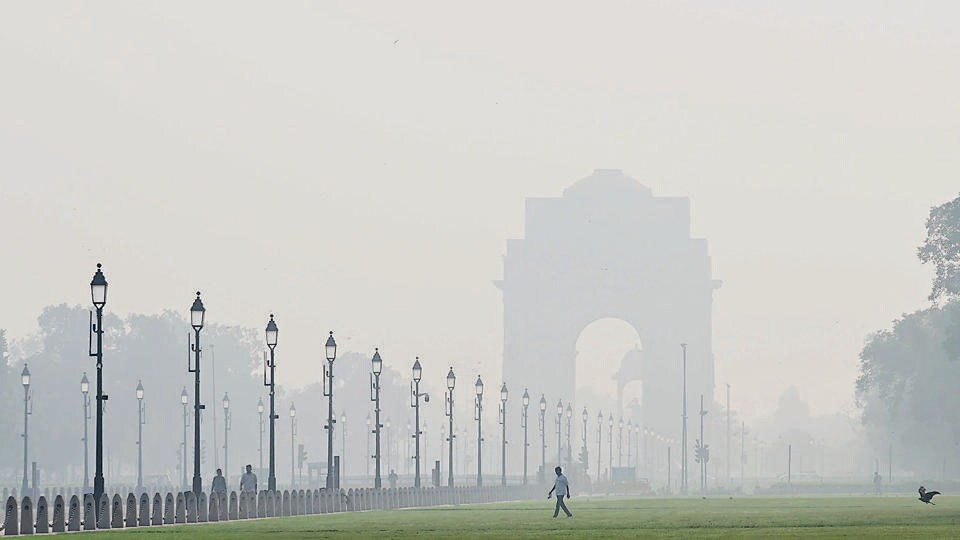
Despite the detection of farm fires in Punjab and Haryana on satellite imagery, DSS estimated the contribution of stubble burning to Delhi’s air quality to be zero on Monday and forecast the same for Tuesday. The contribution of vehicular emissions is expected to slightly drop to 13.4% on Tuesday.
Delhi’s air quality, which stood at an average AQI of 167 (moderate) on Monday, saw a marginal rise from Sunday’s AQI of 164.
Launched in 2021, the DSS, managed by the Indian Institute of Tropical Meteorology (IITM) under the Union ministry of earth sciences, resumed operations after being paused during the summer when pollution levels were lower. The system estimates pollution contributions and assists pollution control bodies like the Delhi Pollution Control Committee (DPCC), the Central Pollution Control Board (CPCB), and the Commission for Air Quality Management (CAQM) in taking corrective actions.
According to DSS data, pollution from neighbouring National Capital Region (NCR) towns, particularly Faridabad, is expected to further impact Delhi’s air quality. Faridabad’s emissions are projected to contribute around 10% to the pollution load on Tuesday, followed by Gurugram (8.2%) and Gautam Buddha Nagar (6%). On Monday, emissions from these three towns contributed 6.5%, 9.2%, and 5%, respectively.
Among local sources in Delhi, the residential sector was the second-largest contributor after vehicular emissions, accounting for around 4% of the pollution on Monday, with an expected contribution of roughly 3.4% on Tuesday.
Officials highlighted that this year’s emissions inventory, a long-term database of pollution sources, has been updated for greater accuracy. “Till last year, the emissions inventory was from 2018. This means the estimated contribution will be more accurate this year,” said an official involved with DSS. To be sure, DSS does not provide real-time pollution data, only estimates.
Although DSS assists in managing pollution sources, the DPCC’s real-time source apportionment study, which was previously conducted by IIT Kanpur, has been delayed. A DPCC official said that they are currently revamping the methodology of data collection and are in search of a new expert institute to run the study. “Thus, resumption of the study may take time,” the official added.
In preparation for worsening air quality, Delhi’s environment minister Gopal Rai announced that the Delhi government will release its 21-point Winter Action Plan against pollution on September 25. The plan will focus on real-time data, action on pollution hotspots, coordination with neighbouring states, and steps to curb stubble burning.
Anumita Roychowdhury, executive director, of research and advocacy at the Centre for Science and Environment (CSE) said the wind direction is easterly at present, which will only transition to westerly-northwesterly when the monsoon withdraws. “Right now, we have limited cases, and the wind direction is towards Punjab and Haryana. We start to see a spike in contribution towards mid-October, with cases and the contribution generally highest in the last week of October and the first week of November,” she said, stating there is still substantial time to act on farm fire cases.
Last year, DSS showed the highest stubble burning contribution was around 35% on November 3.
Delhi’s AQI, currently in moderate, often spikes to ‘severe’ – an AQI of over 400 by late October and early November, generally aided by low temperature, high stubble burning cases and local emissions, including possible bursting of firecrackers around Diwali.