
 E-Paper



In test-track-treat plan, Capital to focus on areas with low exposure
At 716, the city on Friday recorded its highest number of cases in a single day this year. The increase in cases began sporadically early in March but have now turned into a steady trickle, rising from 368 new cases on Monday.

 Prefer HTon Google


Parts of Delhi that did not have a significant outbreak of Covid-19 till now are being targeted for aggressive testing and vaccination, while grassroots workers have stepped up contact tracing, officials involved in the Capital’s fight against a new surge of cases have said, outlining an approach that combines strategic allocation of resources with shoe leather epidemiology.
At 716, the city on Friday recorded its highest number of cases in a single day this year. The increase in cases began sporadically early in March but have now turned into a steady trickle, rising from 368 new cases on Monday.
As per the new strategy, finalised during a meeting chaired by chief minister Arvind Kejriwal on Thursday, wards that had a sero prevalence of 50% or less are being targeted for testing and vaccination, senior officials aware of the plan said, asking not to be named.
“Of the 276 wards in Delhi, including four from the New Delhi Municipal Council and the Delhi cantonment board, the government is narrowing down its focus to 129. These are where prevalence of antibodies among residents was 50% or less, which means people here are most vulnerable to Covid-19 infection. So, we are intensifying vaccination and aggressively conducting RT-PCR tests in these wards,” said a senior health official, who asked not to be named.
The list includes areas such as Tagore Garden, Trilokpuri, Rajouri Garden, Narela and Vishnu Garden. The data being used by the government is that of the fifth serological survey conducted across the Capital between January 15 and January 23. The survey found as many as 56.13% of the 28,000 people sampled to have antibodies, which indicates a past infection.
Delhi has a population of 20 million.
In these wards, the officials are pinpointing their attention to zones that did not report a surge in cases during the three waves of the Covid-19 outbreak. At its worst, Delhi recorded 8,593 cases on November 11, which was the third wave.
“Districts such as north and northwest Delhi on Friday informed the government that they have observed an uptick in cases in a few areas which did not see many cases during the third wave. So, this is where our latest containment strategy is also being rolled out,” said a second government official, asking not to be named.
Micro-containment Zones
At least 360 micro-containment zones – out of the total 682 active ones as on Friday – have been created since March 1. Data seen by HT showed that as on Friday, a record 60.56% of the 3,165 active cases were contained or inside containment zones. Till March 15, this number stood at around 54%. During the November peak, only around 34% of the active cases were located inside containment zones.
Micro-containment zones are limited to one or a few neighbouring houses, single-unit buildings and floors within buildings in some cases depending on space and risks of potential transmission.
Contact tracing
The government is currently tracing around 31 individuals per Covid-19 case, revenue department records show. Among the 11 revenue districts, East Delhi is tracing the highest per case (around 36), closely trailed in decimal figures by the south district. With 28 contacts per case, southwest Delhi is tracing the lowest, the data, seen by HT, showed.
“We have made a strict protocol in which identified contacts of a Covid-19 patient are asked to immediately go into home isolation. The new thing that we are doing now is that even if any of them test negative despite having symptoms, we test them again after 8 days. This means such persons have to be under strict home isolation even after getting treated and testing negative for the first time,” the health official said.
The Union health ministry sets the maximum ideal contact tracing standard at 30 per case.
Vaccination
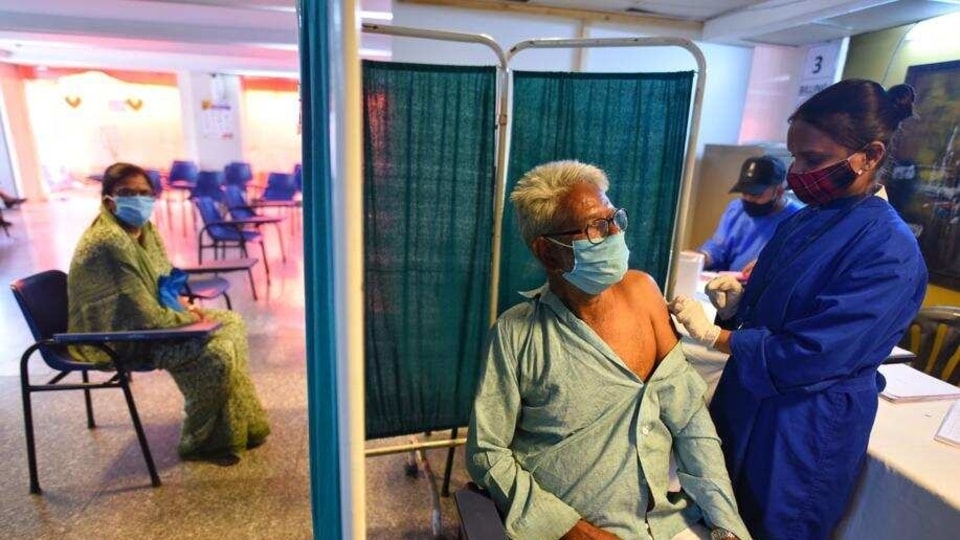
On Thursday, Kejriwal announced the city administration will increase Delhi’s daily capacity from around 40,000 to 125,000 by doubling the number of centres from the existing 500 session sites, and extending their timing by four hours.
Documents seen by HT showed that the target to increase the daily vaccination capacity in government centres has been set at 70,000, almost double the current capacity. Private hospitals have been given a target to increase from around 23,000 to 40,000.
From Monday, all vaccination centres will operate from 9am to 9pm and all Delhi government hospitals will have at least 6 centres each.
District teams have fanned out across the Capital in a bid to convince people aged above 60 and those over 45 with serious illnesses to get inoculated. A senior government official said the teams have also been entrusted with helping people register and book vaccine slots through the Centre’s Co-WIN system and arrange conveyance for them if required.
Testing
For the week ending Friday, Delhi tested 73,333 samples per day – which is lower than the peak of 83,151 average tests a day exhibited by the government for the week ending December 23, a month after the city brought its third Covid-19 wave under control.
“On testing, strict directions have been issued not to decrease Delhi’s total daily Covid-19 tests below the 80,000 mark from now on. Also, our RT-PCR testing capacity is 48,000 and we utilising it,” a third official said.
In the last one week, Delhi conducted 45,471 RT-PCR tests on an average every day. The remaining were with rapid antigen kits which are capable of showing results much quicker, but are less accurate than RT-PCR ones.
Dr Suneela Garg, director professor of community medicines department, Maulana Azad Medical College in Delhi and member of the Lancet Covid-19 commission and vaccination task force for India, said: “Delhi should go for a strong containment policy and club that with aggressive tracing, testing and isolation. The government should not only aggressively identify contacts of Covid-19 cases, but ensure that they are all tested and isolated on being diagnosed Covid-19 positive.
“Delhi has a large number of people who were not infected in the worst of the phases we have seen in 2020. Also, another large chunk of people are the ones whose antibodies have depleted. That is contributing to the present spike.”


