
 E-Paper



JNU report cites governance issues, decline in marginalised students
JNUTA finds over 40% faculty posts left vacant as “no suitable candidate” and warns that leadership centralisation is eroding the university’s academic character.

 Prefer HTon Google


The Jawaharlal Nehru University Teachers’ Association (JNUTA) has released a report titled “JNU: The State of the University”, highlighting a governance crisis, declining representation of Scheduled Caste (SC) and Scheduled Tribe (ST) students, and irregularities in faculty appointments and promotions.
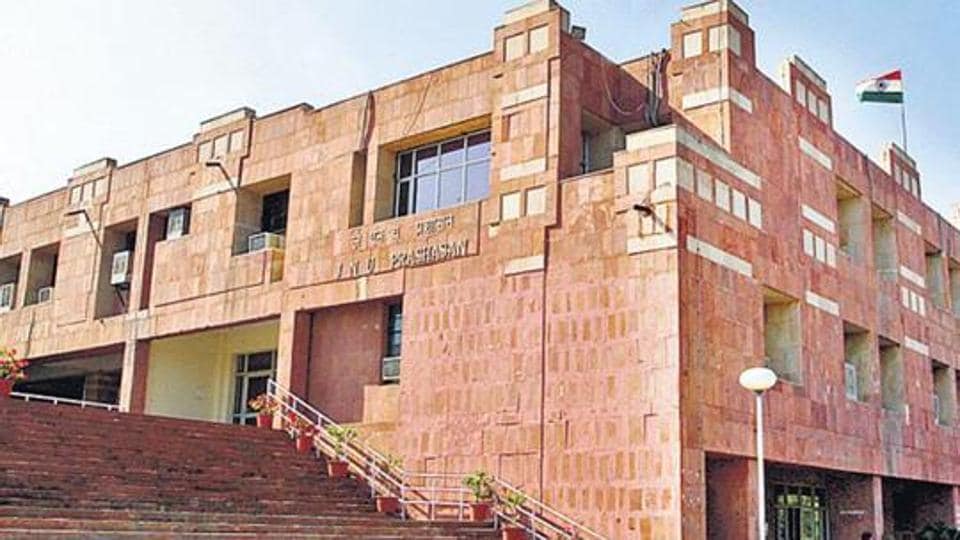
The report, dated October 7, is an updated version of its September 2023 edition and states, “In the last decade, the terms ‘governance’ and ‘leadership’ have been turned on their heads to acquire rather ominous meanings…. From being a ‘public’ institution in which the quest for knowledge and learning in all its dimensions thrives through the lives of its students and faculty, the University has been steadily pushed in the direction of being reduced to being an expression of the Vice Chancellor’s persona.”
Among the major concerns raised is the “elimination of a long-standing system of rotation by order of seniority” in appointing chairpersons and deans. “The practice of discretionary appointments… continues to be operational in JNU,” the report notes, adding that this has led to repeated reappointments and the bypassing of eligible professors.
It also flags the “progressive slowing down” of the promotion process despite a significant backlog. On faculty recruitment, the report reveals that of 326 vacancies for which selection committees were held between February 2022 and August 2025, candidates were recommended for only 184. “No suitable candidate” was declared in 133 cases, over 40%, even when qualified internal faculty had applied.
Between 2021–22 and 2024–25, the number of SC students dropped from 1,500 to 1,143 and ST students from 741 to 545, reducing their shares to 14.3% and 6.8%, respectively, below reservation norms. The number of research students also fell from 5,432 in 2016–17 to under 3,286 in 2024–25.
According to JNUTA, academic expenditures have dropped from ₹38.37 crore in 2017–18 to ₹19.29 crore in 2024–25, after peaking at ₹22.37 crore in 2009–10, with cuts across laboratories, fieldwork, seminars, and publications.
JNU vice chancellor Santishree Dhulipudi Pandit declined to comment on the JNUTA report, and said that “the accusations made in the report are baseless”.

Stay updated with all top Cities including, Bengaluru, Delhi, Mumbai and more across India. Stay informed on the latest happenings in World News along with Delhi Election 2025 and Delhi Election Result 2025 Live, New Delhi Election Result Live, Kalkaji Election Result Live at Hindustan Times.


