
 E-Paper



LG wants 10,000 sandalwood trees in Delhi, experts say ill-advised move
The LG issued these directions after visiting the Sunder Nursery on Sunday, recounting his experiences of planting the same trees in different locations in Nasik, Varanasi and Gandhi Nagar, as well as in Delhi, during his previous stint as chairman of the KVIC.

 Prefer HTon Google


Delhi lieutenant governor VK Saxena on Sunday directed all agencies that maintain parks, gardens, have large tracts of lands and those involved in horticultural activities to plant a total of 10,000 sandalwood trees across the city.
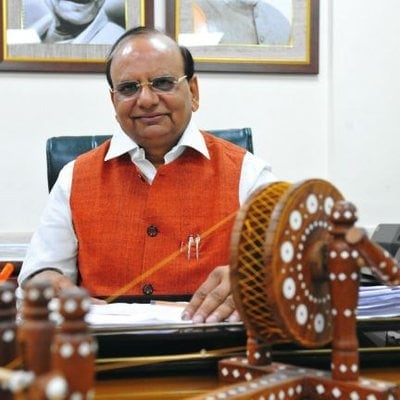
The LG added that the plantation should be done during the ongoing monsoon.
The LG issued these directions after visiting the Sunder Nursery on Sunday, recounting his experiences of planting the same trees in different locations in Nasik, Varanasi and Gandhi Nagar, as well as in Delhi, during his previous stint as chairman of the Khadi and Village Industries Commission (KVIC).
“Contrary to belief that these trees cannot come up in climatic conditions present in Delhi and other locations across the country, all these trees, including the ones that were planted at Rajghat in Delhi, had in just a year not only survived, but had grown to a height of 9-10 feet,” he added.
The LG also appealed to farmers and small land holders across the city, asking them to plant at least four sandalwood trees, stating the often resource-deficient farmers could easily depend on two of those trees for the education of their children, while the remaining two could be utilised for aiding their future careers.
“Plantation of Sandalwood, apart from adding to the floral diversity of the capital and enriching the general environment, will lead to monetization of government land and create immense financial assets for the land owing agencies and farmers or land-holders in the city,” said Saxena on Sunday, stating a sandalwood tree matures in 12 to 15 years and as per the current rates, sells at ₹12-15 lakh each. “At this rate, 10,000 sandalwood trees are estimated to fetch between ₹12,000-R15,000 crores upon maturity,” he added.
However, experts sandalwood trees are not native to Delhi and while they may grow when planted, they will not be able to provide the kind of economic benefits, as associated with the project. The tree requires a well-drained soil, high rainfall, conditions that experts say are not generally available in Delhi.
Environmentalist Pradip Krishen, who is also the author of the Book ‘Trees of Delhi’, said the move is ill-advised, as sandalwood trees can neither grow in an Aravalli landscape, nor in the Yamuna belt. “The tree is a semi-parasite by nature, meaning it relies on other trees or plants nearby for its nutrients. It is also not native to Delhi and may simply not be able to grow like it does in other places, where conditions are more suitable to it,” he said.
According to LG, the exercise will monetise available land resources and create assets for self-sustainability, including the generation of employment from sandalwood, sandalwood oil and the perfume industry, which relies on imports of large quantities of oil and powder derived from the tree.


