E-Paper



PWD drops Minto Bridge from its list of Delhi’s waterlogging hot spots
Officials are confident that the pumps installed on the the road under the Minto Bridge will help keep it clear this Monsoon

 Prefer HTon Google


The Public Works Department (PWD) has dropped the road under the Minto Bridge — a spot infamous for being a trap for buses during heavy rain — from its list of waterlogging hot spots in the Capital, senior officials aware of the development said on Wednesday, confident that the pumps they installed will help keep the road clear.
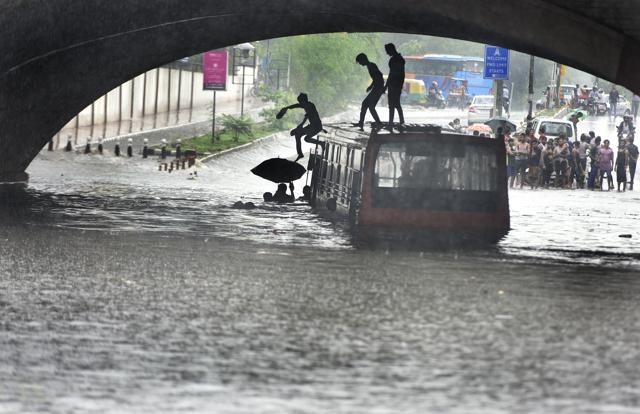
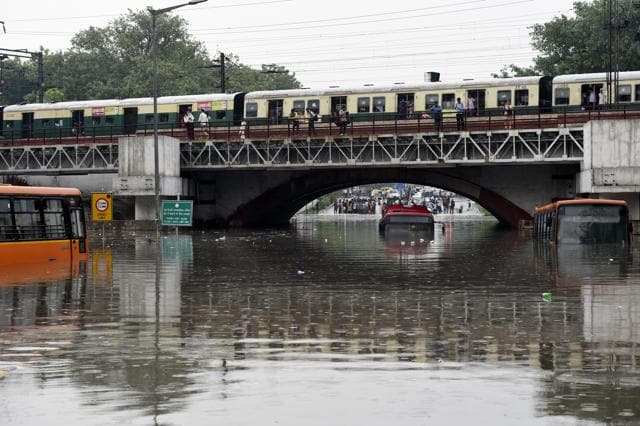
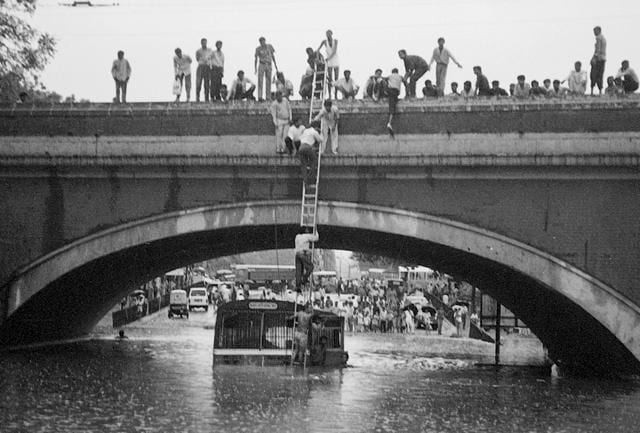
The problem at the spot, near Connaught Place, dates back to at least 1958. It became such a sticky issue that PWD put the area under 24-hour CCTV surveillance throughout monsoon. In 2020, a man whose vehicle was stuck in the waters drowned.
Officials said that as of now, no further interventions are required.
“We call an area a waterlogging hot spot if it gets inundated during five consecutive rain spells. However, Minto Bridge has not seen waterlogging during the last five rain spells and has been removed from the list,” said a senior PWD official, asking not to be named, attributing the improvement to new pumps and drainage lines.
“We will use similar engineering solutions in other areas, and have already started work to ensure minimum waterlogging there too.”
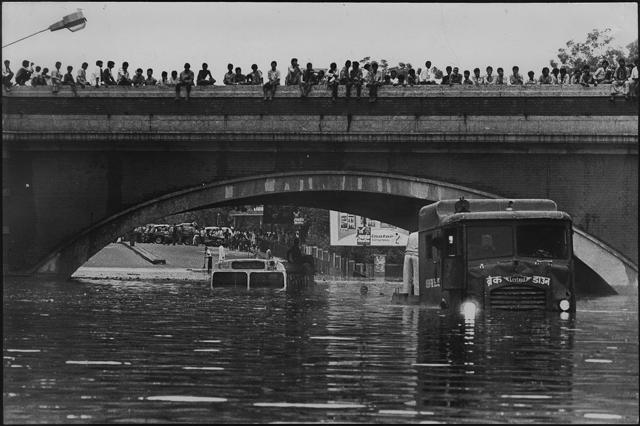
The Minto Bridge stretch lies at the key traffic junction of Deen Dayal Upadhyaya (DDU) Marg and Swami Vivekananda Marg (formerly Minto Road) and leads to Connaught Place on one side and New Delhi railway station, Old Delhi and Darya Ganj on the other.
The PWD official, who asked not to be named, said that over the next three months, these hot spots will be monitored round the clock through CCTV cameras, and various interventions such as automated pumps, water level alarms, and drainage lines have been planned by the department.
For decades, Minto Bridge was synonymous with the Capital’s waterlogging problems.
Before the 2020 fatal accident, in July 2018, two DTC buses got submerged at the spot during the monsoon, and 10 people were rescued after efforts by the fire department and police.
However, simple interventions — both human and technological — helped ensure that there was no waterlogging reported for the first time in 2022.
PWD officials said that apart from the existing drain at Minto Bridge, a new drainage line has been introduced to increase the speed of the water outflow. An automatic pump has also been installed to start clearing water as soon as it hits a particular level.
They added that the department has also been monitoring the operation of the pumps at the bridge using Supervisory Control and Data Acquisition (SCADA) software — a real-time monitoring, supervision and control system from a remote physical location.
The department has also installed a water level alarm system to alert pump operators. “Sometimes, the automated pumps can malfunction and need to be manually switched on. If there is sudden heavy rainfall or when the pump operator is not around, the alarm will turn on as soon as the water level rises. This is to ensure that there is no delay,” the official quoted above said.
Additionally, the mechanised cleaning of streets ensures garbage does not clog up the drain, he added.
A two-km stretch of the Ring Road near the World Health Organization building used to be a waterlogging hot spot, but PWD has now raised the entire saucer-shaped carriageway by 350-450mm and the stretch is now off the list. Additionally, a 650m-long drainage line was created to dispose of storm water directly into the Yamuna. A sump with capacity of 500,000 litres was also created for quick discharge, and back-up pumping arrangements are also in place.
Last week, PWD minister Atishi, urban development minister Saurabh Bharadwaj and deputy MCD mayor Aaley Mohammed Iqbal held a joint review meeting to assess the waterlogging situation across Delhi and discussed potential solutions.
At the meeting, Atishi said, “We are committed to ensuring that the people of Delhi have a hassle-free monsoon season. Our departments are working round-the-clock to ensure that drainage systems are cleaned and repaired beforehand.”