
 E-Paper



Delhi: NDMC to notify new solar policy soon
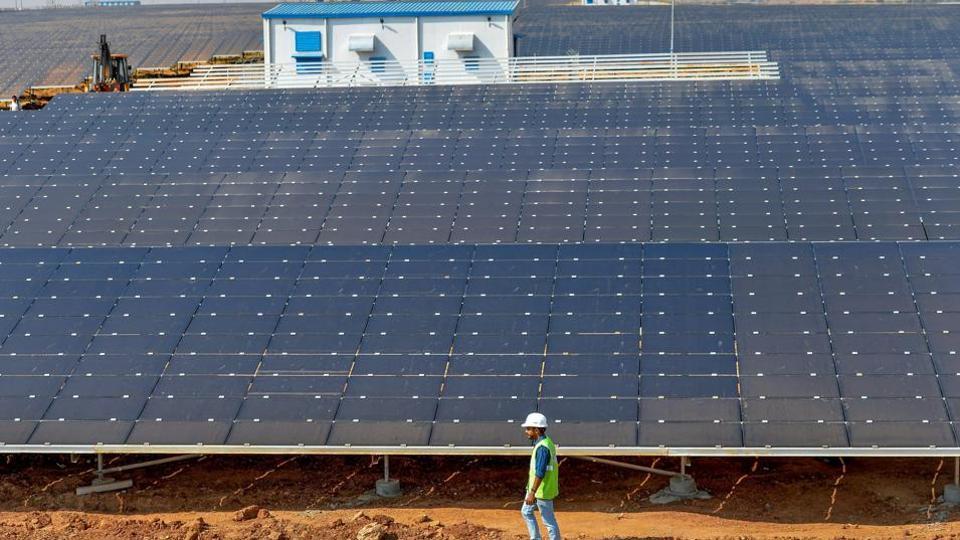
Under the new policy, it will be mandatory for all existing and upcoming government and institutional buildings in NDMC area to install solar panels with net metering


The New Delhi Municipal Council (NDMC) will soon notify its new solar policy for Lutyens’ Delhi, under which all government buildings under the jurisdiction of the council will consume only renewable energy starting 2025, officials aware of the development said on Tuesday, adding that a final decision on the draft policy will be taken next week.
NDMC council member Kuljeet Chahal, at a press conference on Tuesday, said under the new policy, it will be mandatory for all existing and upcoming government and institutional buildings in the NDMC area to install solar panels with net metering.
Net metering is a mechanism which allows domestic or commercial users, who generate their own electricity using solar panels or photovoltaic systems, to export their surplus energy back to the grid.
“The public consultation phase has been completed and the final policy will be soon notified by the council,” Chahal said.
The finalised draft based on public feedback, a copy of which has been seen by HT, says that individual households, offices and commercial establishments will be eligible for a minimum project capacity of 1KW or more, while the maximum capacity of these solar photovoltaic systems will not be more than sanctioned connected load in case of consumers applying for net metering.
An NDMC official said, “The power tariff for the power generated from solar power plants will be decided by the Delhi Electricity Regulatory Commission.” DERC is the regulatory commission that oversees the electricity sector of the Capital and fixes the power tariffs.
In order to achieve the target of 100% renewable energy consumption in the New Delhi area, Chahal said it is now incumbent upon the council to tap into all possible potential solar energy generation sources in the area. “The solar policy will facilitate the adoption of solar power plants at the individual and institutional level. It will be applicable on all solar energy generation systems with a capacity of 1 kilowatt peak (kWp) or more and will apply to all electricity consumers,” he said.
New Delhi has 56,013 electricity consumer connections, of which 25,498 consumer connections are private. The council also has 1,662 connections for members of Parliament, 249 connections for ministers, and 1,559 consumer connections for NDMC employees.
The power consumption of the area is around 450MW. A second NDMC official said Lutyens’ Delhi gets around 300 sunny days every year, and the sunshine period per day on average is 8-10 hours. “We have a vast potential which largely remains untapped, and the new policy will encourage the adoption of solar plants,” the official said, declining to be named.
“With solar power, the power expenditure is expected to go down by increasing solar power contribution as one unit of solar power is expected to cost Rs2.4 against current cost of Rs5.4 per unit,” the official said.
The draft policy says, “Solar panels may be installed at any height or level, including ground level, terrace, rooftop, and shall not be included in the ground coverage calculations. Panels will be exempted from permissible building heights subject to the height restrictions by the Airport Authority of India.”


Stay updated with all top Cities including, Bengaluru, Delhi, Mumbai and more across India. Stay informed on the latest happenings in World News along with Delhi Election 2025 and Delhi Election Result 2025 Live, New Delhi Election Result Live, Kalkaji Election Result Live at Hindustan Times.


