
 E-Paper



SC orders nationwide clean-up of ₹1.6L-cr regulatory assets
While examining the issue, the bench widened the scope of the case, noted that the problem of increased regulatory assets was not a phenomenon limited to Delhi

 Prefer HTon Google


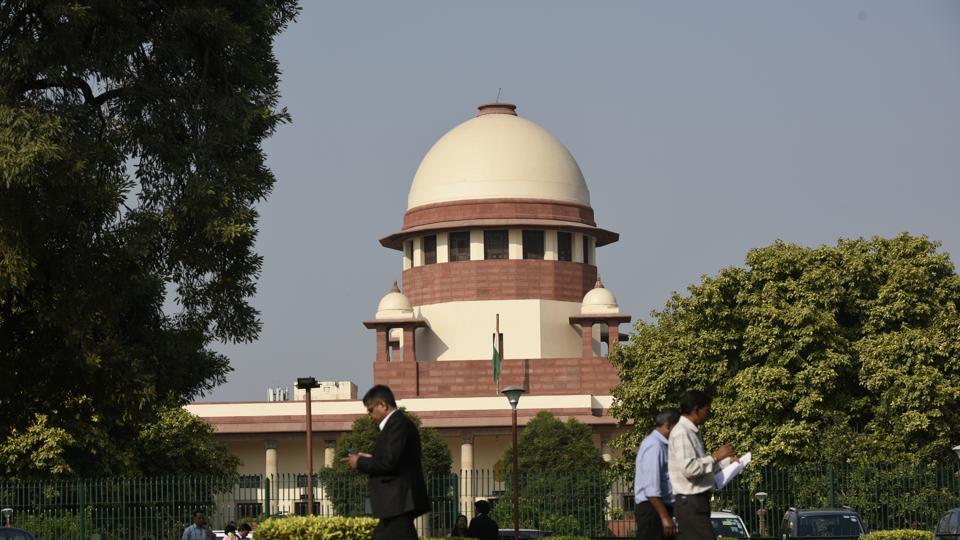
The Supreme Court on Wednesday directed electricity regulatory commissions (RCs) across the country to prepare a detailed roadmap for liquidating existing regulatory assets (RAs) within the next three years. The court also instructed the Appellate Tribunal for Electricity (APTEL) to ensure strict compliance with this directive by registering a suo motu petition.
The direction came in response to a petition filed by Delhi’s three major power distribution companies -- BSES Rajdhani Power Ltd, BSES Yamuna Power Ltd, and Tata Power Delhi Distribution Ltd -- challenging the Delhi Electricity Regulatory Commission’s (DERC) approach to electricity tariff determination. The companies argued that DERC’s tariff policies over the years led to a massive accumulation of regulatory assets, which as of March 31, 2024, stood at ₹27,200.37 crore across the three discoms, including carrying costs.
While examining the issue, the bench of justices PS Narasimha and Sandeep Mehta widened the scope of the case, noted that the problem of increased RA was not a phenomenon limited to Delhi. For instance, Tamil Nadu reported an estimated RA of ₹89,375 crore as of FY 2021–22, while Rajasthan’s cumulative RA had crossed ₹47,000 crore by FY 2024–25.
In contrast, the electricity regulatory commissions of Andhra Pradesh, Assam, Haryana, Himachal Pradesh, Jharkhand, Madhya Pradesh, Odisha, Punjab, Sikkim, Telangana, and Uttar Pradesh stated that they had never created RAs. The Maharashtra commission confirmed it had not created any regulatory assets since March 2020, in compliance with the National Tariff Policy, 2016, and the Electricity (Amendment) Rules, 2024.
The court directed that if any new RA is created, it must be liquidated within three years, with the existing regulatory assets cleared within four years starting from April 1, 2024, as per Rule 23 of the Electricity Rules. Rule 23 prescribes that regulatory assets should not exceed 3% of the Annual Revenue Requirement (ARR).
The bench held that each RC must prepare a trajectory and roadmap for the liquidation of its regulatory assets, including provisions to deal with carrying costs. It further ordered a thorough audit to determine why discoms were allowed to accumulate RAs without recovery for extended periods.
To monitor and enforce these measures, APTEL was directed to invoke its powers under Section 121 of the Electricity Act and issue orders, instructions, or directions to ensure that the RCs fulfill their duties regarding regulatory assets. APTEL must also register a suo motu petition and continue monitoring until the liquidation timelines conclude.
The judgment underlined that while increasing electricity tariffs is a tool to bridge revenue gaps, it may impose a sudden “tariff shock” on consumers. To avoid this, commissions may opt to recover part of the gap immediately and create a regulatory asset for the remainder—recoverable in subsequent years. However, this should not become a long-term practice.
“The financial health and commercial viability of distribution companies must be ensured by the regulatory commissions,” the bench said. It emphasized that tariffs must be cost-reflective, and that revenue gaps between approved ARR and projected revenue should only arise in exceptional circumstances.
Highlighting the consequences of unchecked RA accumulation, the court said, “Disproportionate increase and long pending regulatory assets depict a regulatory failure. It has serious consequences on all stakeholders, and the ultimate burden is only on the consumer.”
The court found that while RCs are meant to be independent authorities having functional autonomy, their decisions give a clear impression of a lack of ability to take “firm” decisions. “Instead of taking strong decisions on the basis of the statutory mandate, we see instances where the Regulatory Commissions manage and manoeuvre to arrive at a tariff by creating regulatory assets over and above all permissible limits. This is where the problem lies,” the court observed.
The bench reminded the RCs to call for ARR, ensure that tariffs are determined, and that truing up is conducted in a timely manner, by exercising suo motu powers if necessary. “Ineffective and inefficient functioning of the Regulatory Commissions, coupled with acting under dictation can lead to regulatory failure. The commissions are accountable for their decisions, and they are subject to judicial review,” the bench said.

Stay updated with all top Cities including, Bengaluru, Delhi, Mumbai and more across India. Stay informed on the latest happenings in World News along with Delhi Election 2025 and Delhi Election Result 2025 Live, New Delhi Election Result Live, Kalkaji Election Result Live at Hindustan Times.


