
 E-Paper



Strong winds, lower farm fires help Delhi avert air disaster
Delhi’s Air Quality Index (AQI) worsened from 259 (poor) at 4pm a day before Diwali to 312 (very poor) on Monday, but then fell to 303 on Tuesday, according to the Central Pollution Control Board’s (CPCB) daily bulletin

 Prefer HTon Google


Strong winds, coupled with fewer farm fires than usual in Punjab and Haryana, kept Delhi from plunging into its annual post-Diwali pollution disaster, experts said, adding that the unfettered use of firecrackers throughout the city would otherwise have pushed the air quality to noxious levels.
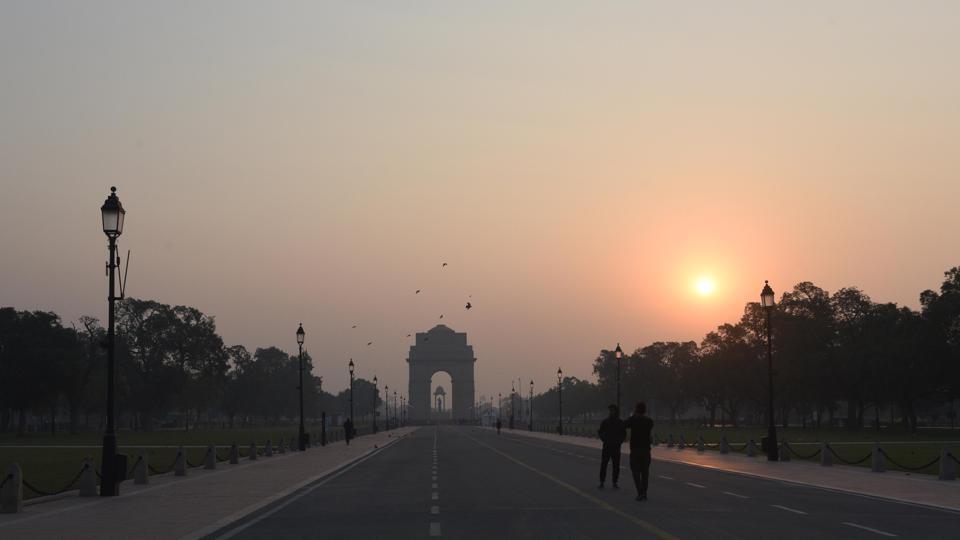
Delhi’s Air Quality Index (AQI) worsened from 259 (poor) at 4pm a day before Diwali to 312 (very poor) on Monday, but then fell to 303 on Tuesday, according to the Central Pollution Control Board’s (CPCB) daily bulletin. In fact, the air cleared up even further later in the evening, with pollution levels falling out of the “very poor” zone and clocking a reading of 299 at 5pm.
Also Read| Delhi cracker ban turns to ashes, violations go undeterred
An AQI from 201-300 is categorised as poor, and 301-400 very poor.
Winds slowed down in the build-up to Diwali and local emissions started to accumulate, steadily driving up pollution levels, said experts, with central agencies predicting that the AQI could tip into the deep end of the “very poor” zone on Diwali. However, steady winds and sunny days came to the rescue.
“While we were seeing calm winds at evening and late night, this changed on Diwali evening, and winds remained between 5-10 kmph throughout the evening and night,” said VK Soni, a scientist at the India Meteorological Department (IMD) who is part of the panel on the Graded Response Action Plan (Grap).
“This meant pollutants were able to disperse simultaneously and pollution levels largely remained in check overnight,” he said.
Wind speeds increased to 15-20kmph on October 25 during the day, with the visibility improving to 4,000 metres in parts of Delhi, said RK Jenamani, another scientist at IMD. “Normally, the day after Diwali has pollutants in the air and visibility is less than half of this,” he said.
The lower air pollution levels were also a result of fewer farm fires in Punjab, Haryana and Uttar Pradesh -- late rains in October have pushed the peak period of stubble burning to November, with farm fire figures relatively low in the week leading up to Diwali.
Stubble burning is yet to peak, with the daily fire count in Punjab touching 1,484 on Diwali night. In comparison, the number last year on the night before Diwali was 3,383 fires. The contribution of stubble burning in Delhi’s air was 10% on Monday, but dropped to 5-6% on Tuesday as the wind direction changed from north-westly to westerly. In comparison, the contribution of stubble burning on Diwali last year was 36%, official data showed.
“This was down to two factors. Wind direction changed to westerly on Monday evening and the contribution of farm fires has therefore come down. It was expected to touch 15-18% the day after Diwali, but the change in wind direction has brought it down by two-thirds,” said Gufran Beig, project director at Safar, a forecasting body under the ministry of earth sciences.
Also Read| Delhi records 201 fire calls on Diwali this year: Data
A delay in the farm fire season has helped Delhi, said Anumita Roychowdhury, executive director, research and advocacy at the Centre for Science and Environment, an advocacy group.
The problem, however, is that tough days may lie ahead as the count goes up.
“Normally, Diwali and the stubble burning season coincide, but farm fires are very low so far. Any contribution that came on Diwali was able to quickly disperse due to strong winds,” Roychowdhury said, adding that other factors such as a low mixing height were also missing at this time of the year.
The mixing height or boundary layer is an invisible layer in the atmosphere within which particulate matter gets trapped. The lower the mixing height, the more pollution rises, as pollutants are closer to the surface and are unable to disperse.
“Ventilation is a lot better at the moment, even with mercury dropping below 15 degrees. The mixing height is currently around 1,800 metres, while it was less than 1,000 metres last Diwali,” Soni said.



