
 E-Paper



Who all are most vulnerable to Delhi’s pollution? Doctors answer
The Centre-run System of Air Quality and Weather Forecasting and Research (SAFAR) has predicted that the air quality is likely to improve to “very poor” category from tonight considering no more firecrackers are burnt.

 Prefer HTon Google


As Delhi’s air quality continues to remain in the “severe” category two days after Diwali, medical experts have expressed concerns regarding the situation causing serious health conditions, especially because of the ongoing coronavirus disease (Covid-19) pandemic.
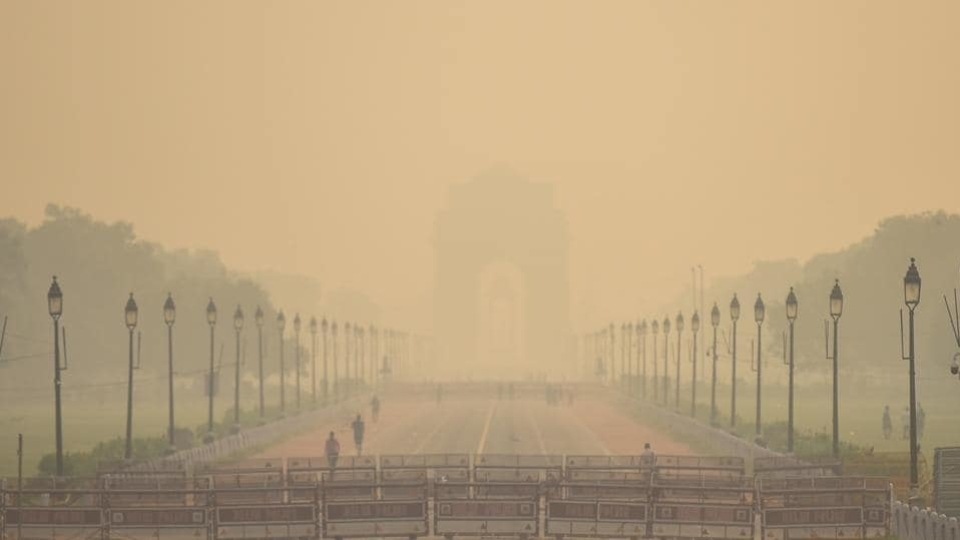
The national capital’s air quality began taking a tumble starting Thursday 9pm when it reached the “hazardous” category as people of Delhi refrained from obeying the blanket ban on firecrackers imposed by the Aam Aadmi Party (AAP)-led government. Although the air quality index (AQI) improved to reach the “severe” category, it is far from being healthy.
The central government-run System of Air Quality and Weather Forecasting and Research (SAFAR) has predicted that the air quality is likely to improve to “very poor” category from tonight considering no more firecrackers are burnt. However, stubble burning that is also a primary cause of the frightening air quality situation in Delhi, has been predicted to remain almost the same.
Also Read | Brace for bitter cold and high pollution this winter
As an emergency step to bring down the pollution level, the Delhi government on Saturday stopped as many as 92 construction sites for flouting norms and began spraying water on roads.
According to data by the Central Pollution Control Board (CPCB), the AQI in Chandni Chowk was recorded at 442 at 8pm, at 442 in IGI Airport, at 442 in ITO Airport, at 456 in Okhla Phase-2, at 454 in Punjabi Bagh, at 451 in Patparganj, at 453 in Rohini, and at 437 in Sirifort, among others.
When the air quality is at such an alarming level, it can lead to severe cases of Covid-19, director of All India Institute of Medical Sciences (AIIMS) Dr Randeep Guleria told news agency ANI.
He added that air pollution has “huge effects” on respiratory health in general, and especially in people with lung ailments and Asthma.
Also Read | Stubble burning emissions account for 36% of Delhi’s pollution: SAFAR
Echoing Dr Guleria, chairman-MD of Medanta, Dr Naresh Trehan said that such worse pollution levels will cause every individual to suffer. He told ANI that people are complaining about “headaches, breathing problems, especially [those] with Asthma and lung problems.”
Dr Trehan further explained that young children are vulnerable and the “severe” category air quality in Delhi can affect their brain development. “Hospital is full of patients, so this is a difficult phase for us. Every year we face this problem but fail to address or correct it,” he added to ANI.
Terming the current air quality in the national capital to be “dangerous”, Dr Ashok Seth, chairman of Fortis Escorts Heart Institute said that the AQI levels are especially worse for the elderly and those with lung issues and heart diseases. “Pollution itself leads to chest congestion and bronchospasm. Those with Asthma, Bronchitis will start getting worse,” he told ANI.
Dr Seth further stated that such extreme pollution predisposes patients with Asthma and Bronchitis to “further chest infections, viral infections and cases of pneumonia.”
He recommended old people to stay indoors, get vaccinated against flu and also use air purifiers at home continuously.


