
 E-Paper



Yamuna, groundwater, drains across city have widespread microplastic contamination: Study
Researchers collected 88 samples across all 11 districts and found elevated microplastic levels in every sampled zone.

 Prefer HTon Google


A year-long scientific assessment by The Energy and Resources Institute (TERI) has found widespread microplastic contamination in the Yamuna as it flows through Delhi, as well as in the Capital’s open drains, floodplain soil and groundwater.
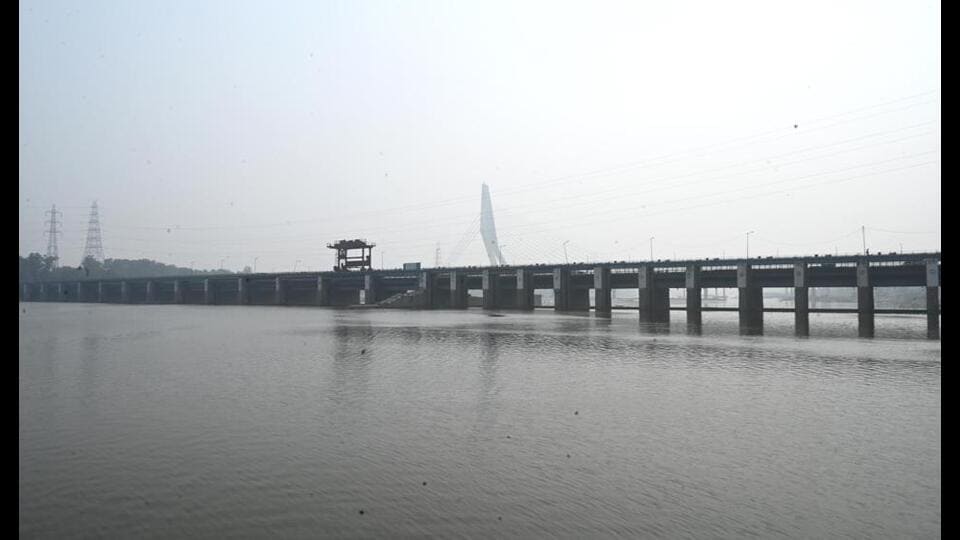

The study, titled Study on Microplastics in River Yamuna and Groundwater in Delhi (2024–25), was commissioned by the Delhi government’s environment department. Researchers collected 88 samples across all 11 districts and found elevated microplastic levels in every sampled zone.
The report, submitted to the government late last year, highlights seasonal shifts in pollution patterns, with monsoon flows reducing concentrations in river water but redistributing the pollutants into surrounding floodplain soil.
Microplastics – particles smaller than 5mm – are known to absorb and transport toxic chemicals.
Morphological analysis showed that microfibres accounted for nearly 95% of detected particles, suggesting domestic laundry effluents and textile-related discharges as major contributors. Other morphotypes, including fragments, films, sheets and lines, pointed to the breakdown of larger plastic waste.
Polymer analysis identified 13 material types, including polyethylene terephthalate (PET), high- and low-density polyethylene (HDPE and LDPE), polypropylene and polyvinyl chloride (PVC), indicating mixed sources such as household waste, industrial discharge and packaging materials.
The data revealed marked seasonal variation in river and drain water. Average microplastic concentrations in the Yamuna dropped from 6,375 particles per cubic metre (MPs/m³) during the pre-monsoon sampling window in May–June 2024 to 3,080 MPs/m³ during post-monsoon sampling between December 2024 and January 2025 – a decline of around 50%. Open drains, including Najafgarh and Shahdara, showed even steeper reductions of about 60%, from roughly 7,500 MPs/m³ to 3,000 MPs/m³.
Researchers attributed the decline primarily to rainfall-driven dilution and flushing rather than a reduction in plastic generation. High river flows during the monsoon dispersed floating particles or transported them downstream.
However, the apparent improvement in flowing waters was offset by accumulation along the riverbanks. Microplastic concentrations in bank soil rose more than fourfold, increasing from an average of 24.5 MPs/kg before the monsoon to 104.45 MPs/kg afterward. The findings suggest that runoff carries plastic debris from drains into the floodplain soil, where it may persist and gradually leach.
Groundwater samples from 42 locations showed relatively stable contamination levels across both sampling phases, averaging around 1,200 MPs/m³. Although seasonal variation was limited, researchers flagged the continued presence of microplastics in subsurface water as an emerging concern due to potential long-term exposure risks.
In the pre-monsoon phase, microplastic counts ranged from 200 to 2,200 MPs/m³ in groundwater samples. A well in Karol Bagh recorded the highest count, while Ghazipur reported the lowest. Fibres and films were the two morphotypes detected, with fibres comprising up to 91%.
Spatial mapping identified 10 vulnerability zones across Delhi—Najafgarh, Tilak Nagar, Saket–Vasant Kunj, Kalkaji, Karol Bagh, Naraina, ITO Barrage, Okhla, Ghazipur and Bhalswa—areas marked by dense habitation, industrial activity, landfill proximity or medical infrastructure.
The report recommends a real-time plastic pollution monitoring dashboard, monthly testing at major drains, advanced filtration upgrades at sewage and effluent treatment plants, installation of trash-capture systems at drain confluences, restrictions on open laundry along riverbanks and promotion of bio-based polymer alternatives under a department-wise mitigation roadmap.
Priti Mahesh, an independent environment and public health researcher said the report’s revelations are a wake-up call. “These invisible toxins accumulate in our bodies, disrupting hormones, harming aquatic life, and poisoning future generations. We must act now with plastic bans, advanced filtration, and community vigilance to reclaim our river and health,” she said.

Stay updated with all top Cities including, Bengaluru, Delhi, Mumbai and more across India. Stay informed on the latest happenings in World News along with Delhi Election 2025 and Delhi Election Result 2025 Live, New Delhi Election Result Live, Kalkaji Election Result Live at Hindustan Times.


