
 E-Paper



Yamuna pollution rises in March, better than last year
Faecal coliform — an indicator of sewage entering the river — peaked at 400,000 MPN/100ml (units) in March this year, compared to a peak of 110,000 units in Feb

 Prefer HTon Google


The Yamuna became more polluted in the month of March in comparison to February, the latest Delhi Pollution Control Committee (DPCC) monthly water quality report has found.
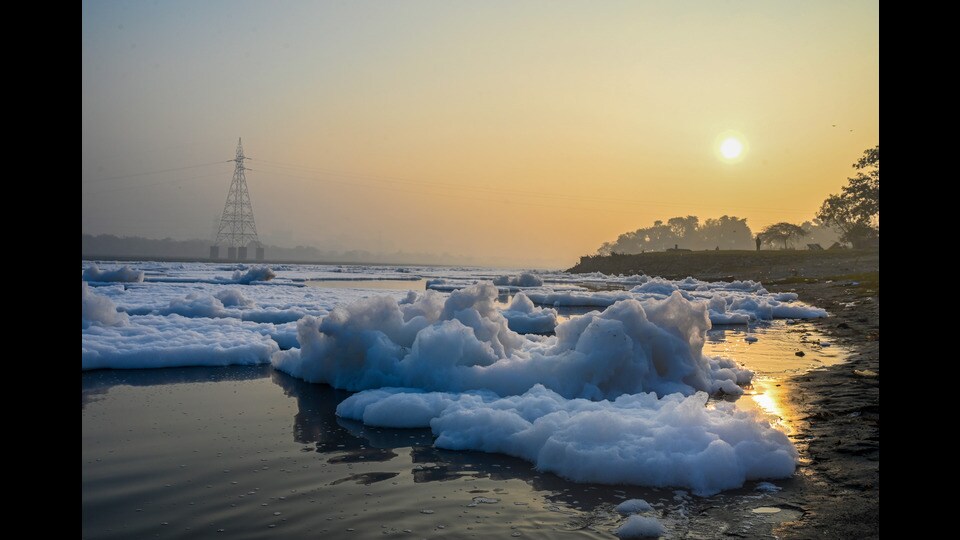
Faecal coliform — an indicator of sewage entering the river — peaked at 400,000 MPN/100ml (units) in March this year, compared to a peak of 110,000 units in February, the report released on Friday showed. It should not exceed 2,500 units.
The biological oxygen demand (BOD), indicating how much oxygen organisms is needed to survive in the water, meanwhile followed a similar trend. The BOD peaked at 60 mg/l in March — 20 times the safe limit of 3 mg/l. It was at a peak of 36 mg/l in February.

However, data also shows Delhi is faring much better this March – as compared to March 2025. In March last year, faecal coliform peaked at 1.3 million units, while BOD peaked at 70 mg/l.
To be sure, experts said the pollution in the river tends to rise at this time of the year, attributing it being lean season when there is significantly less rainfall along the river’s catchment. This also results in lesser water being released downstream of the Hathnikund barrage and a reduced environmental-flow (e-flow) -- required to flush away pollutants naturally. However, they flagged sharp peaks in the pollution downstream of Wazirabad as a concern.
“The latest data for water quality in Delhi’s drains shows the BOD of the Najafgarh drain was 60 mg/l in March and 65 mg/l in February. Yet, we see a sharp rise in pollution downstream of the drain in March – in comparison to February. We need to assess where this pollution is coming from, if the overall pollution reduced in the Najafgarh drain,” said Pankaj Kumar, a Yamuna activist.
He further flagged fluctuations in the Sonia Vihar drain as a cause of concern, questioning why, despite the government claiming STPs were fully functional, pollution still seems to be increasing. “This either means effluents are reaching from somewhere, or there are untapped sources,” he added.
Dissolved oxygen (DO) – essential for aquatic life – ranged between 3.1 mg/l and 4 mg/l between Palla and Wazirabad in March, but was zero downstream. It should be at least 5 mg/l or higher – indicating a high pollution load in the river. In February, it ranged between 0.4 mg/l till 8.2mg/l, but was zero at only two locations.
To assess Yamuna’s river quality, water samples are collected manually from the Yamuna from eight different locations – beginning at Palla, where the river enters Delhi; at Wazirabad, ISBT Kashmere Gate, ITO bridge, Nizamuddin bridge, Okhla barrage, Agra Canal and finally Asgarpur, after which the river exits Delhi.
Bhim Singh Rawat from South Asia Network on Dams, Rivers and People (SANDRP) said the DPCC latest monthly Yamuna water quality test report “only reconfirms what we already know – that the river is ecologically dead”.
“Data shows it is totally unfit for any kind of use and has grave health implications. Feacal levels have been detected six folds higher even at Palla, which reveals untreated effluents are entering the river from the Haryana side and contaminating potable water supply of Delhi. Overall, it underlines the abysmal failure of pollution prevention, control mechanisms as fundamental flaws continue to plague the treatment infrastructure in the city,” he added.

Stay updated with all top Cities including, Bengaluru, Delhi, Mumbai and more across India. Stay informed on the latest happenings in World News along with Delhi Election 2025 and Delhi Election Result 2025 Live, New Delhi Election Result Live, Kalkaji Election Result Live at Hindustan Times.


