
 E-Paper



Exploring the highs and lows of the beatboxing scene in Pune
Separating rhythm from noise, city beatboxers are working towards creating awareness for the music form, with interesting techniques and more


Making the right notes, meet Pune’s beatboxers, who are ensuring that these sounds are used to entertain and appeal. These young talents, most of whom are self-taught artistes, are not only popularising the art of beatboxing, but also working towards creating an environment for aspiring artists to explore.
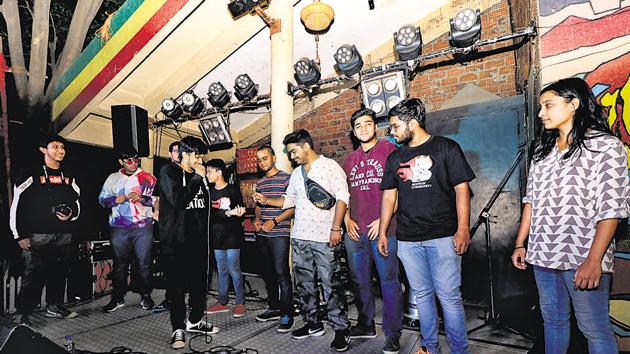
A fairly new “accepted” art form in the city, beatboxing rose to popularity with several talent shows, championships and of course films. The latest film to help create awareness on beatboxers was Gully Boy, where the lead actor Ranveer Singh is seen beatboxing and rapping to Hindi music.
When Milind Bailey, 21, was in school, he was intrigued by two beatboxers that featured on a reality show. A budding musician then, Bailey’s interest in the art of beatboxing grew and he decided to explore it. “I was keen to learn more about the art. It has been six years since I experimented with beatboxing and I am continuing to do so,” says the Bachelor of Mass Media student of MIT College, who originally hails from Bengaluru. Bailey organised the first Pune Beatbox Championship in the city in 2017, followed by one in 2018 and once earlier this year, with the help of sponsors.
Parag Bhide, a percussionist, learned tabla in school and explored other instruments. Beatboxing is an art form he recently started exploring. “I started by learning from YouTube. Within a couple of months, I joined a band as a full-time beatboxer, as no other rhythm instruments were played. That was an amazing learning experience.”
On the growing trend of the music form, he says, “Over the past couple of years, awareness regarding beatboxing is increasing and more people are slowly joining the circuit. We also have been organising events such as Pune Beatbox Championships and other jamming events. With the release of Gully Boy, a lot more people have been introduced to beatboxing.”
Anil Raina, co-founder, Reel Note Studios, was introduced to the music form when he met a few beatboxers in a talent show in 2013. “Being a guitarist and singer, I am always on the lookout for music. So, when I met these beatboxers, I explored the medium. I have been travelling a lot as a musician. I personally believe that I am a guitarist by profession and a drummer by heart. Rhythm is in my head and that helped me learn beatbox.”
Mainstream yet?
When Bailey moved to Pune from Bengaluru, he was surprised at the lack of recognition the beatboxing community had in Pune. The young musician took it upon himself to create awareness and build a platform for beatboxing. He started off by approaching senior and established beatboxers from the city who were into commercial music. “We started out as a four-member team and today we are a 77-member-beatboxing community. The journey was tough, but I am proud at what I have achieved so far.”
Bhide says, “Not yet, but slowly it is evolving in that direction! It’s a relatively new art form in India, and the awareness is also less. Lack of proper institute or classes also creates a very big problem to learn beatbox.”
Raina is ready to learn. “Back in 2013, people did not understand the concept. They thought the sounds were computerised or coming from a machine. It was difficult to explain to them.”
He adds that thankfully the hip hop culture brought in the much-needed awareness about beatboxers. “Honestly, people are not open to sudden change, but if you introduce it to them gradually, they will accept it. You have to present and package it well.”
The gig scene
The demand for beatboxers is steadily increasing. More and more bands are also starting to adapt to their lineup. Bhide shares that it’s more like a community than an association. “It helps to learn from each other and also to organise planned events. Get in touch with the community and everyone is ready to help you out. If by any chance you can’t get in touch, then YouTube is always there.”
Raina adds that the country has so much to offer when it comes to music. “It is sad that people do not explore the regional and folk music that India has to offer. You can easily fuse, mix and merge these sounds and create something new and sensational. I hope musicians in general start exploring different elements to get a good sound.”
Bailey is straight forward when it comes to the gig scene in the city. “Solo performances of beatboxers can get boring for the audience. What works instead are battles and championships, where the audience is given a little of different things. It is packaged to intrigue them and get them to know more about beatboxing.”
He adds that initially solo performers are not paid and offered a platform to showcase their talent. “It’s okay to do a few free gigs initially as it will help with exposure and experience. Once you gain this, shows and other gigs will follow. It helps to have gigs where vocalists, rappers and beatboxers are together. It helps pull a larger audience.”
Challenges
The biggest challenge, Raina believes, is the sound system. “When you perform live, if it is backed with good sound, then your performance will soar. However, a bad sound system will make you sound miserable. The audience also judges you based on the speaker quality, failing to realise that it is not the performer’s fault.” He goes on to add that the older generation is yet to warm up to the idea of “making sounds from the throat”.
Bailey adds that initially the challenges were getting people to form a community for jam sessions, battles and championships. “They were sceptical if Pune audience would be open to the idea of a beatboxing event. I am glad I did not lose hope. Today, we are in a much better place.”


