
 E-Paper



Govt data does not highlight distress in various sectors: Yashwant Sinha
According to Sinha, the economic slowdown was due to structural reasons and the problem began in the agrarian sector with a sharp decline in the purchasing power in the rural areas leading to a decline in demand


The economic data provided by the government is not reliable as it does not highlight the distress in various sectors, former BJP leader and finance minister Yashwant Sinha said here on Monday.
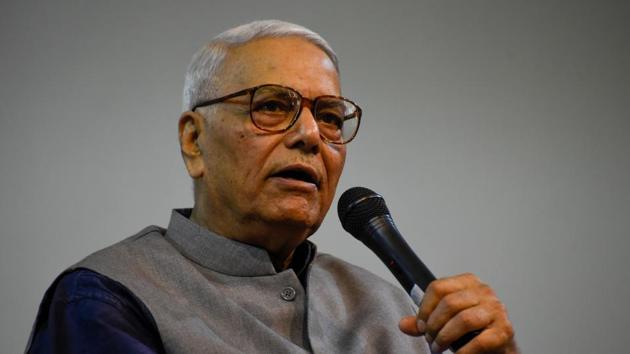
There should be strict laws in the country to regulate government finance and reduce government debts, he said while delivering a speech on ‘Economic Slowdown- Structural or cyclic?’ at the Gokhale Institute of Politics and Economics here.
“Today everyone is worried about the slowing down of the economic growth rate. The problems are more severe today, as the agrarian distress and declining wages of farmers need to be addressed,” he said.
A former finance minister and external affairs minister, Sinha said, “Many a times the figures, data and statistics which are given to us are not reliable. The data is shown to us in such a way that the last five years are presented as the glorious years in our country in terms of economic growth. So the distress in various sectors is not visible in government data,” he said.
He said there was slowdown in agriculture, power supply and the corporate sectors. Demand was reducing and there is a need to regulate government finances, he said.
According to Sinha, the economic slowdown was due to structural reasons and the problem began in the agrarian sector with a sharp decline in the purchasing power in the rural areas leading to a decline in demand.
“In the last six years the growth of construction workers has declined from 30 lakh to 10 to 12 lakh. People who do not get work in rural areas come to cities and work in the construction sector, but that is also now declining,” he said.
He blamed demonetisation for its adverse impact on jobs in the power supply sector and the construction sector. This was followed by the adverse impact of the Goods and Services Tax (GST), he added.
Sinha said when he was appointed as finance minister by Prime Minister Vajpayee in 1998, he too faced a similar situation of contraction of demand. “So we moved in a big way in different types of investments so that demand for investment goods increases,” he said, adding that similar steps need to be taken now to boost employment increase the consumption of goods.


