
 E-Paper



Gurugram left out of IIT’s pollution forecast due to lack of reliable data
The forecast has been going on for the last few months, but Gurugram has been excluded from the forecast, submitted to the Central Pollution Control Board (CPCB) due to lack of reliable data, said Mukesh Khare, air pollution expert from IIT-D.


The city has been left out of a biweekly air pollution forecast for Delhi-NCR being done by a team from the Indian Institute of Technology, Delhi, due to unreliable air quality monitoring data.
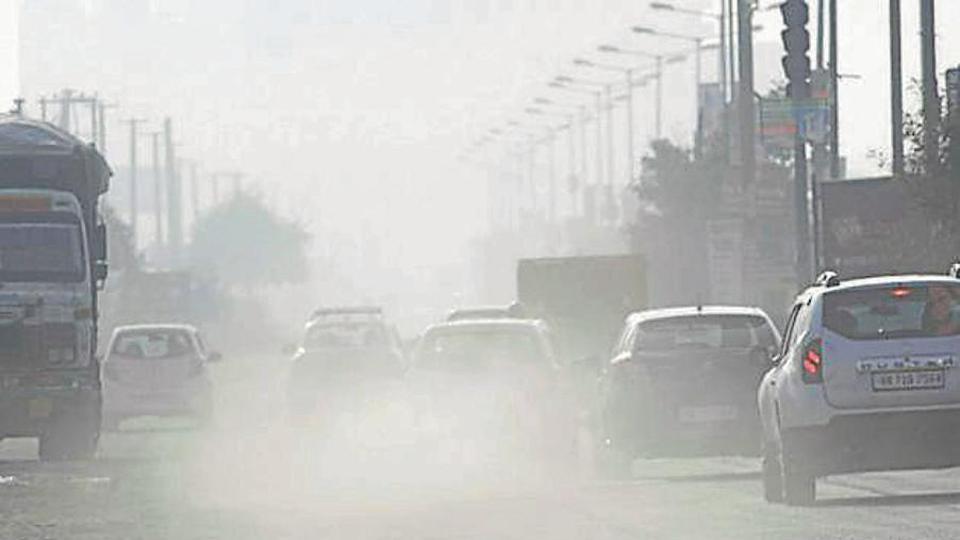
The forecast has been going on for the last few months, but Gurugram has been excluded from the forecast, submitted to the Central Pollution Control Board (CPCB) due to lack of reliable data, said Mukesh Khare, air pollution expert from IIT-D and member of the Supreme Court-appointed Environmental Pollution Control Authority (EPCA). Khare spoke to HT on the sidelines of an air pollution conference at a private university in Manesar on Friday, where he talked about ‘Urban Air Pollution in India’.
Being implemented for the first time during peak pollution season, Khare said these forecasts will identify potential hot spots across Delhi-NCR every two weeks, and will allow authorities to plan for localised pollution control measures. “Gurugram, however, has been left out of due to lack of reliable data,” he said.
“Based on these forecasts, we would prepare biweekly action plans, primarily targeting the finer particulate matter (PM2.5) levels in the pollution hotspots. The plans would also try to tell by what percentage the pollution could drop if the measures are implemented,” said Khare, who is also the coordinator for the Centre of Excellence for Research on Clean Air at IIT-D.
“We were initially supposed to provide forecasts for Delhi, but expanded it to the NCR. While developing these forecasts, we were able to identify four new hotspots in Delhi and another three across the NCR, including Sonepat in Haryana, which provides consistent and regular data. Gurugram’s air quality data, by comparison, has many gaps,” Khare said.
For example, there are several days in Gurugram’s air pollution data where the city, as per its only two air quality monitors at Vikas Sadan and Gwal Pahari, has not recorded enough information to calculate the city’s daily AQI score.
Moreover, on several days, the city’s daily average AQI is identical to its daily average level of PM2.5. “This is an incorrect method of calculating air quality. The state pollution control board needs to fix the issue if it is still persisting, and ensure the continuous flow of usable data,” Khare said.
However, Khare said that his team has, through the analysis of limited background data, been able to pinpoint significant sources of pollution in Gurugram. “We know for certain that Gurugram, and even Faridabad, have major presence of dust, natural and due to construction. Even burning of waste and biomass is rampant. It’s important for local authorities to take measures against this, otherwise, the dust is transported to Delhi, where it adversely affects local conditions,” Khare explained.
The EPCA, earlier this week, had also ordered the state pollution control board to take all possible measures to ensure that air quality in NCR does not deteriorate.
Officials of the CPCB did not respond to requests for comment.
Rajesh Garhia, senior scientist, Haryana State Pollution Control Board, said, “Gurugram will get at least two new air quality monitors within the next few weeks.” He said that reliable data from the same will be transmitted to the CPCB servers.


