
 E-Paper



‘Bhandaras’ leave Gurugram choking on toxic waste: activists
In a recent incident in Sector 23A, a bhandara left behind heaps of food, plastic, disposable cutlery, which were dumped and set on fire

 Prefer HTon Google


What starts as an act of service to fellow residents through free community kitchens, or “Bhandaras”, is ironically harming public health and well-being, resulting in pollution, toxic air, and environmental degradation. Residents and public health and sustainable waste management advocates warned. From upscale MG Road to residential neighbourhoods like Sector 23A, unchecked dumping and open burning of waste from such events have become a growing concern, they added.
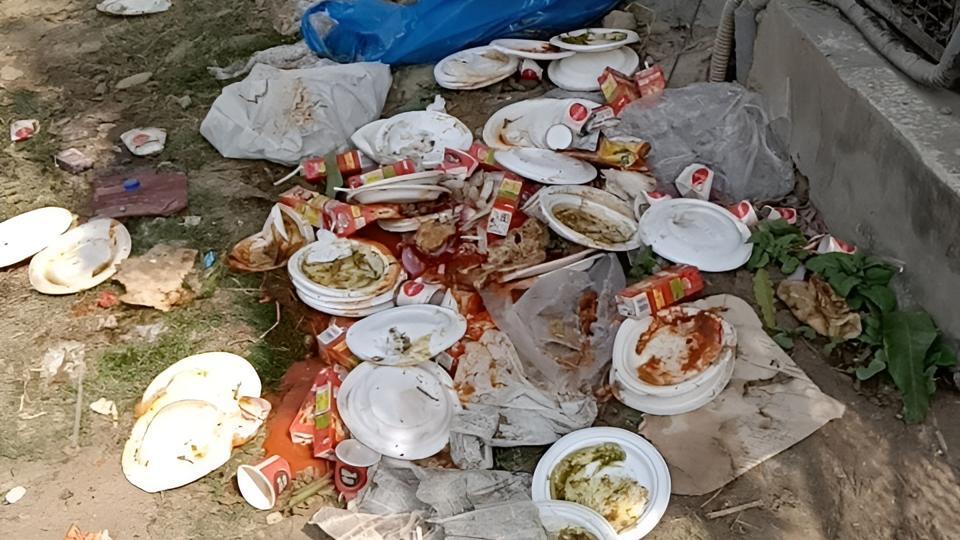
In a recent incident in Sector 23A, a bhandara left behind heaps of leftover food, plastic and thermocol plates, and disposable cutlery, which were dumped in an open plot and later set on fire. The act triggered outrage among residents and public health experts. “This practice must stop immediately. Burning waste is not just unlawful but a major health hazard,” said Bhawani Shankar Tripathy, vice president of RWA Sector 23A and a public health and environmental expert.
Similar scenes have unfolded regularly near Times Tower and Essel Tower on MG Road, where Thursday bhandaras serving thousands often leave pavements littered with styrofoam waste. “Normally, only 50-odd trash items would be collected from this stretch, but after bhandaras, sanitation workers pick up over 4,000 disposable plates in a single evening,” a civic official said, on condition of anonymity.
While the Municipal Corporation of Gurugram (MCG) deploys extra manpower post-events, officials insisted the onus of waste management lies with organisers. “We will keep a strict check on such incidents. If anyone is found dumping or burning Bhandara waste in public spaces or vacant plots, they will be penalised,” said MCG commissioner Ashok Garg. “Organisers must take responsibility for cleaning the site or pay a fee to MCG for waste collection and disposal,” he added.
Sustainable waste management practitioners, meanwhile, noted that this “growing problem” demands urgent intervention by the environment ministry and district administration. “Despite the Haryana Municipal Corporation Act and Solid Waste Management Rules mandating proper waste disposal by event organisers, many Bhandara organisers fail to comply, neglecting public health and sanitary conditions,” said Ruchika Sethi Takkar, founder of “Why Waste Your Waste” and “Citizens For Clean Air”. She further urged the district administration to implement a Green Protocol Ordinance, mandating event organisers to switch from single-use disposables to reusable plates and crockery and notify MCG in advance in accordance with the provisions of HMCA and SWM Rule, 2016.
Tripathy, meanwhile, added, “Public health is a core responsibility of urban local bodies, and that includes ensuring safe food practices at public events. Using low-grade plastic or styrofoam with hot food is hazardous. Dumping or burning waste must attract strict penalties.”
Echoing similar concerns, Rohan Malik, a resident of Sector 46, said, “The waste left behind is not just an eyesore — it’s a threat to public health and the environment. There must be strict monitoring and penalties for violations.”
In response, MCG officials said food inspectors and sanitation staff will now monitor bhandaras for compliance, and repeat offenders could face legal action under environmental laws.


Stay updated with all the Breaking News and Latest News from Mumbai. Click here for comprehensive coverage of top Cities including Bengaluru, Delhi, Hyderabad, and more across India along with Stay informed on the latest happenings in World News.


