
 E-Paper



Despite Grap-4, no order to shift mode for Gurugram schools
Despite Grap Stage 4, the district administration has not issued orders for online or hybrid classes, even as AQI hit 345 and parents raise health concerns.

 Prefer HTon Google


Even as Gurugram’s air quality worsened to a “very poor” AQI of 345 on Monday, schools across the district continued to function in physical mode, raising concerns among parents. Despite the enforcement of Stage 4 of the Graded Response Action Plan (Grap), no directive has been issued by the Gurugram district commissioner to shift classes online. On Sunday, the AQI was at a “poor” 291 at 4pm, according to the daily national bulletin by the Central Pollution Control Board (CPCB).
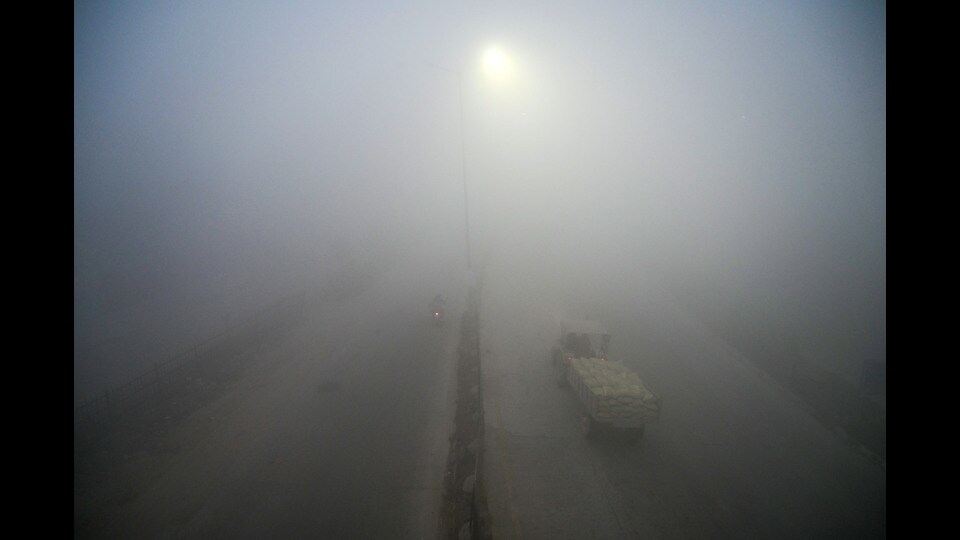
Under the CAQM framework, Grap measures serve as guidelines, with the authority to enforce school closures or shift to hybrid or online classes resting with district or state administrations. In Gurugram, such binding orders for both government and private schools are issued by the deputy commissioner. Although GRAP Stage 4 is currently in force, no order has been issued by the DC so far. Private schools, however, are free to adopt a hybrid mode on their own, as there is no mandatory directive in place.
Despite repeated attempts by HT, Gurugram deputy commissioner Ajay Kumar and officials from his office did not respond to queries on why no fresh orders had been issued for hybrid classes or whether last month’s directive allowing hybrid classes up to Class 5 remains in force or was withdrawn after the CAQM delegated Grap III to stage II back then.
District education officer Saroj Dahiya said that these instructions are issued by the deputy commissioner for both private and government schools. “No such order has been issued by the Gurugram DC yet,” she said.
On December 13, the Commission for Air Quality Management (CAQM) announced that all emergency measures under Grap Stage 4 had been enforced across Delhi-NCR. Under Stage 4 provisions, states and local administrations have the flexibility to move classes to online or hybrid mode, particularly for younger students, if air quality does not improve.
Parents said they were compelled to send their children to school through dense smog every morning. “There is a lot of pollution in the air, and our child leaves for school early in the morning when the smog is at its peak. While schools in Delhi have shifted to online classes, why are schools in Gurugram still operating physically?” said Neetu Gupta, parent of a class 6 student.
Rakesh Sharma, a resident of Sector 56, said his children were showing health symptoms. “It really hits when your child thinks the smog is just a cloud spread across the city. Both my children are coughing, yet they still have to go to school. I am deeply worried about their immunity,” he said, adding that online learning, while not ideal, was necessary under current conditions.
Environmental activist and parent Ruchika Sethi said the situation amounted to a public health emergency. “The administration is underplaying what is essentially a public health emergency. The impact of air pollution is slow and cumulative. It cannot be dismissed as a seasonal problem,” she said, highlighting children’s developing immune systems and exposure during daily commutes.
School authorities said precautionary steps were being taken. Rashmi Malik, principal of Salwan Public School, Gurugram, said, “We have suspended all physical activities and advised students and staff to wear masks. We have even moved plants indoors and are sprinkling water to reduce dust.” She added that the school may shift to hybrid mode if air quality remains poor for the next two to three days.
Aditi Misra, director of Delhi Public School, Gurugram, said outdoor activities had been restricted. “The safety and well-being of our students remain our highest priority. All classrooms are air-conditioned and equipped with air purifiers,” she added.
Health experts, meanwhile, warned of serious risks. Dr Manish Mannan, head of paediatrics and neonatology at Paras Health, Gurugram, said children were especially vulnerable. “Physical exertion increases the rate and depth of breathing, allowing a larger volume of pollutants to reach deep into the lungs,” he said, advising against outdoor activities during high pollution days.
Stay updated with all the Breaking News and Latest News from Mumbai. Click here for comprehensive coverage of top Cities including Bengaluru, Delhi, Hyderabad, and more across India along with Stay informed on the latest happenings in World News.


