
 E-Paper



Door-to-door garbage collection disrupted in Gurugram
Rising LPG costs and West Bengal elections have led to a 20% drop in Gurugram's sanitation workers, disrupting garbage collection services.

 Prefer HTon Google


A combination of rising LPG costs due to the West Asia conflict and the upcoming West Bengal elections has led to a reduction in manpower for Gurugram’s sanitation department, disrupting door-to-door garbage collection services across the city, officials and residents said.
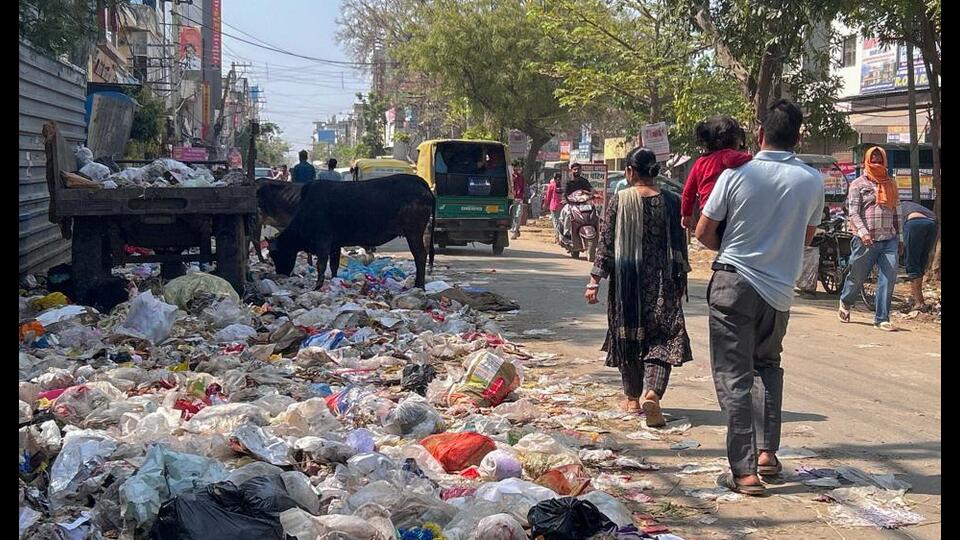
Nearly 20% of sanitation workers have stopped reporting to work, citing steep increases in gas prices, according to officials. Many of these workers, particularly those from West Bengal, have returned to their hometowns due to financial strain and the ongoing election season in their state.
Ravinder Yadav, additional MCG commissioner acknowledged the issue, stating that the shortage of workers and vehicles has disrupted the entire chain of waste collection. “The shortage of sanitation workers and vehicles has disrupted the entire chain of waste collection in the city. A major reason behind this is the ongoing election season in West Bengal, due to which a significant number of workers have returned to their hometowns. At the same time, the sharp rise in gas cylinder prices has made it financially unviable for many workers to continue, prompting them to leave their jobs.”
“To ensure that sanitation services are not affected in the long run, we are now focusing on hiring local drivers and sanitation workers so that residents do not have to bear the brunt of the current situation and normalcy can be restored at the earliest,” he added.
Residents across multiple colonies have reported that garbage vehicles are either arriving irregularly or not at all, forcing people to dump waste in open areas. Civic officials, who asked not to be identified, said they are receiving around 150 complaints daily regarding uncollected garbage.
Data from the municipal corporation indicates that while around 350 sanitation workers are required for smooth operations, only about 290 are currently available.
The shortage has led to reduced frequency of waste collection, with some areas receiving services only once every few days, according to at least 20 resident welfare associations (RWAs).
Rajkumar Yadav, President, Sector 45 RWA, said, “Waste collection has been severely hit in our area over the past few days. Sanitation workers are missing in action and garbage collection vehicles are either irregular or not coming at all. As a result, waste is piling up at multiple points, creating unhygienic conditions and foul smell. Despite repeated complaints, there has been no improvement. Residents are growing increasingly frustrated.”
Sunil Sareen, Vice-President, Imperial Gardens RWA, Sector 102, said, “The disruption in waste collection has become very evident in our society. Vehicles have stopped coming on a daily basis and in some cases, waste remains uncollected for two to three days. This is not just an inconvenience but a serious health concern, especially with rising temperatures.”
Officials said the situation has worsened due to a sharp rise in fuel costs. The price of gas cylinders has increased nearly fourfold, making it difficult for workers to sustain daily operations. Earlier, workers could refill cylinders at ₹400, but now the cost has surged to ₹1,400– ₹1,600.
According to officials familiar with the matter, the 14.2kg LPG cylinder, which earlier used to cost around ₹3,000, is being sold in the black market for as high as ₹5,000.
Additionally, the tendering process for waste collection vehicles has been affected. While a previous tender for around 400 vehicles expired, a new tender has not yet been approved, further straining the system.
Despite sanitation challenges, LPG supply for domestic consumers remains stable. Over 117,000 domestic cylinders and 757 commercial cylinders have been delivered in the past six days. However, for sanitation workers and contractors, rising operational costs continue to pose a serious challenge.


Stay updated with all the Breaking News and Latest News from Mumbai. Click here for comprehensive coverage of top Cities including Bengaluru, Delhi, Hyderabad, and more across India along with Stay informed on the latest happenings in World News.


