
 E-Paper



Face recognition cams at MG Road metro station, others for better security: GMDA
The cameras will help identify miscreants who flee the scene, taking advantage of the rush, said officials

 Prefer HTon Google


The Gurugram Metropolitan Development Authority (GMDA) installed eight facial recognition cameras at the entry and exit of the MG Road Metro station on Friday.
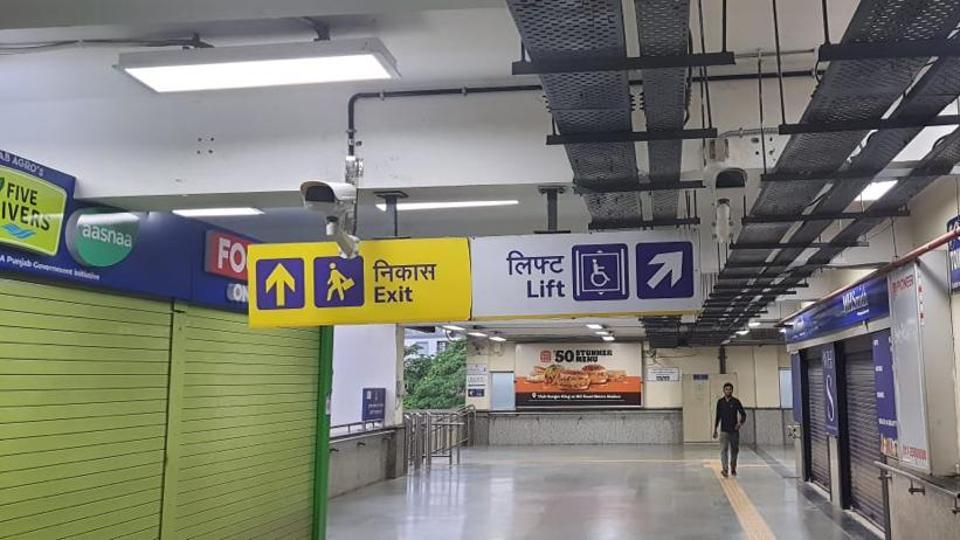
Eight such cameras will also be installed at the Sikanderpur metro station before June 10. GMDA officials said that they are yet to receive permission from the Delhi Metro Rail Corporation for installing facial recognition cameras at the Huda City Centre station.
The enhanced surveillance will improve safety and security of commuters, especially women and children, officials claimed. The GMDA is also in the process of linking all metro stations with the Integrated Command and Control Center (ICCC) in Sector 44.
The technology detects facial features and matches them with existing information on databases to identify a particular person. Police said that this surveillance system will help control eve-teasing and snatching incidents, common outside metro stations.
The cameras will help identify miscreants who flee the scene, taking advantage of the rush. “There have been several cases where suspects could not be identified. These cameras will also help us in investigating other criminal cases apart from petty crime and traffic violations,” said Preet Pal Sangwan, assistant commissioner of police (crime).
Sangwan said a team of seven officers, including a sub-inspector, is deployed to monitor feeds at the ICCC and detect crime. Vehicle theft, a major challenge for authorities, has been controlled to a great extent with the system’s help.
Sudhir Rajpal, chief executive officer, GMDA, said 1,130 CCTV cameras are operational 24x7 at 212 junction locations in the city at present.
“These camera feeds are monitored round the clock by the police department for city surveillance and traffic management through ICCC. Regular e-challans are issued for traffic violations pertaining to jumping red-lights, zebra crossings, not wearing helmets or seat belts and on vehicles without high security number plate, using this CCTV infrastructure set-up by GMDA. On an average around 1,700 to 1,800 challans are issued daily,” he said.
Haryana chief minister Manohar Lal Khattar conducted a surprise inspection at the offices of the GMDA and Municipal Corporation of Gurugram (MCG) on January 29 and outlined the need to install facial recognition cameras in the city.
According to Rajpal, these cameras will be used for general surveillance, and using artificial intelligence will aid in the detection and tracing of people with questionable credentials. “The cameras will help in finding missing people as the data is aligned with the police department,” he said.
Six such facial recognition cameras have been installed at the Sheetla Mata Mandir, four at the Gurugram Bus Stand, and another at Sadar Bazaar.
“GMDA is closely working with the police and traffic departments in understanding their requirements. These cameras are providing live feeds to the ICCC which is commissioned to eight other monitoring police stations in Gurugram. We aim to increase our scope of surveillance across the GDMA jurisdiction in Gurugram and Manesar,” said Rajpal.
PK Aggarwal, advisor, smart city division, GMDA, said that they are keeping a close watch on the daily movement of commuters and activities happening across the city through CCTV cameras.
“The technical and police teams deployed at the command centre are monitoring the screens and alerting police if any suspicious activity is noticed. The 24/7 real-time feed is captured and stored for up to 30 days and has been instrumental in helping police officials trace and arrest suspects involved in criminal activities,” he said.
According to Aggarwal, a ₹1 crore robbery on Subhash Chowk, and a murder case near the Daulatabad Flyover were solved with help from the surveillance system. “The ICCC technical team supported the police department with CCTV footage that proved critical in identifying the suspects and vehicles used in crime following which arrests were made and the cases were solved. The feed from the cameras in the concerned areas were analysed and vehicles from around the crime location were traced. Within two days, the vehicles in both the cases were traced and suspects were arrested,” he said.
All the surveillance cameras are connected via the captive optical fibre network of the GMDA. Additional locations are being identified for the next phase of installation of these cameras, said officials.


