
 E-Paper



Fewer migratory birds visit Sultanpur wetland: Asian Waterbird Census report
Experts said the fall in the birds visiting the park over the years is due to delayed monsoon and late onset of winter

 Prefer HTon Google


The winter migratory birds arriving at the Sultanpur national park have reduced slightly in numbers this year as compared to the 2024 census, according to the annual Asian Waterbird Census (AWC) report.
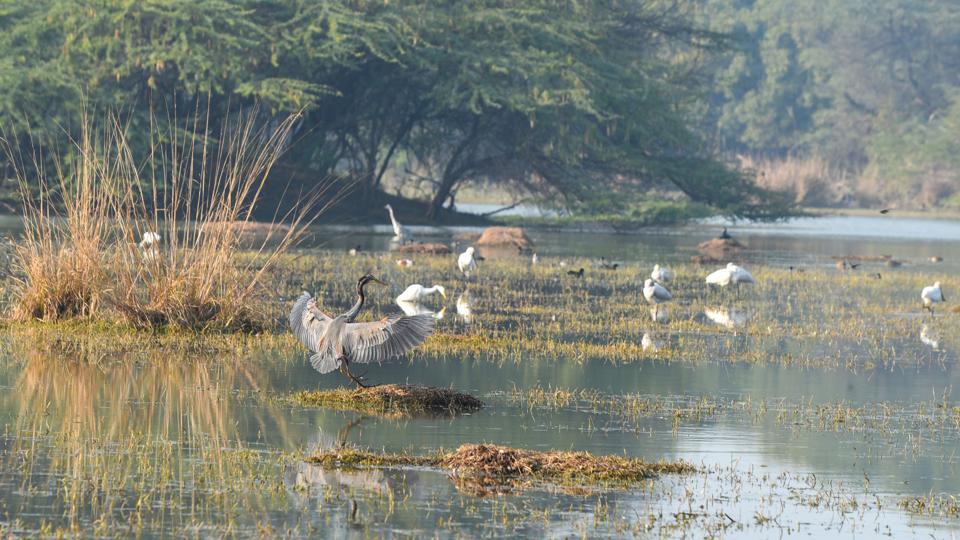
The census is conducted by Wetlands International in collaboration with the Haryana Forest and Wildlife Department and the Haryana State Biodiversity Board, reflecting the broader impact of global climate change and deteriorating wetland ecosystems, which have affected the migratory patterns of the birds.
As per AWC 2025, a total of 2,593 migratory birds were seen at the Sultanpur national park, comprising 48 species. Comparatively, 2,686 total birds and 43 species were recorded in the AWC 2024 while 9,026 total birds and 51 species were logged in 2023. The census took place on Saturday, starting 11am and wrapping up later in the evening.
The Sultanpur park has been identified important under the Ramsar Convention on Wetlands and the survey was conducted under the guidance of AWC Delhi state coordinator Dr TK Roy, an ecologist and ornithologist, with participation from birders and experts from International Union for Conservation of Nature (IUCN) and Wetlands International – South Asia (WISA).
Dr Roy said that the fall in the birds visiting the park over the years is due to delayed monsoon and late onset of winter causing reduced water levels. Compared to 2024, the AWC 2025 recorded a slight increase in species diversity but a drop in overall bird population.
The survey identified noticeable declines in several migratory species, such as the Northern Pintail, which saw a drop in number from 146 in 2024 to 115 this year. The Bar-headed Geese, which were absent last year, were 67 in numbers this time. Similarly, resident species like the Painted Stork showed a sharp decline, with only 206 individuals recorded compared to 467 last year. On the other hand, some species, such as the Eurasian Spoonbill, showed improvement, with 70 individuals this year as against 14 in 2024.
Dr Roy emphasised the urgency of wetland conservation to address the downward trend. He noted that the reducing numbers of both resident and migratory birds highlight the stress on wetland ecosystems caused by climate change and human activities. “The Sultanpur wetlands are vital for sustaining biodiversity, and immediate action is necessary to protect these habitats and their avian populations,” he said.


Stay updated with all the Breaking News and Latest News from Mumbai. Click here for comprehensive coverage of top Cities including Bengaluru, Delhi, Hyderabad, and more across India along with Stay informed on the latest happenings in World News.


