
Grap IV: Gurugram DC orders staggered office hours, urges WFH
The move follows a December 13 CAQM directive and is meant to cut emissions alongside curbs on construction and industrial activity.
Acting on directions issued under stage 4 of the Graded Response Action Plan (Grap), Gurugram deputy commissioner Ajay Kumar on Sunday ordered staggered working hours for all government and civic offices in the district from Monday to reduce vehicular load and curb air pollution.
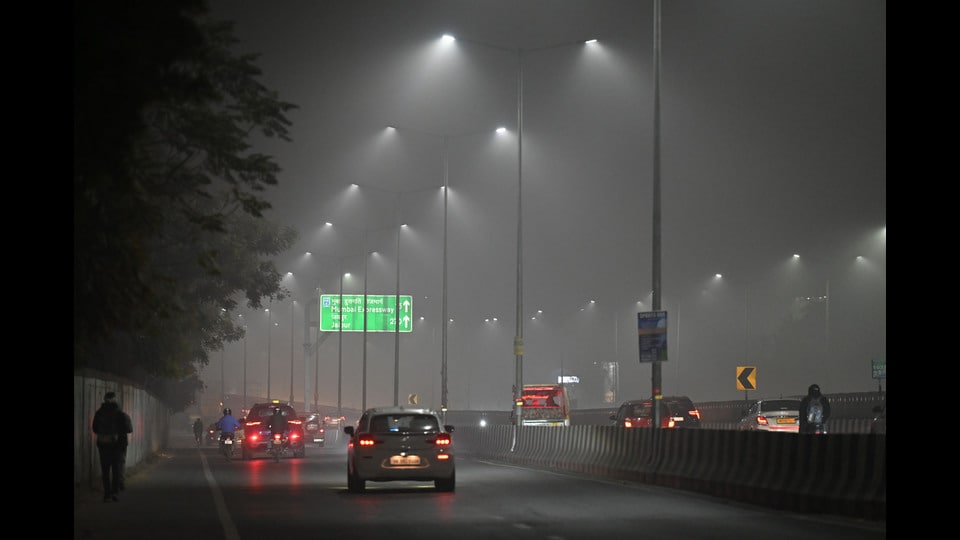
The order has been issued in compliance with the December 13 directive of the Commission for Air Quality Management (CAQM), which invoked Grap stage 4 across Delhi-NCR after air quality in the Capital deteriorated to the “severe-plus” category. The CAQM order mandates additional emergency measures to minimise emissions and reduce public exposure to hazardous air.
Under the district administration’s directive, all state government offices in Gurugram will function from 9.30am to 5.30pm. Offices of the Municipal Corporation of Gurugram and the Municipal Corporation of Manesar will operate from 8.30am to 4.30pm. Offices under the Municipal Council, Sohna, Municipal Council, Pataudi Mandi, and the Municipal Committee, Farrukhnagar will also follow timings from 8.30am to 4.30pm.
The deputy commissioner on Sunday issued an advisory urging all private institutions in the district to adopt a work-from-home system until further orders.
The revised office timings aim to stagger peak-hour movement and ease traffic congestion during morning and evening commutes. The district administration clarified that the order will remain in force for the entire duration that Grap stage 4 is effective in the region. All heads of departments and municipal authorities have been directed to ensure strict compliance.
Officials said staggered office hours are a key emergency pollution control measure, as they help reduce traffic density, cut vehicular emissions and ease pressure on public transport. The move is expected to complement other restrictions already in place under Grap stage 4, including controls on construction activities, industrial emissions and vehicular movement.
The administration appealed to residents to cooperate and avoid non-essential travel. “These steps are being taken in the interest of public health and environmental protection,” officials said, adding that further measures may be introduced if air quality does not improve. The order has been circulated to all government departments, municipal bodies, and enforcement agencies for immediate implementation.
ABOUT THE AUTHORLeena DhankharLeena Dhankhar is Senior Editor and Bureau Chief, Gurugram, at Hindustan Times, where she has spent over 17 years chronicling the transformation of one of India's fastest-growing urban regions. From starting her career as a crime reporter to leading the Gurugram bureau, her journalism has been defined by investigative reporting, in-depth storytelling and an unwavering focus on public interest. Over nearly two decades, she has reported extensively across crime, politics, civic governance, elections, real estate, environment, courts, sports, education and entertainment, covering Gurugram, Faridabad, Nuh and Palwal. Her reporting has exposed several major scams and systemic failures, including insurance frauds, waste management irregularities, illegal arms manufacturing units in Nuh, illegal mining in the Aravallis, organised crime networks and governance lapses affecting millions of residents. Known for her investigative work and exclusive stories, Leena has reported on high-impact national issues, including the Nicaragua charter flight carrying Indian migrants that was turned back amid allegations of human trafficking, exposing the growing network of illegal immigration rackets. Her work has also focused on gang wars, prison administration, juvenile crime, women and child protection systems, the functioning of the Juvenile Justice Board and Child Welfare Committee, and environmental challenges such as pollution, waterlogging and deteriorating civic infrastructure. Beyond hard news, Leena has extensively documented Haryana's rich heritage, forests and wildlife, bringing attention to the state's historical landmarks, biodiversity, conservation efforts and ecological challenges through immersive reportage and feature writing. Her journalism has consistently gone beyond breaking news. She has documented Gurugram's rapid urbanisation through long-form narratives and enterprise reporting on issues ranging from pothole-ridden roads, flooding and waste management to the changing social fabric of India's Millennium City. She also writes widely read feature columns, including The Outsider, Changemaker, and Concern for Gurugram, profiling people, places and ideas shaping the city's identity. Leena is the author of Gurugram School Murder, published by Juggernaut Books, a deeply reported account of one of India's most high-profile school murder investigations. She is currently working on her second book, an investigative work exploring some of India's most significant scams and fraud investigations. Beyond print journalism, she has expanded her storytelling through public speaking and digital media. She is a TEDx speaker and has produced podcasts exploring Gurugram's transformation, civic challenges and untold stories. Her work reflects a commitment to narrative journalism that combines rigorous reporting with compelling storytelling. A law graduate with an MBA in Human Resources, Leena brings a multidisciplinary perspective to her reporting, particularly on governance, public policy and legal affairs. She has travelled extensively across India to pursue investigative assignments, often reporting from remote locations and conflict-prone areas in search of stories that matter.Read More
Stay updated with all the Breaking News and Latest News from Mumbai. Click here for comprehensive coverage of top Cities including Bengaluru, Delhi, Hyderabad, and more across India along with Stay informed on the latest happenings in World News.

E-Paper


