
 E-Paper



Gurugram’s lost history, waiting to be recognised
Gurugram's rich heritage is at risk due to neglect and lack of documentation, highlighting the need for preservation on World Heritage Day.

 Prefer HTon Google


In a city surrounded by skyscrapers, expressways, and rapid urbanisation, Gurugram’s heritage past is often overlooked. Hidden in quiet village lanes, hilltops and forgotten corners, the city’s largely undocumented history is increasingly at risk.
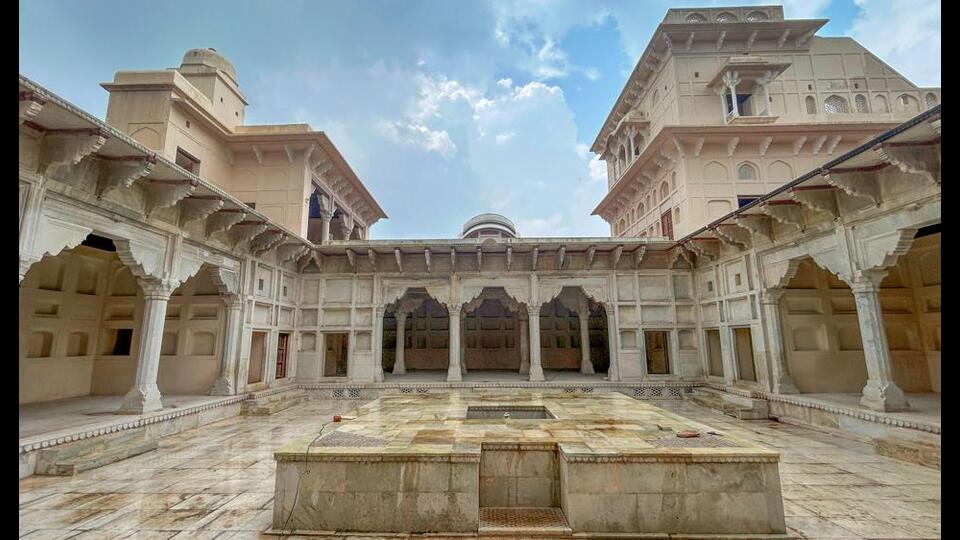
On World Heritage Day (April 18), the focus shifts to the urgent need of preserving the city’s historical and cultural sites.
A report released by the Raahgiri Foundation on Friday, seen by HT, highlights how Gurugram, despite its rapid transformation, continues to house rich but overlooked heritage sites. The report, compiled over the year as part of the Gurugram Heritage Survey through field documentation, archival research and site mapping, documents structures across 50 sites, spanning nearly twelve centuries—from Mughal-era monuments and early 20th-century stepwells to Lodi-era tombs and prehistoric sites in the Aravallis.
Historians warn that the biggest risk to these structures is not just neglect, but the lack of proper documentation.
“The tragedy of urban heritage in India’s new cities is not demolition, it is documentation failure. When we do not know what we have, we cannot protect it. Gurugram is a city that has been comprehensively surveyed for real estate and road width, but never for cultural significance. The sites documented in this report are not exceptional; they are representative. The question is not whether Gurugram has heritage worth preserving. The question is whether we will act before the next decade makes the choice for us,” said Banani Bhattacharyya, program manager – Haryana Heritage Museum Project, Raahgiri Foundation.
The report documents multiple sites across Gurugram, including the 18th-century Shish Mahal in Farrukhnagar, the Badshapur Baoli, Sohna Fort, and the Mangarbani prehistoric landscape. While at least 10 of these sites are protected by the Archaeological Survey of India (ASI) and visited by people, the majority exist without formal recognition, making them vulnerable to encroachment, neglect and unplanned development.
“Gurugram’s heritage monuments are vital to the city’s cultural identity and must be preserved through integration with urban development and heritage-sensitive planning. Public awareness and community participation is also important, as local communities play a key role in safeguarding these sites through outreach and educational initiatives. The vision is to ensure that Gurugram’s growth as a global city remains balanced, where modern development coexists harmoniously with its rich cultural heritage,” said Amit Khatri, director & special secretary, Archaeology & Museums, Haryana.
The report underlines that Gurugram’s heritage is not confined to monuments alone, but is embedded in everyday spaces such as baolis, havelis, mosques and gateways that continue to exist within living neighbourhoods.
“Raahgiri began as a movement to reclaim streets, but streets do not exist in isolation. They connect to places, and places carry memory. When we lose our heritage streetscapes, we lose the very context that gives a city its soul. On World Heritage Day, we are asking this city to look at what it already has, and to choose to keep it,” said Sarika Panda Bhatt, founder trustee, Raahgiri Foundation and architect & urban planner.
Gurugram’s heritage sites have never been systematically mapped or integrated into city planning.
According to the report, Gurugram has only a handful of officially protected monuments, even as several historically significant sites continue to remain undocumented.
As of 2025, Haryana has 66 state-protected heritage sites and monuments, with the number growing. While there is no definitive total count for all potential, undiscovered, or undocumented heritage sites, the state archaeology department has identified 78 total sites for potential, enhanced protection. This gap, according to experts, could lead to irreversible loss in the coming years if not addressed through immediate intervention.
Clusters such as Farrukhnagar—with its Mughal-era urban planning—and Mangarbani, a prehistoric landscape with evidence of early human habitation, could qualify for global recognition if properly documented and conserved, the report stated.


Stay updated with all the Breaking News and Latest News from Mumbai. Click here for comprehensive coverage of top Cities including Bengaluru, Delhi, Hyderabad, and more across India along with Stay informed on the latest happenings in World News.


