
Sign in

HHRC takes suo motu note of body carried on pushcart in Faridabad case

Family allegedly couldn’t pay ₹700 for transport and got no ambulance aid. HHRC cites Article 21 dignity rights and seeks responses from health officials by April 2, 2026.

Published on: Feb 8, 2026, 04:02:03 IST
Share
Share via
  • facebook
  • twitter
  • linkedin
Copy link
  • copy link

The Haryana Human Rights Commission (HHRC) has taken suo motu cognisance of an incident where the body of a 35-year-old woman was transported on a motorised push cart by her family as they could allegedly not afford an ambulance. The commission termed the situation as “gross violation of human dignity and a serious failure of the public health system”.
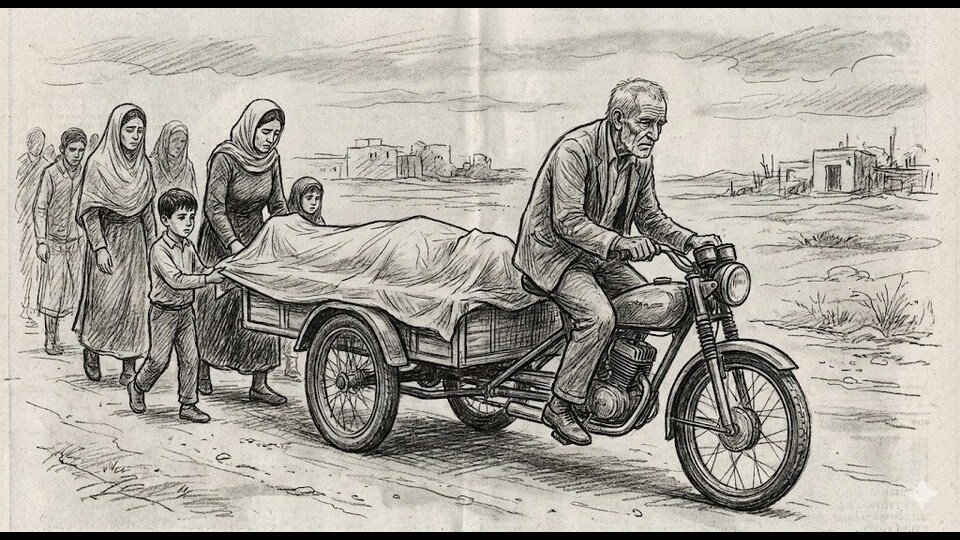
HHRC flagged contradictory hospital responses on ambulance use and noted recurring gaps nationwide where poor families transport bodies due to lack of services. (HT Photo)

The notice was issued following a news report published on January 30, which detailed that the woman died during treatment at Faridabad’s Badshah Khan Civil Hospital. According to the report, the family was unable to arrange ₹700 demandedby a private cart operator for transporting the body and did not receive any ambulance support too from the hospital or district administration. The family eventually carried the body to their village, about 7–10km away, on an open motorised cart.

In its order, the commission, headed by justice Lalit Batra, said the incident raises grave concerns about the State’s obligation to ensure dignity and humane treatment, even after death. It observed that the right to life under Article 21 of the Constitution includes the right to live and die with dignity, and that dignity does not cease upon death.

“In the absence of any ambulance or hearse facility being provided by the hospital or district administration, the family was compelled to make its own arrangement. Dead body was transported to the village Sarurpur on a motorised pushcart, an act that reflects not choice but compulsion born out of poverty and institutional neglect,” the order read.

HHRC described the reported scene as deeply distressing — with the woman’s elderly father-in-law driving the cart, family members walking alongside, and her seven-year-old son holding onto the shroud to prevent it from blowing away — calling it incompatible with the standards expected of a welfare state.

The commission noted that similar incidents across the country show a recurring systemic gap where poor families are forced to transport patients and bodies through makeshift means due to lack of accessible services. It also flagged contradictory responses from health officials — one stating ambulances are not meant for carrying bodies, and another saying no request was made — and said this reflects a policy vacuum and administrative insensitivity.

Further, the commission has recommended that the Haryana health department frame a policy to ensure free and dignified transportation of bodies of deceased persons from economically weaker families who die in civil hospitals.

Notices have been issued to the additional chief secretary of Health and Family Welfare department, director general of health services, and the Faridabad civil surgeon, to submit action taken reports before the next hearing scheduled for April 2, 2026.

  • Leena Dhankhar
    ABOUT THE AUTHOR
    Leena Dhankhar

    Leena Dhankhar is Senior Editor and Bureau Chief, Gurugram, at Hindustan Times, where she has spent over 17 years chronicling the transformation of one of India's fastest-growing urban regions. From starting her career as a crime reporter to leading the Gurugram bureau, her journalism has been defined by investigative reporting, in-depth storytelling and an unwavering focus on public interest. Over nearly two decades, she has reported extensively across crime, politics, civic governance, elections, real estate, environment, courts, sports, education and entertainment, covering Gurugram, Faridabad, Nuh and Palwal. Her reporting has exposed several major scams and systemic failures, including insurance frauds, waste management irregularities, illegal arms manufacturing units in Nuh, illegal mining in the Aravallis, organised crime networks and governance lapses affecting millions of residents. Known for her investigative work and exclusive stories, Leena has reported on high-impact national issues, including the Nicaragua charter flight carrying Indian migrants that was turned back amid allegations of human trafficking, exposing the growing network of illegal immigration rackets. Her work has also focused on gang wars, prison administration, juvenile crime, women and child protection systems, the functioning of the Juvenile Justice Board and Child Welfare Committee, and environmental challenges such as pollution, waterlogging and deteriorating civic infrastructure. Beyond hard news, Leena has extensively documented Haryana's rich heritage, forests and wildlife, bringing attention to the state's historical landmarks, biodiversity, conservation efforts and ecological challenges through immersive reportage and feature writing. Her journalism has consistently gone beyond breaking news. She has documented Gurugram's rapid urbanisation through long-form narratives and enterprise reporting on issues ranging from pothole-ridden roads, flooding and waste management to the changing social fabric of India's Millennium City. She also writes widely read feature columns, including The Outsider, Changemaker, and Concern for Gurugram, profiling people, places and ideas shaping the city's identity. Leena is the author of Gurugram School Murder, published by Juggernaut Books, a deeply reported account of one of India's most high-profile school murder investigations. She is currently working on her second book, an investigative work exploring some of India's most significant scams and fraud investigations. Beyond print journalism, she has expanded her storytelling through public speaking and digital media. She is a TEDx speaker and has produced podcasts exploring Gurugram's transformation, civic challenges and untold stories. Her work reflects a commitment to narrative journalism that combines rigorous reporting with compelling storytelling. A law graduate with an MBA in Human Resources, Leena brings a multidisciplinary perspective to her reporting, particularly on governance, public policy and legal affairs. She has travelled extensively across India to pursue investigative assignments, often reporting from remote locations and conflict-prone areas in search of stories that matter.Read More

Catch every big hit, every wicket with Crickit, a one stop destination for Live Scores, Match Stats, Infographics & much more. Explore now!.

Stay updated with all the Breaking News and Latest News from Mumbai. Click here for comprehensive coverage of top Cities including Bengaluru, Delhi, Hyderabad, and more across India along with Stay informed on the latest happenings in World News.