
 E-Paper



MCG removes C&D waste from 20 spots in Gurugram, says will clean areas in month
Sumit Chahal, junior engineer of MCG, said that they have been acting against the vehicle owners illegally dumping waste

 Prefer HTon Google


A day after HT reported on the dumping of construction and demolition (C&D) waste in at least 20 areas across the city, the Municipal Corporation of Gurugram (MCG) formed teams to map the areas and removed the waste from several spots, said officials.
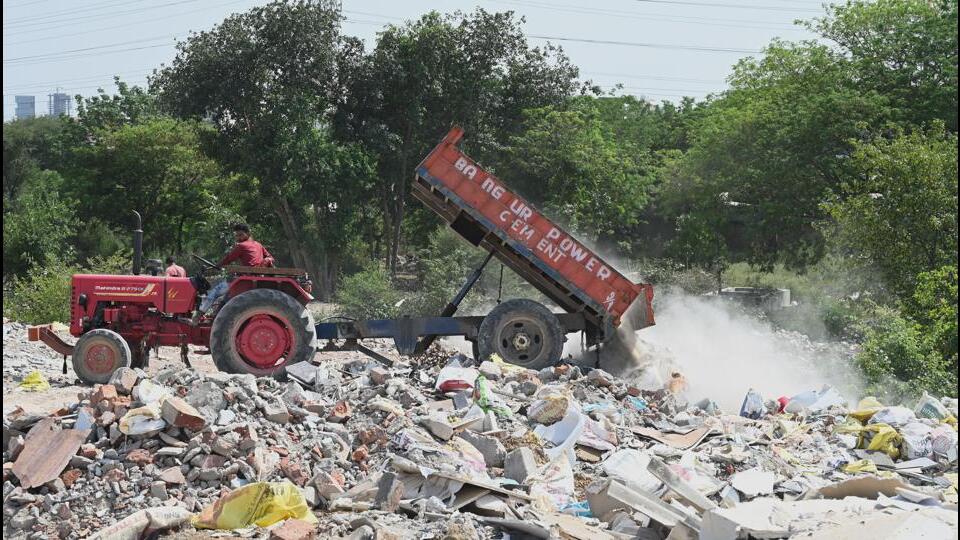
MCG officials said they held a meeting with the private agency responsible for picking up the C&D waste and have directed their teams to penalise the erring vehicles.
PC Meena, MCG commissioner, said that areas will be cleaned within this month and no illegal dumping will be allowed in the Aravallis or on roadside. “Strict action will be taken against private agencies or vehicles found involved in any illegal activities. We want to appeal to residents to send pictures to identify the vehicles,” he said. Meena said he will personally do spot checks and will ensure the areas reported will be mapped and monitored by the teams.
Sumit Chahal, junior engineer of MCG, said that they have been acting against the vehicle owners illegally dumping waste. “On Tuesday, we penalised six vehicles found dumping construction waste on the roadside and in an open area. The teams have been directed to penalise drivers with ₹10,000 for a first-time offence, ₹25,000 for a second offence and ₹35,000 for a third offence. A fourth-time offender will be fined ₹50,000 while ₹1 lakh will be the fine for a fifth offence. We will also write to police regarding impounding vehicles involved in illegal dumping,” he said.
Chahal said they visited at least 20 spots on Tuesday and duties have been assigned to patrol the area twice a day. “We will also check CCTV footage of the areas with the help of locals to identify the vehicles and will get cases registered against them,” he said.
Manas Fuloria, a resident and CEO of Nagarro, a digital product engineering company said, “It is great to hear the administration has responded and started clearing C&D waste. We citizens will only get the quality of services we demand; that’s how it is with any service provider. So let us look beyond our narrow personal issues and participate in the running of the city, especially when it comes to air, water and soil pollution.”
Ruchika Sethi Takkar, founder member of “Why Waste Your Waste”, a civil society movement for a zero-waste city, said that fresh dumping alongside the cleaned areas has commenced. “This is because the local vendors selling construction material around the residential areas also ply the tractors for the removal of debris from construction sites. The residential colonies are witnessing large-scale demolition and construction activities, generating massive quantities of waste. For a permanent resolution, administration should integrate these operators and firmly get them to comply with the C&D waste management rules. It’s not just a waste management issue but also a health risk to several thousand residents of Gurugram. The municipal corporation should consider designating at least two or three temporary C&D collection sites per ward and install GPS on these tractor trolleys for compliance,” she said.
According to a National Green Tribunal (NGT) order of 2015, dumping of any kind of waste, including C&D waste, is banned. Anyone found doing so is liable to pay an environmental compensation fine of up to ₹50,000.
Despite being a hub of construction activity, Gurugram has just one construction debris processing plant in Basai. The plant, set up in December 2019, has a processing capacity of 1,800 tonnes per day, but it is currently operating at only 300 tonnes per day, which is nowhere near enough to tackle the estimated 800 tonnes of construction waste generated by the city daily. Officials said that the capacity is limited because the plant is mandated to pick up C&D waste only within a 15km radius of the plant.
On Tuesday, officials of IL&FS, which used to run the Basai processing plant, said they are no longer involved in the plant and has sold it to another company in 2021. Their employees were retained by the new company.
IL&FS officials said they sold the plant in 2021 to EverEnviro Resource Management Private Limited and since then have no relationship with this business. “We have sold our waste management businesses under IL&FS Environment in April 2021 as a part of the resolution process,” a spokesperson for IL&FS said.
Regarding the change in management of the Basai plant, MCG engineer Chahal said they need to update the documents of IL&FS and replace names with that of the new company.


