
 E-Paper



New structural safety guidelines in Haryana to ensure safety of high rise buildings
The new safety guidelines assume importance in the wake of the DTCP receiving more than 60 complaints from residents’ welfare societies regarding poor construction and structural issues in high-rise buildings in the state

 Prefer HTon Google


The department of town and country planning (DTCP) on Saturday released a fresh draft of structural safety guidelines to ensure that the design and structure of and material used in high-rise buildings meets the prescribed standards and building code specified by the government. According to the DTCP, the new guidelines aim to plug the gaps in existing procedures and provide for the empanelment of structural engineers, geotechnical engineers, third-party auditors, and fact-finding agencies to create a foolproof mechanism to ensure that quality and safety norms are followed during the construction of high-rise buildings.
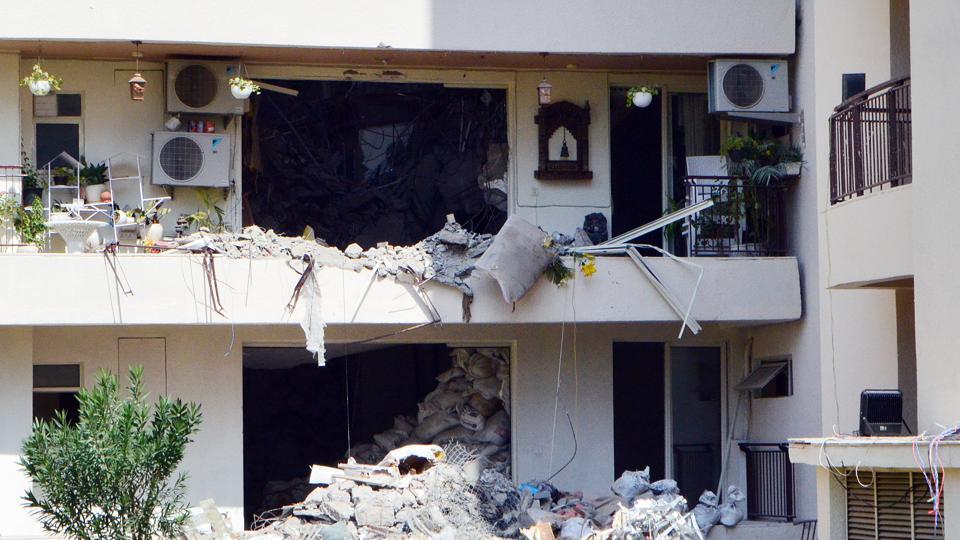
The new safety guidelines assume importance in the wake of the DTCP receiving more than 60 complaints from residents’ welfare societies (RWAs) regarding poor construction and structural issues in high-rise buildings in the state. Another trigger for this exercise, DTCP officials said, is the February 10 incident wherein the ceilings of six floors of Tower D in Chintels Paradiso condominium in Sector 109 collapsed, killing two residents.
Following this incident, the Haryana government had announced in the state assembly that a fresh set of guidelines will be prescribed to prevent a repeat of such incidents and to ensure construction norms are followed.
RS Bhath, district town planner, enforcement, said that the new guidelines will ensure that there are no gaps in planning, designing, and supervision of high-rise buildings during construction. “The department carried out detailed discussions with stakeholders and experts under the directions of the director, DTCP, and additional chief secretary, DTCP, which led to the creation of the new draft guidelines. We also learnt a lot from the over 60 complaints received from RWAs. Based on that, an active supervision structure is being planned and organised,” he said, adding that the department is open to suggestions by everyone till April 28, after which the new guidelines will be brought into force.
According to the new norms, structural engineers and supervision engineers will be empanelled by the department after a thorough background check. The department admitted that at present it did not have any mechanism to verify the antecedents of these experts, which will be necessary now. The guidelines have also prescribed the eligibility and experience of experts who seek empanelment with the department.
In case a building is higher than 70 metres, then services of geotechnical engineers will be sought to certify design and construction, said DTCP officials.
Observing that there was a lack of third-party inspections of project sites during construction, the new guidelines suggest that inspection agencies engaged in structural design and safety should be empaneled to ensure that the quality of material being used is good, and construction practices at the site adhere to the building and construction code prescribed by the government. At present, the department has to rely on a certificate submitted by the architect and supervision engineer along with an application for an occupancy certificate after the completion of a building.
“The third-party inspections will keep construction firms on their toes and the inspectors will be held accountable. So they will have to ensure norms are adhered to and no short-cuts are taken,” said Bhath.
Another key recommendation made by the department is to empanel a “fact-finding agency”, whose role will be to probe the multiple complaints being made by flat owners and RWAs with regard to maintenance issues, construction-related problems and structural faults in a building. “This agency will submit a factual report within 15 days of the complaint and clarify whether it is a maintenance issue or requires a structural audit. Presently, there is no mechanism to look into such types of complaints,” said Bhath, adding that this agency will be paid by the department from the labour cess levied by the government.
The department has also mandated that the developer shall hand over all the building and structural designs to the RWA at the time of handing over a residential colony. The RWAs, in order to make alterations, must seek permission from the empanelled structural agency or engineer. The structural audit of buildings older than 30 years will be carried out by RWAs at their own cost, the guidelines prescribe.
The guidelines also state that an online portal will be developed for empaneling experts such as a structural agency, third-party experts and others, who shall be vetted by a committee of subject matters experts, which shall be constituted by the department.


