
 E-Paper



Rain effect: Gurugram breathes in good air after consecutive very poor air days
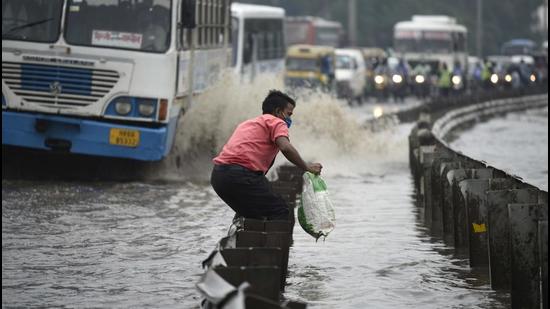
Gurugram received 42mm of rainfall from 8.30am on Sunday to 8.30am on Monday, which took the air quality index to 36, which was in the good category of CPCB classification, from a very poor AQI of 332 a day prior.


Buoyed by heavy spells of rainfall on Monday, the air quality in Gurugram beat a dramatic retreat from the very poor category to the good category of the Central Pollution Control Board’s (CPCB) daily air quality index (AQI) bulletin.
On Monday, the city reported an air quality index of 36, a sharp improvement from 332 (very poor) recorded on Sunday. Neighbouring cities of Delhi (AQI 46), Noida (AQI 45), Greater Noida (AQI 38), Ghaziabad (AQI 45) in the National Capital Region (NCR) also reported good air quality, except for Faridabad, where the air quality was recorded to be satisfactory (AQI 55).
The city received 42mm of rainfall from 8.30am on Sunday to 8.30am on Monday, according to records of the India Meteorological Department. On Monday, the city saw strong surface winds throughout the day after it stopped raining early in the morning.
Officials of the CPCB on Monday said that the air quality is likely to remain in the moderate category over the next few days before it starts deteriorating to the poor category again.
The CPCB also held a meeting for operationalisation of the anti-pollution measures under the Graded Response Action Plan (Grap) measures in the NCR, and decided that “actions under ‘poor’ to ‘moderate’ category should be rigorously implemented with immediate effect in Delhi-NCR.”
The implementing agencies in the NCR states were also instructed to be ready to implement actions under the very poor category, as and when the air quality starts deteriorating.
Over the next few days, between October 21 and 24, air quality is likely to fluctuate between the moderate and poor category, after which light rain is likely in NCR.
On Sunday, HT had reported that although Gurugram had very poor air on the CPCB’s AQI bulletin, the air quality started improving due to rainfall, as 10 of the 12 local air quality monitors recorded satisfactory AQI, while two recorded a moderate AQI reading.
S Narayanan, member secretary of Haryana State Pollution Control Board (HSPCB), said, “There are predictions of air quality deteriorating in the coming days, so we will take action accordingly and implement action suggested under Grap measures for poor quality of air. Measures for very poor air quality will be implemented if the situation worsens.”
Under the plan for the poor category, measures that are implemented usually pertain to stopping garbage burning in landfills and other places, imposing heavy fines on persons responsible, stringently enforcing all pollution control regulations in industries and thermal power plants, ensuring that all brick kilns remain closed in Delhi-NCR as per the directions of the National Green Tribunal (NGT), ensuring periodic mechanised sweeping or sprinkling of water on roads with heavy traffic and dust generation potential.
Under the very poor category, measures taken up under Grap include stopping the use of diesel generator sets, implementing a surge in parking fee by three to four times, stopping use of coal or firewood in eateries and urging people with respiratory or cardiac problems to stay indoors.
On Monday, the city recorded a maximum temperature of 31.8 degrees Celsius (°C), two degrees below normal, while the minimum temperature was 19.8°C, which was four degrees above the normal. The humidity level was recorded at 92% at the end of the day. The minimum temperature on Monday was four degrees lower than what was recorded on Sunday.
Stay updated with all the Breaking News and Latest News from Mumbai. Click here for comprehensive coverage of top Cities including Bengaluru, Delhi, Hyderabad, and more across India along with Stay informed on the latest happenings in World News.


