
 E-Paper



Rainfall fails to improve Gurugram air, in very poor zone for second day in a row
Even as the city received light rainfall on Sunday, it recorded an air quality index of 332 (very poor) on the CPCB bulletin, worse than the poor air quality recorded in neighbouring Delhi


Air quality in the city deteriorated rapidly over the past two weeks, from the satisfactory category to the very poor category, according to the Central Pollution Control Board’s (CPCB) daily air quality index (AQI) bulletin, an indication that anti-pollution measures are still lacking.
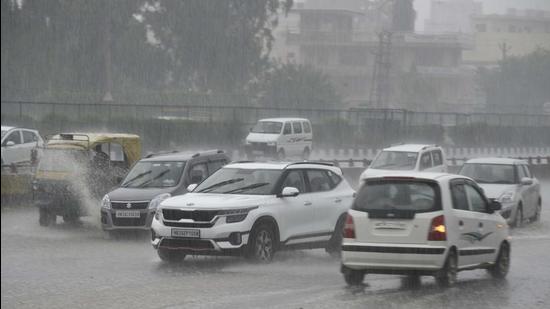
Even as the city received light rainfall on Sunday, it recorded an AQI of 332 (very poor) on the CPCB bulletin, worse than the poor air quality recorded in neighbouring Delhi. This was the second consecutive day the city recorded very poor air, after recording an AQI of 308 on Saturday.
However, on Sunday, data collated from the Gurugram Metropolitan Development Authority’s (GMDA) air quality monitors painted a different picture, with 10 of the 12 monitors depicting the satisfactory level of air quality, while two monitors, at Tau Devi Lal Park and Rezang La Chowk, recorded moderate air quality between 9am and 6.30pm.
Officials of the Haryana State Pollution Control Board (HSPCB) attributed the dip in air quality to weather conditions of drop in temperatures and low mixing height of pollutants, inhibiting their dispersion.
“This dip in air quality in the past two days is because of unfavourable weather conditions as there is a decrease in temperature, slow wind speed and decrease in mixing height of pollutants. This, ultimately, obstructs the pollutants to disperse in the atmosphere,” Kuldeep Singh, the regional officer of HSPCB for Gurugram (north), said.
When asked if the dip in AQI was due to lack of enforcement of anti-pollution measures issued on October 1, he said, “After reading various reports of dust control norms not being followed, especially at construction sites, I visited a few areas and saw the situation. I have instructed all agencies to follow the measures properly and submit a daily report. Our teams will also start conducting surprise raids at the hotspots or from where complaints are received, and take action accordingly.”
Experts agreed that the dip in air quality may be due to unfavourable weather conditions, but pointed out that source reduction of pollutants has not happened.
“Despite all instructions being issued, there is no difference in managing vehicular emission or dust management on the ground. Weather conditions are unfavourable, but with the rain that the city received on Sunday, the effects will be seen over the next two to three days, but our AQI may still be on the higher side as pollution sources in the city have not been checked properly,” Abhishek Srivastava, a city-based environmental engineer, said.
According to the CPCB data, between October 3 and 6, the city recorded satisfactory air quality, with AQI scores below 100 while on Saturday, the city recorded very poor air quality for the first time this season.
The pollution board has identified that the main causes for pollution in Gurugram are dust pollution from construction and demolition activities, vehicular pollution, and solid waste burning. The pollution control board has identified 18 hotspots for vehicular air emissions or traffic congestion, 13 hotspots for road dust, 10 areas used for rampant solid waste disposal, and seven hotspots for industrial air emissions.
On October 1, directions were issued to 40 agencies in the city, including the Municipal Corporation of Gurugram, GMDA, Haryana Shahari Vikas Pradhikaran and the transport department, among others, to adhere to action plans issued for pollution hotspots in the city.
More rain likely on Monday
Gurugram received light rainfall of around 1mm on Sunday, bringing slight relief to residents from pollution. Strong surface winds also helped slightly improve the air quality during the day.
According to the weather bulletin issued by the Meteorological Centre in Chandigarh, heavy rain with thunderstorms, lightning with gusty winds (speed 30-40kmph) is likely at isolated places across the south and south-east Haryana districts.
On Sunday, the city recorded a maximum temperature of 31.8 degrees Celsius (°C), two degrees below normal, while the minimum temperature was 24°C, which was six degrees above the normal. The humidity level was recorded at 92% at the end of the day.
The air quality in Delhi-NCR is likely to improve to the moderate category over the next two days as an effect of the rainfall.
Stay updated with all the Breaking News and Latest News from Mumbai. Click here for comprehensive coverage of top Cities including Bengaluru, Delhi, Hyderabad, and more across India along with Stay informed on the latest happenings in World News.


