
 E-Paper



SC allows NHAI to restart widening of Pataudi-Rewari-Gurgaon Expressway
Already, 12,000 trees have been chopped for the project, but no compensatory afforestation has been carried out, said environmentalists

 Prefer HTon Google


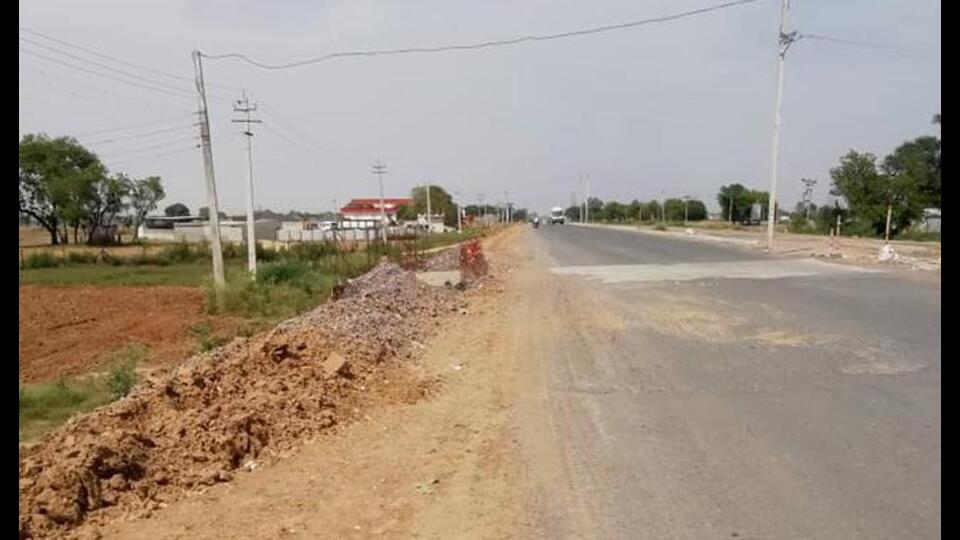
The Supreme Court has permitted the National Highways Authority of India (NHAI) to restart the widening of the Pataudi-Rewari-Gurgaon Expressway, which was halted last year by the National Green Tribunal (NGT) over compensatory afforestation.
The court also asked the highways authority to involve the respondents (environmentalists) in identifying land to plant saplings.
The work on widening the four-lane 43km highway project, connecting Gurugram, Rewari, and Pataudi started in July 2020 but it was halted in September 2022 by the NGT on an appeal filed by environmentalists against the forest clearance granted for the project. They said the site (Panchkula) where compensatory afforestation is being carried out is 300km from the location where trees are being felled, and that such plantation is no compensation.
The NGT constituted a joint committee to conduct a site visit and submit a report. The joint committee’s report acknowledged that compensatory afforestation was being carried out in Panchkula.
In its order issued on September 2, 2022,the NGT noted: “Forest clearance is subject to the requirement of afforestation within 10km of the place from which trees are cut. It will be the responsibility of the PP (project proponent) to find suitable land, subject to the approval of the forest department for this purpose.”
Against this, the NHAI approached the Supreme Court this January citing unavailability of swathes of land in Gurugram to plant the saplings.
The petition was heard by the Supreme Court on April 6 and the order came on Friday. The apex court also directed the Haryana government to take consent of both NHAI and the respondents (environmentalists) in the case before carrying out plantation.
“Haryana will interact with the petitioner as well as co-respondents, to find out the place/location where trees can be replanted. Further, the petitioner is permitted to carry out the road widening work, and necessary permission for cutting of trees can be accorded by the competent authorities. We also direct that, in case, any specified location is mutually agreed upon, the tree plantation drive shall be undertaken at the said location,” said the order.
According to NHAI, forest clearance was granted for 36.14 hectares in Gurugram division, which includes 8,373 trees and 3,948 plants. In Rewari division, the nod was to clear 10.94 hectares, which includes 4,049 trees, 4,137 plants.
Already, 12,000 trees have been chopped for the project, but no compensatory afforestation has been carried out, said environmentalists.
Environmentalists, who are the petitioners before the NGT, said as per an inspection report dated July 30, 2021, land is being acquired on either side of the road which makes felling of trees inevitable on both sides.
The petition added that the felling permission is contrary to a 2017 order of the tribunal, wherein it had directed that no tree can be felled until and unless ten trees are planted for each tree felled or proposed to be felled.
In fact, the felling of trees for the widening work came to light after a resident from the area alerted Vikrant Tongad, a Noida based environmentalist, about the activity. Tongad shared the news with his contemporaries in Gurugram and the matter soon reached the NGT.
On September 2, 2022, while hearing the petition by environmentalists questioning the forest clearance for diversion of around 47 hectares of forest land for the project, the NGT directed the NHAI to find suitable land for compensatory afforestation closer to the place from where trees were cut.
Vivek Kamboj, a Gurugram-based environmentalist, said the NGT in September 2022 had ordered that if this mandatory condition is not followed up, the PP (project proponent) will not be allowed to proceed with the project.
“NHAI had said in its reply to NGT that due to non-availability of such a large patch of degraded forest land in Gurugram, another site was proposed in Pinjore Range in Morni-Pinjore division of Haryana which is approximately 280km from the project location,” he said.
Vaishali Rana, a city-based environmentalist, said, “The apex court has ordered that we will be a part of the team to locate the compensatory afforestation (CA) site. Now the government agencies can’t get away by giving a lame excuse that there isn’t any land available in whole of Gurugram for CA. What we were not expecting was that without fixing the onus on NHAI and the forest department for felling trees in violations of CA rules, they have been allowed to carry on with the project,” she said.
A senior NHAI official said that the court decision will help the authority expedite the work on the highway as the apex court has granted permission for felling of trees wherever these are required. “We were presently working at spots where trees were not required to be removed. But now we have the permission to.remove the trees with the help of state authorities,” he said.


