
 E-Paper



To decongest Gurugram-Faridabad toll plaza, vehicles to get free pass when queue goes beyond 50m
Police said the white lines will ensure that the waiting queue of vehicles is not more than 50 metres at any given point of time

 Prefer HTon Google


Traffic police on Thursday came up with a unique solution to the frequent congestion on both sides of the Gurugram-Faridabad toll plaza, and said if the vehicle queue extends for more than 50 metres at the toll plaza, then vehicles at the front of the queue would be given free passage till the queue reduces.
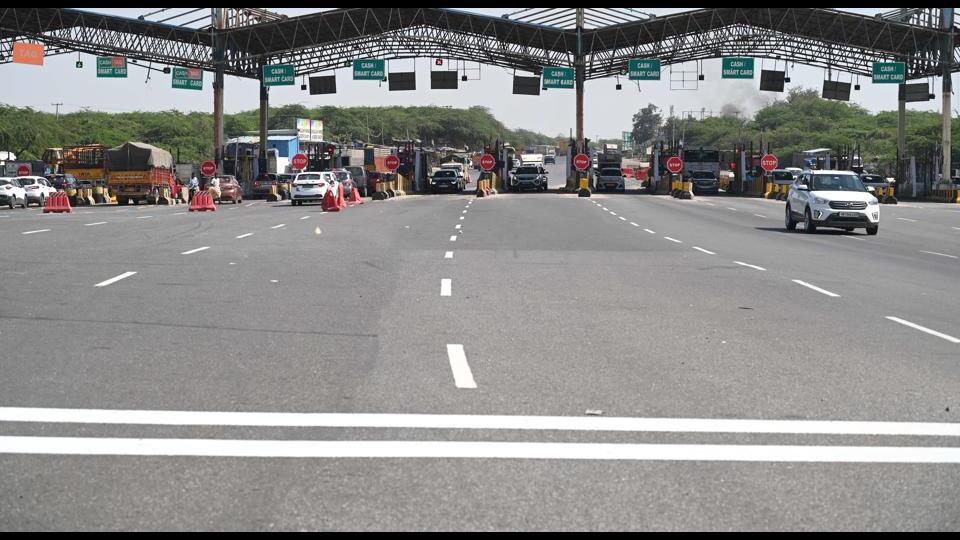
For this purpose, the traffic police on Friday painted white strips on both sides of the Gurugram-Faridabad toll plaza, at a distance of 50 metres from the boom barriers.
Traffic police said if the vehicle queue goes beyond the white strip, then the boom barriers will be lifted and the vehicles given free passage, till the congestion clears and the queue is once again within the white mark.
Deputy commissioner of police (traffic) Virender Vij said the initiative was taken after repeated complaints from commuters about the congestion at the toll plaza.
“A spot check was conducted for a week. We noticed that the stretch remained congested almost the entire day but the situation was really bad during peak hours. Commuters had to wait for over an hour to cross the toll. After discussion with the traffic team, we decided to paint a white line, 50 metres from the toll plaza, on both sides, to provide relief,” he said.
Police said the white lines will ensure that the waiting queue of vehicles is not more than 50 metres at any given point of time and if the queue is beyond that distance, then vehicles at the front can pass without paying the toll.
These guidelines have been issued by the National Highways Authority of India (NHAI) as it seeks to minimise waiting time at toll plazas and ensure a service time of not more than 10 seconds per vehicle even during peak hours.
Manoj Khaitan, a resident of Sector 61, who works in a private company in Faridabad, said he takes the stretch six days a week. “Not even once have I found the stretch congestion free. Crossing the toll plaza takes more than half an hour because they don’t have the option of a FASTag (an electronic toll collection system). The operators are very slow and unable to manage the pressure during peak hours,” he said.
Lalit Sharma, a resident of Sector 48 and a daily commuter to Faridabad, said the stretch after Golf Course Extension Road towards Faridabad is congested during peak hours and at least three times a week, it takes more than an hour to cross it.
“It’s been three years and the situation is still the same. We have complained to the police several times but nothing has been done. The operators are issuing manual slips and that is time consuming,” he said.
Charging the toll amount individually, in the absence of a working FASTag facility, causes massive traffic congestion. More than 50,000 vehicles pass through the toll plaza daily, said traffic police.
The state government had signed a memorandum of understanding (MoU) with the NHAI in 2019 for the use of the FASTag system to pay tolls even on state roads, but the toll plaza on the Gurugram-Faridabad road is awaiting permission.
Ashish Bhardwaj, director of South Asian Tollways Pvt Ltd, the company which operates the toll, said they have installed all equipment related to the FASTag system, there has been no progress as the proposal sent to the Haryana government is yet to be cleared.
“To manage traffic, we have deployed extra manpower and have given online payment QR codes to operators for the payment. We have also kept hand-held machines at all counters to ensure speedy transactions. The traffic volume has increased over the past few months and we are waiting for the permission to start FASTag, which will in itself reduce congestion,” he said.
Bhardwaj said they will have to suffer huge losses due to the new initiative of white strips, but they will try to solve the congestion problem at the earliest.


