E-Paper



500 bighas of enemy property in grip of land mafia in U.P.’s Prayagraj
After the instructions of the state government to remove encroachments from designated enemy properties, the exercise to identify such properties has started in Prayagraj

 Prefer HTon Google


After the instructions of the state government to remove encroachments from designated enemy properties, the exercise to identify such properties has started in Prayagraj. If district administration officials are to be believed, the land mafia could have illegally occupied as much as 500 bighas of enemy property in Prayagraj.
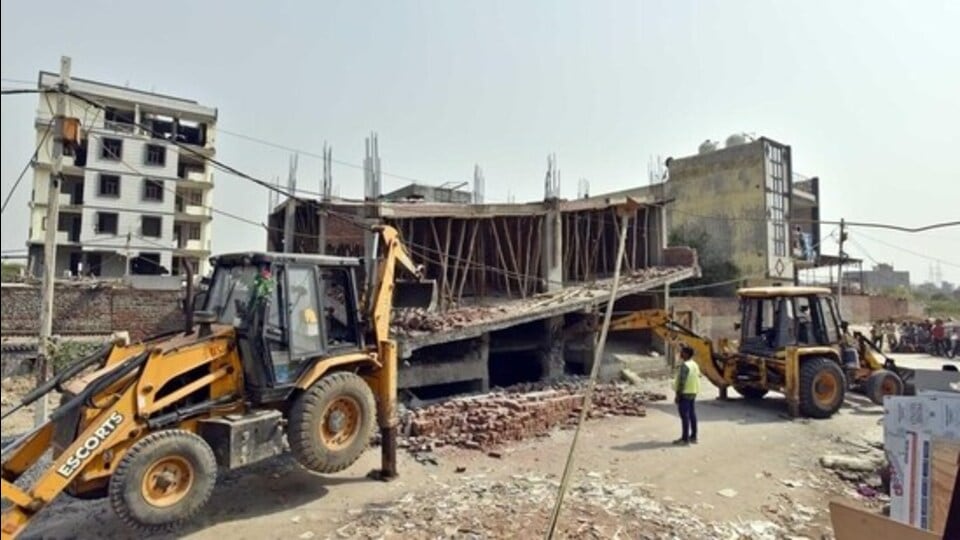
In a bid to make identification of enemy properties tough, their documents have even been burnt by such elements in Mauaima town area. Now, in the absence of documents, investigation is going on in the district on the basis of 70-year-old land records, officials say.
Enemy property is the property left behind in India by people who migrated from India to Pakistan or other countries. After partition in 1947, a large number of big land owners left their properties in areas like Kareli, Karelabagh, Puramufti, Dhumanganj, Jhunsi, Pargana, Mauaima and Phulpur and migrated from Prayagraj to Pakistan.
After this, the Enemy Property Act was enacted in 1968. In this, the state government was made the custodian of all such lands. With the passage of time when people left, a large number of land mafia occupied these lands.
When riots took place in Mauaima here in 1983, a large chunk of documents were burnt which included those related to these enemy properties as well. With the connivance of the then revenue officials, around 35 bigha of such land whose value is in crores was even got illegally registered in names of certain individuals.
Recently, chief minister Yogi Adityanath pursuing the policy of ‘zero-tolerance’ against any kind of corruption in a high-level meeting gave strict directives to free valuable properties still in illegal possession due to the neglect of previous governments.
Following this, Prayagraj district magistrate Sanjay Kumar Khatri has asked lekhpals (revenue employees) to collect information about all such land and properties. “Necessary action in this regard is being taken on priority,” he said. However, there are challenges before officials. Due to burning of documents, land reconciliation has been started on the basis of 70-year-old records.
After talking to some elders, the officials have come to know that around 35 bighas of land has been occupied by the land mafia in Mauaima alone. Even name of a gang has surfaced which is pressurising people to get their names removed from the land records. This information was conveyed to divisional commissioner Vijay Vishwas Pant.
After this, investigation started in other tehsils also. According to officials, more than 500 bighas of land has been found occupied in eight tehsils of the district and on which the encroachments will have to be removed as part of the statewide exercise.
“Some of the properties in Mauaima are designated enemy property which are being scrutinised. Status of some properties is also not clear but there is speculation that they could be enemy properties. In such a situation, their documents are being looked into. If it is proved that the lands are enemy property, they will be so declared,” said Dr Kanchan, sub divisional magistrate, Soraon.
Enemy property is the property left behind in India by people who migrated from India to Pakistan or other countries. After the India-Pakistan War of 1965, the Enemy Property Act was promulgated in 1968. The ownership of these properties is passed on to a government department known as the Custodian for Enemy Property in India.
The basic assignment of the Custodian of Enemy Property for India is to identify, declare, preserve, manage and take control of the enemy properties and dispose of the property with prior approval of the Government of India under the provisions of the Enemy Property Act, 1968 as amended by the Enemy Property (Amendment and Validation) Act, 2017.