E-Paper



‘95% vegetables consumed in Lucknow grown with pesticides’
At Navin Vegetables, Fruits and Galla Mandi in Triveni Nagar, traders said nearly the entire vegetable supply reaching the city is cultivated with pesticides. The mandi receives consignments from Madhya Pradesh, Maharashtra and nearby districts such as Sitapur, Barabanki and Unnao.

 Prefer HTon Google


More than 95% of vegetables consumed by over 2.6 million residents in Lucknow are grown using pesticides and insecticides, according to traders at the city’s wholesale market and farmers from supplying districts. While the produce appears large and shiny, farmers admit chemicals are used from sowing to harvesting.
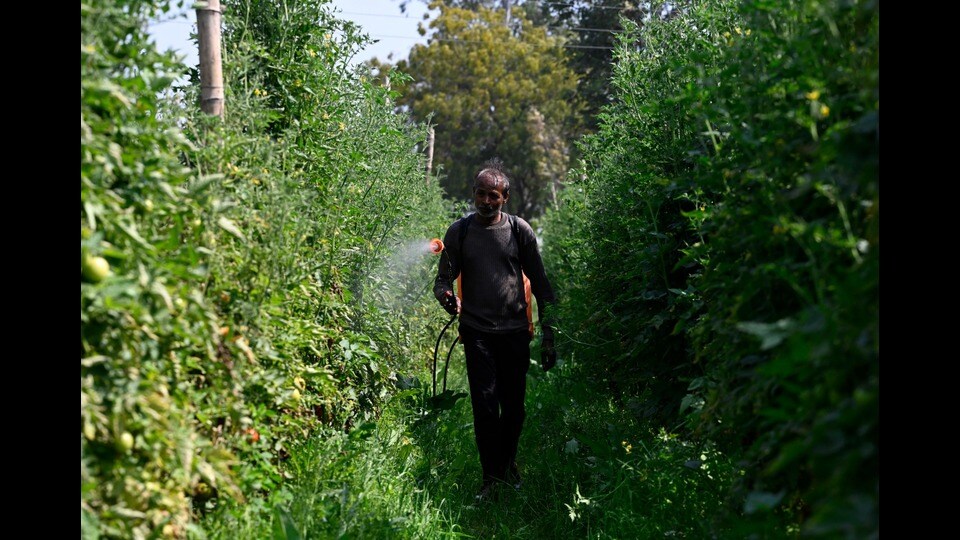
At Navin Vegetables, Fruits and Galla Mandi in Triveni Nagar, traders said nearly the entire vegetable supply reaching the city is cultivated with pesticides. The mandi receives consignments from Madhya Pradesh, Maharashtra and nearby districts such as Sitapur, Barabanki and Unnao.
Subhash Singh, secretary of Navin Vegetables, Fruits and Galla Mandi, said, “The supply of over 95% vegetables in the city is fulfilled by several states, including Madhya Pradesh and Maharashtra but there is also a supply from nearby districts Sitapur, Barabanki, and Unnao. While organic produce is expensive for consumers, it also requires proper technique and technology. Even organic produce and chemically grown vegetables cannot be completely differentiated without proper testing and certification.”
When HT visited to verify the claims to a village near Misrikh in Sitapur district found farmers spraying fertilisers and pesticides without gloves or safety glasses. Several farmers said they follow the quantity suggested by shopkeepers selling the products.
Pahalwan Singh, 48, a farmer near Mishrikh, said organic farming yields lower output. “When I grow potatoes using organic farming practices, I get only 20-22 quintals in my 4 bigha farm. When I grow potatoes using chemical fertilizers the size is bigger and shinier. The quantity increases to about 45-50 quintals. Tomatoes and brinjals cannot be grown in large quantities without chemical fertilisers. Even though we want to grow organic vegetables on a large scale, we have no option because we have a family to run. There is a need for the government to implement some regulations and provide a better price for the organic vegetables after testing,” he said.
Indrasen Maurya, 38, said farmers sometimes increase fertiliser use to boost plant growth. “In one acre, 50 kgs of diammonium phosphate (DAP) and urea is used but sometimes we increase it to 100-200 kgs for tomato, brinjals, chillis and potatoes. If the amount of DAP is increased the plant’s height increases rapidly and bears more and larger fruits,” he said.
Lalta Singh, 56, of Barabanki, said he grows organic vegetables for family consumption but uses pesticides for large-scale supply. “There are certain chemicals used to kill insects and pests that penetrate the fruit, making it harmful to health, but we are unable to grow them in bulk quantities. Sometimes pesticide sellers misinform farmers to spray more so that they repurchase sooner. In some cases, farmers use harmful pesticides like Paraquat due to labour shortage,” he said.
Kamlesh Singh, 52, from Mishrikh, said he continues organic practices despite lower returns. “I don’t even get the price that other farmers receive because my vegetables are not as good-looking. About 187,000 metric tonnes of urea was used in Sitapur last year, which means people are consuming 1 spoon of poison every day. In my farm, I use cow dung, turmeric and jaggery and insect traps,” he said.
Prof Venkatesh Dutta, head of the environment science department at Babasaheb Bhimrao Ambedkar University, Lucknow, said pesticide use near water bodies is increasing contamination. “This is detrimental to aquatic ecosystems, bees and birds. Harmful chemicals remain in the environment for a long time as persistent organic pollutants,” he said.
VP Sharma, a former scientist at CSIR-Indian Institute of Toxicology Research, said agrochemicals can affect health if used above permissible limits. “These chemicals boost foliage and fruit size. The plant does not know which chemical to migrate inside and which to keep out, so they become part of the food system. Regular consumption of vegetables with residue above permissible limits can cause adverse effects on human health,” he said.