
 E-Paper



CAG flags ₹408 crore loss from illegal mining in UP
In three districts, five cases of mining were detected in 30.40 hectares without any leases. Around 613 stone crushers were found operating without mandatory storage licences, with no action taken by district mines officers, CAG said.


Illegal mineral excavation spread over 268.91 hectares across 11 districts of Uttar Pradesh between 2017 and 2022, causing a pending revenue loss of ₹408.68 crore, has been flagged by the Comptroller and Auditor General (CAG) of India. The report on ‘Mining in Uttar Pradesh and Socio-Economic Impact of Illegal Mining’ was presented in the state assembly on Tuesday by parliamentary affairs minister Suresh Khanna.
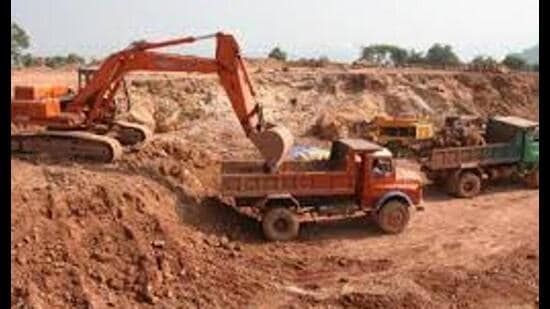
According to the CAG, 45 lessees mined 26.89 lakh cubic metres of minerals outside their allotted lease areas, with recovery proceedings delayed due to inadequate monitoring.
In three districts, five cases of mining were detected in 30.40 hectares without any leases. Around 613 stone crushers were found operating without mandatory storage licences, with no action taken by district mines officers, CAG said.
“The Meja Thermal Power Project allegedly extracted 53,88,930 cubic metres of ballast and boulders without a mining lease or permit. Of the ₹322.62 crore sought as royalty by the Prayagraj district administration, only ₹81.77 lakh was deposited, leaving ₹321.81 crore outstanding,” the CAG said.
As per the report, the mining surveillance system, developed by the Union ministry of mines for detecting illegal mining, was not used by the state’s geology and mining department.
Lessees generated transit passes using unfit vehicles, including those with fake registration numbers, and inflated distances and quantities. Fake passes submitted to executing agencies went unchecked, resulting in a ₹5.89 crore revenue loss, according to the CAG.
CAG’s review of the data of transit passes (e-MM-11 forms) showed that lessees issued passes with different vehicle capacities for day and night transport, and quantities above permissible limits, indicating weak software controls.
Brick kilns were established without following distance norms from habitations, schools, orchards, eco-sensitive zones, and monuments. Four mining leases were granted near bridges despite guidelines prohibiting such activity, CAG stated in its report.
During the audit, CAG found that stamp duty worth ₹20.96 crore was short levied on 173 mining lease deeds. Financial assurance for mine closure costs was not collected from 54 lessees.
Required plantation of 13,64,800 saplings over 6,824 acres was not carried out, and rehabilitation in closed mines went unmonitored, risking environmental degradation, CAG stated.


