
 E-Paper



Checkmate, fraudsters: Real-time bank-police grid yields 47% cyber recovery in 6 months
The state has strengthened its cyber response framework by linking a high-capacity call centre to a real-time banking intervention system, the Cyber Fraud Mitigation Centre (CFMC). The mechanism aims to stop the flow of stolen money during the crucial early window after a victim reports a fraud.

 Prefer HTon Google


Even as cyber fraud cases continue to rise, Uttar Pradesh has reported a 47.17% recovery rate over the past six months, with authorities planning to scale the 1930 helpline network to an 80-seat capacity to checkmate fraudsters by blocking stolen funds within minutes of a complaint.
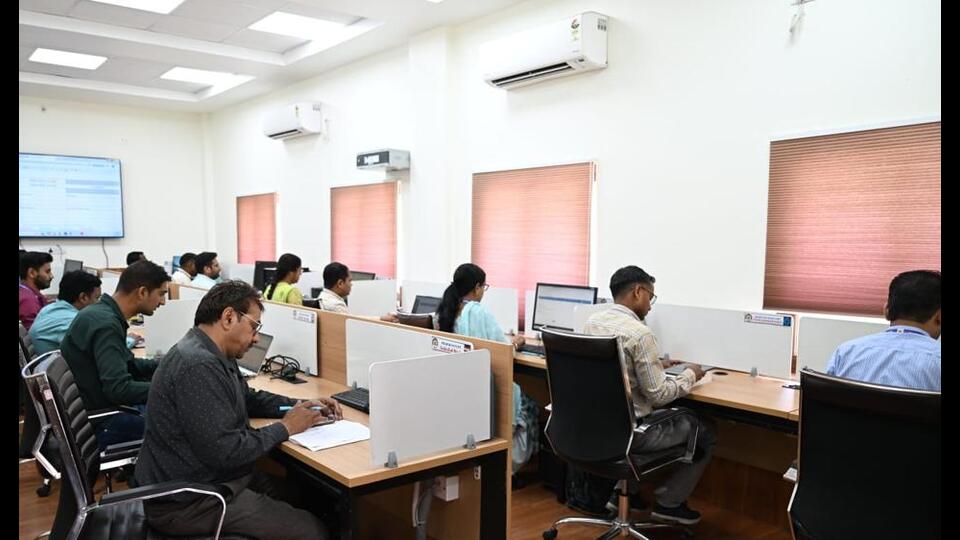
The state has strengthened its cyber response framework by linking a high-capacity call centre to a real-time banking intervention system, the Cyber Fraud Mitigation Centre (CFMC). The mechanism aims to stop the flow of stolen money during the crucial early window after a victim reports a fraud.
Data underscores both the scale of the problem and the gains from the upgraded system. Between September 2025 and March 2026, cyber fraud worth ₹24.12 crore was reported in the state. Of this, ₹11.38 crore has been recovered, translating to a recovery rate of 47.17%. January 2026 recorded the highest reported fraud at ₹12.66 crore, accounting for more than half the total losses during the period. Recovery rates improved from 24.56% in September 2025 to 88.65% in March 2026.
The initiative builds on the Union home ministry’s Indian Cyber Crime Coordination Centre (I4C) set up in 2018 and the National Cyber Crime Reporting portal launched in 2019. The financial cyber fraud helpline, introduced as 155260 in 2020 and upgraded to 1930 in 2021, enables victims to report cases immediately.
In Uttar Pradesh, the 1930 helpline began with 14 seats at the UP 112 headquarters in 2021 and six more were added in 2023. With complaints climbing, a 30-seat dedicated call centre was commissioned on July 31, 2025, at Kalli Paschim in Lucknow, taking total operational capacity to 50 seats functioning round the clock. Authorities plan to add another 30 seats, scaling the system to 80 seats. Officials said lakhs of calls are received every month, reflecting rising awareness and an increase in cyber fraud incidents.
Binod Kumar Singh, director general (cyber crime), said the integration of 1930 with the cyber fraud mitigation centre marks a shift from post-incident investigation to real-time disruption. “Uttar Pradesh has moved decisively from a reactive model to a real-time intervention framework. With expanded capacity and deeper banking integration, we are responding faster and more effectively to evolving cyber threats,” he said.
“Under the new system, once a complaint is registered on 1930, the information is instantly relayed to the CFMC, where police personnel and bank officials work side by side. This enables immediate verification and action, including freezing or placing a lien on suspect accounts, often within the critical golden hour after a fraud is reported,” he explained.
According to the Uttar Pradesh Police, ₹325.25 crore had been frozen or put under lien till the end of 2025 through the National Cyber Crime Reporting Portal and helpline number 1930.
Officials attribute the trend to faster response times, improved coordination and the operationalisation of the cyber fraud mitigation centre. First established nationally in 2024 and replicated in Uttar Pradesh in 2025, the centre has become central to the state’s strategy. At the Lucknow facility, representatives from 15 major public and private sector banks sit alongside police teams to enable immediate action in high-value cases.


