
 E-Paper



East–West Metro corridor prepares for lift-off in packed Old Lucknow
Approved on August 12, 2025, the 11.2-km line will cut through neighbourhoods where roads squeeze past homes, markets and traffic bottlenecks. In such a setting, planners are working with limited room, tasked with creating a modern metro link without unsettling communities already pressed for space.

 Prefer HTon Google


The East–West Metro Corridor under Phase 1B of the Lucknow Metro project, planned from Charbagh to Vasant Kunj, is gaining fresh momentum with authorities preparing to clear crucial land parcels in the packed interiors of Old Lucknow. The long-awaited link is moving toward its first construction push next year, reshaping how the city plans transit in some of its most space-starved streets.
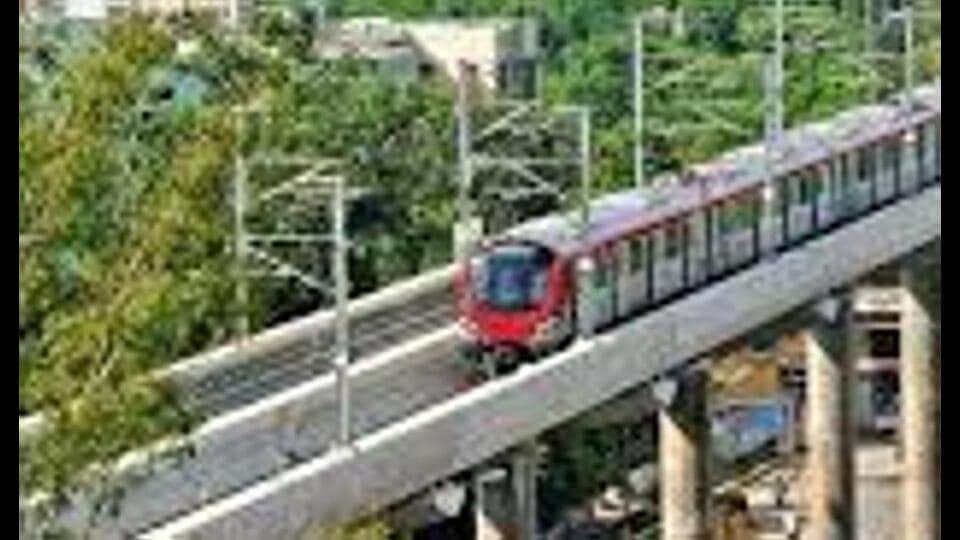
Approved on August 12, 2025, the 11.2-km line will cut through neighbourhoods where roads squeeze past homes, markets and traffic bottlenecks. In such a setting, planners are working with limited room, tasked with creating a modern metro link without unsettling communities already pressed for space.
Construction is expected to begin in phases from February next year, said Uttar Pradesh Metro Rail Corporation (UPMRC) officials.
The corridor’s narrow geography has influenced everything from station entry points to tunnel routes, according to a UPMRC official. “Surveys and digital mapping tools are identifying small workable pockets in areas where residents want smoother mobility but cannot give up shopfronts or footpaths,” he added.
Another senior UPMRC official said, “We are engineering not just around structures, but around people’s lived realities.” “Every access point, every turn, every underground stretch has to respect the land it touches.”
The corridor’s land map is tightly planned. Small pockets like 823 sq m at Charbagh and 365 sq m at Gautam Buddha Marg have been taken for passenger access, while larger plots, over 18,000 sq m near Chowk Crossing and 18 hectares near Hardoi Road for the depot, offer rare open space in the old city. Temporary land, including 12 hectares near Sitapur Road for a casting yard, will support civil work, and another 61 hectares reserved for property development is expected to aid future revenue, an official informed.
Space pressure has shaped the design as well. The line will start with three-coach trains, with room to expand only if demand rises. Stations will remain compact, unlike the wider setups on the North–South route. ‘We learned from the first phase,” an official said. “This system is being built for Lucknow’s density.”
To preserve the limited surface area, the project will lean on advanced construction. Four Tunnel Boring Machines will handle most underground work, while elevated parts will use precast segments to limit dust, noise and traffic impact.
With land in place and tenders in the works, the East–West line is set to move ahead by fitting itself into one of the city’s tightest urban stretches.


