
 E-Paper



GST Council decides to set up two GoMs
Union finance minister Nirmala Sitharaman made the announcement about the two GoMs after the 45th meeting of the GST Council in Lucknow


The Goods and Services Tax (GST) Council on Friday decided to decided to set up two Groups of Ministers (GoMs), the first to look into rate rationalisation and the second to examine the issues of e-way bills, FASTags, technology and compliances. Both the GoMs have been given two months’ time to submit their reports.
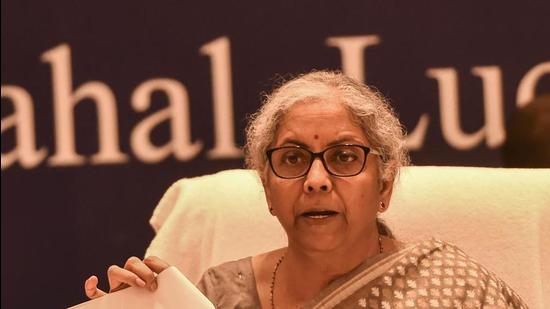
Union finance minister Nirmala Sitharaman made the announcement about the two GoMs after the GST Council’s 45th meeting in Lucknow. She said there were clear anomalies in the structure as rates have gone up and down.
Sitharaman also said a number of “people centric” decisions were taken at the GST Council meeting that met physically after a gap of nearly two years. The GST Council is an apex federal body on indirect taxes.
The GST Council also decided that food delivery aggregators like Swiggy and Zomato would now be responsible for the collection of GST from consumers instead of the restaurants from where the food is bought. A decision in this regard has been taken following reports that some restaurants were either not depositing the tax or it disappeared after collection of GST from the consumers.
“This is no new tax,” said Sitharaman.
She also said petrol and diesel would not be brought under the GST regime at this stage.
“This is not the time to bring them under the GST,” she said while speaking to media persons after the meeting.
Sitharaman said the issue was taken up on the GST Council’s agenda only in view of the directives of the Kerala high court that asked the council to consider the matter. She said many members said they didn’t want this and the council will report back to the Kerala high court.
About the extension of deadline for compensation to states for the shortfall in their GST collections beyond July 2022, she said the law provided the compensation against shortfall in GST for five years. She said the cess to be collected after July 2022 (up to March 31, 2026) would be used for the purpose of payment of loan and interest taken last year or this year due to shortfall in the revenue. She said the collection of cess would be used for repayment of loan. A number of states have been demanding that the deadline be extended for five more years.
“We demanded extension of the deadline for payment of compensation to states beyond five years,” said West Bengal minster of state (independent charge) for urban and municipal affairs Chandrima Bhattacharya.
Commenting on the decision not to bring petrol and diesel under GST, Professor Yashvir Tyagi, former head of the department of economics at Lucknow University, said, “The people at large will be disappointed to know that the GST Council did not agree to bring the petroleum products under the GST regime which would have brought down the prices of petroleum products substantially. This would have given the much needed relief to the common man.”


